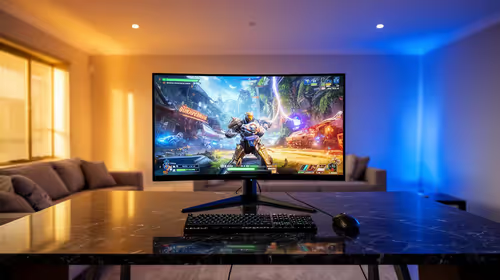
A premium screen can consume budget quickly, so budgeting in ZAR for a 2.8K 120Hz touchscreen laptop starts by separating the display experience from the processor, memory and storage needed to support the whole machine. The right figure pays for a balanced daily tool, not a row of fashionable labels.
Quick Answer
Use roughly R25,000 to R35,000 as a planning band for a premium compact laptop, then refine it around workload and display priorities. The MSI Modern 14S AI+ G3MG sits at R29,199 and provides a concrete midpoint: Core Ultra 7 355, 32GB RAM, a 1TB SSD and a 14-inch-class format.
💵 Split the budget into jobs
Begin with the workload engine: processor, RAM and storage. These components shape compile times, multitasking, exports, file capacity and the useful life of the machine. Next fund the parts you experience directly, including display, keyboard, touchpad, webcam, speakers and construction. Finally allow for the desk and travel accessories required by your routine.
For a high-resolution display, value comes from readable scaling and image detail. A 120Hz mode improves motion smoothness, while touch adds direct input. Each benefit is independent, so a user who cares about sharp text but rarely touches the panel should not treat all three as one indivisible upgrade.
🧾 Remember the complete setup cost
A mobile purchase may need a protective sleeve, compact mouse and suitable charger arrangement. A desk setup can add a stand, external keyboard, monitor and hub. These accessories can improve ergonomics more than moving one processor tier higher, so include them before setting the maximum laptop price.
The R29,199 MSI reference leaves a R801 gap to R30,000. That figure makes it easy to model the rest of a setup in Rand. Its 32GB RAM supports a large active workload, the 1TB SSD adds project space and Core Ultra 7 355 supplies the processing tier.
Use the AI laptop finder to compare machines by intended use, then scan Evetech's Intel laptop options to place processor and memory combinations in context.
📊 Judge the upgrade by weekly use
Convert each premium feature into a repeated benefit. Higher resolution may make dense documents easier to arrange. Faster refresh can reduce visual friction during constant scrolling. Touch can help annotation or navigation. If a feature barely appears in a normal week, shift that money towards RAM, storage, comfort or accessories that solve a frequent problem.
Keep a small reserve instead of spending to an arbitrary ceiling. A complete R32,000 setup that includes proper desk ergonomics may be better value than a R32,000 laptop used flat on a desk with cramped input.
Price comparisons work best when the same complete package is used on both sides. Add the same sleeve, input devices and backup solution to every option, then isolate the difference created by processor, memory, storage and screen. This prevents a cheaper base machine with many required extras from looking artificially attractive.
Allow for the practical cost of mobility as well. A high-resolution compact system used daily should have protection that fits securely and a charging arrangement that works at the regular desk. If a touchscreen changes how the device is handled, include cleaning and stable support in the routine rather than treating the panel as a specification-only upgrade.
Revisit the budget after a week-long workload diary. Features used for hours deserve more weight than those admired briefly. The diary often reveals that memory headroom, readable scaling or a good keyboard matters more than a single headline number.
Frequently Asked Questions
Is R29,199 a reasonable premium-laptop reference?
Yes. It sits within a practical R25,000 to R35,000 planning band and buys MSI's 14-inch-class Modern 14S AI+ G3MG. A 1TB SSD and 32GB RAM flank the Core Ultra 7 355 processor.
Should the display receive more budget than the processor?
That depends on the task. Reading, visual work and long screen time can justify display spending, while calculation, exports and large projects may reward processor and memory first.
Does touch always add enough value?
No. It is most useful for direct navigation, annotation and supported creative input. Keyboard-led users may prefer to allocate the same amount elsewhere.
How should I price accessories?
List every item needed at home and on the move, then add those Rand amounts before comparing laptop tiers. This prevents small essentials from breaking the planned total.
Is a faster refresh rate only for games?
No. It can make scrolling and interface motion feel smoother, though static office work gains less than motion-heavy use.
Ready to turn a premium wish list into a workable Rand plan?
Build your Evetech shortlist around the tasks you repeat, reserve enough for the supporting setup, and spend the remaining budget on screen qualities you will notice every day.