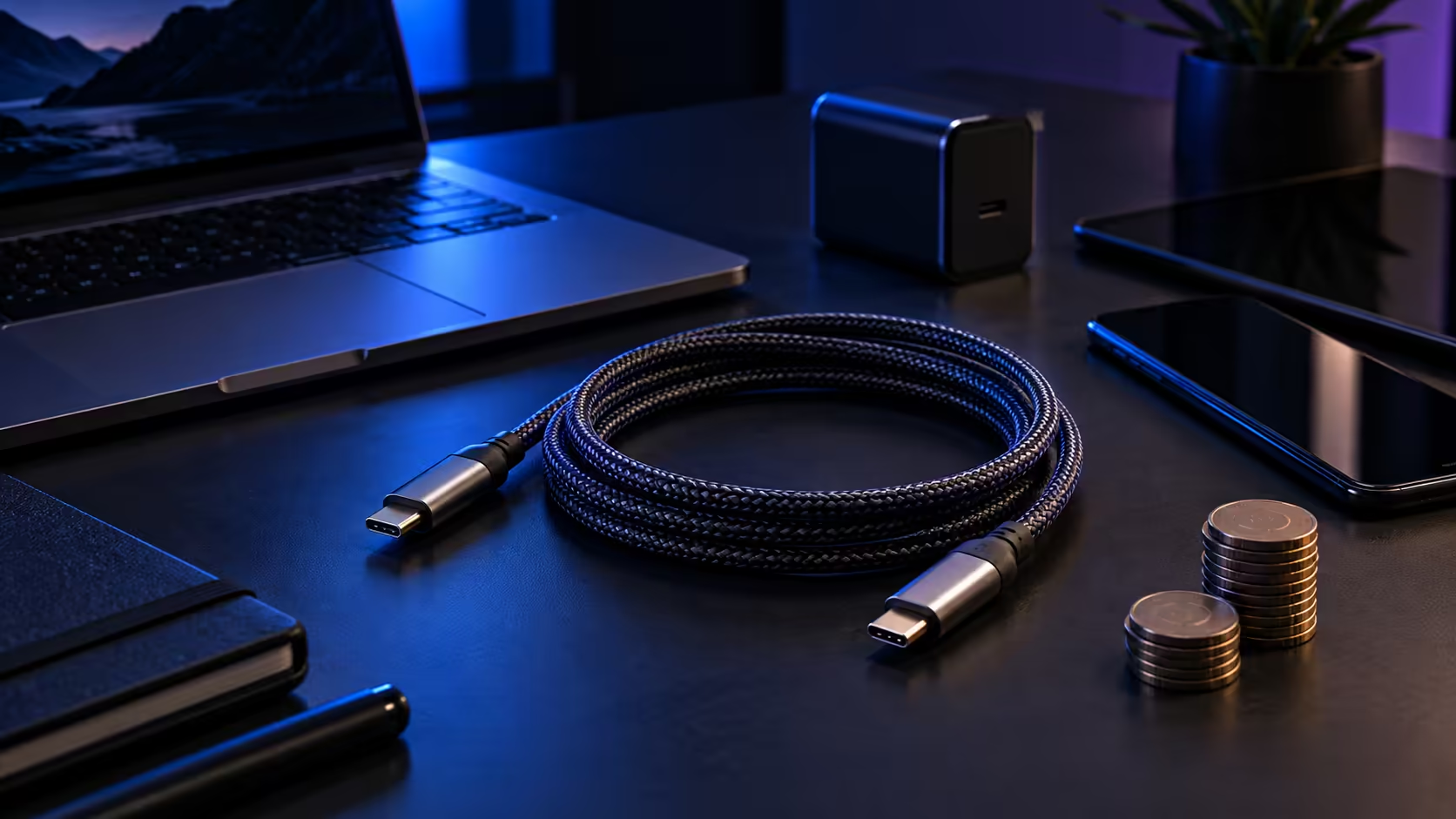
Budgeting for a durable 140W USB-C cable in South Africa comes down to a figure most buyers underestimate, and the maths only gets more favourable once the local buying advantage is factored in.
Quick Answer
Around R399 buys a 1.8m cable rated for 140W or more with a 30,000-bend lifespan and USB-IF certification. That is the Anker 544, and the shorter 0.9m version is R229 if reach is not the priority.
💰 What R399 actually buys at this tier
For that price, the Anker 544, in the comprehensive cable range, delivers a genuine 5A e-marked cable, USB-IF certified, with a published 30,000-bend rating and a bio-nylon braid covering 46% of the cable body's exterior. Cables priced well under this figure without a stated amp rating or certification mark are usually built to a lower cost target that shows up the moment a demanding laptop charger is plugged in rather than a phone.
🇿🇦 Why buying locally changes the sum
A tempting overseas price tag rarely survives contact with freight and a small-parcel clearing charge tacked on at the border, so the sticker saving on paper often shrinks or disappears by the time the cable actually arrives. The real cost only shows up later though, when a charging cable that has developed a fault, which tends to happen gradually rather than all at once, needs sending back: a local seller turns that into a short courier trip, while an overseas one turns it into a shipment costing more than the R399 cable itself.
📏 Length moves the number too
The 0.9m Anker 544 at R229 suits a bag or a docking station sitting close to the laptop, while the 1.8m version at R399 reaches a more typical wall socket distance. Check your own charger's wattage before buying either length, since the cable's job is to match that figure, not to exceed it needlessly at extra cost for capacity you will never actually draw.
Frequently Asked Questions
Is R399 reasonable for a 140W USB-C cable in South Africa?
Yes, that sits within the expected range for a genuinely certified, 5A-rated cable at 1.8m, neither underpriced nor carrying unnecessary extras.
Why is the shorter cable cheaper than the longer one?
Less material goes into a shorter cable, from the conductors to the braid, which is why the 0.9m version costs less than the 1.8m at the same rating.
Does a cheaper uncertified cable ever match this performance?
Rarely at the same wattage. An uncertified cable claiming a high figure without USB-IF backing is the more likely place for a mismatch between the stated and actual rating.
Does ordering a cheaper 140W cable from overseas make sense?
Generally not once freight costs and the hassle of a return are factored in, especially given how often charging cables fail intermittently rather than outright.
Ready to budget correctly for a cable that will actually perform?
Expect to spend around R399 for the full 1.8m, certified 140W option.