A comfortable South African ergonomic workstation comes from aligning the chair, desk, display and input devices as one system. Start with stable feet and easy reach, then use advanced controls to refine support instead of compensating for poor placement.
Quick Answer
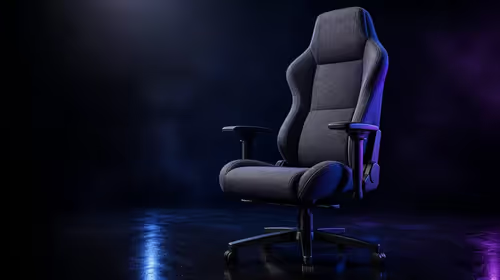
A comfortable workstation can use the E3 Ultra's 1.97-inch seat slide, one-inch lumbar depth, five-way armrests and 2.2-inch headrest-depth adjustment to meet the desk.
Arrange seat position, feet, desk reach and screen height first. Add lumbar, forearm and head support one control at a time, and preserve regular movement. The HBADA E3 Ultra costs R9,599, with 8D lower-back adjustment, 720-degree omni armrests and a biaxial 4D headrest for personal tuning.
🦶 Build the seated foundation
Use a seat position that lets the feet rest securely and the thighs sit without unwanted edge pressure. Bring the chair close enough to the desk that the torso can remain against the backrest while typing.
Exact seat dimensions and load capacity need their own checks. Do not infer fit from the adjustment package or price.
🖥️ Place work within a relaxed reach
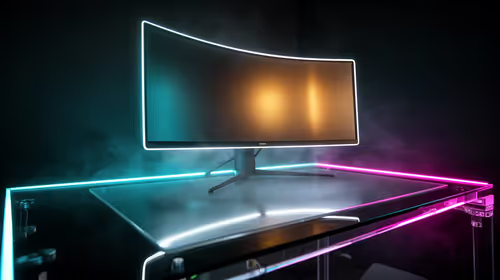
Centre the primary screen and set its height for a natural gaze. Keep keyboard and mouse close enough that shoulders remain settled. The E3 Ultra's omni arm supports can then be explored through their 720-degree range without letting them block the desk edge.
Compare working positions across Evetech's HBADA chair department. The useful armrest setting is the one that supports the forearms and still allows access to the input devices.
🎚️ Add torso and head support
Introduce the 8D lumbar adjustment near neutral and make one modest change. Once lower-back contact is settled, position the E3 Ultra's 4D biaxial headrest; it offers 70 degrees of rotation and tilt.
Head support should complement the screen rather than redirect the gaze. Save a repeatable reference after both controls feel unobtrusive through real work.
🔄 Use recline as one task position
The chair reclines to 140 degrees. Check wall, desk and cable clearance before moving deeper, and keep recline for tasks that suit the changed viewing and input relationship. It does not replace standing or walking breaks.
Evetech's general office chair collection can help compare alternative fit packages. The best workstation is not the most adjustable one; it is the arrangement whose parts stop competing with one another.
Lighting and vision demands also shape the workstation. Glare or small text can pull the head forward even when screen height looks correct. Resolve those viewing problems before increasing headrest or lumbar contact, because the chair cannot prevent a visual task from changing posture.
Place frequently handled documents or a phone where reaching does not repeatedly break backrest contact. Small peripheral tasks can undermine an otherwise balanced central workstation.
Finally, schedule brief setup reviews when equipment changes. A new monitor arm, keyboard, foot support or desk can invalidate saved references. Rebuilding from feet to screen takes less time than chasing discomfort through several advanced controls at once.
Keep water, notebooks and frequently used accessories within a sensible reach zone. Repeated twisting for peripheral items can undo the central alignment even when the chair itself is well tuned.
Set seat depth for leg support, place lumbar contact, align forearms with inputs and bring the headrest to the user last. The mesh and gravity-sensing recline support task changes, but screen and keyboard placement remain the fixed reference points.
Test the complete arrangement through typing, reading and one reclined break before accepting it.
Frequently Asked Questions
Which parts form the workstation's initial reference?
Begin with stable feet, seat position, desk distance and primary-screen location. These elements create the reference for every chair adjustment that follows.
How can 8D lumbar support fit the setup?
Use it to refine lower-back contact after the work surface is reachable. Change one aspect, perform ordinary tasks, and retain only a repeatable improvement.
What armrest range is available?
The E3 Ultra's arm supports have a 720-degree omni-adjustment range. Test each side independently for typing, mouse movement and desk clearance.
How does the headrest adapt?
Its biaxial 4D headrest rotates and tilts across a 70-degree range. Position it after the screen to avoid forcing an unnatural gaze.
What role does recline play?
Recline introduces another seated relationship for suitable tasks. HBADA provides up to 140 degrees, subject to safe room clearance and correct use.
Can a chair correct every workstation mismatch?
No. A chair cannot fix a distant keyboard, unsuitable display placement, limited legroom or a task schedule without movement.
What is the local price reference?
This white E3 Ultra carries a R9,599 price. Weigh that amount while comparing complete workstation fit rather than isolated chair features.
Ready to align the whole workstation before fine-tuning the chair?
Explore Evetech office seating with desk reach, display position and personal support references already mapped.