DDR5 instability becomes manageable when the last passing state is preserved. A reliable fix for DDR5 memory stability begins with correct seating and motherboard defaults, then introduces capacity, frequency and any optional tuning as separate variables.
Quick Answer
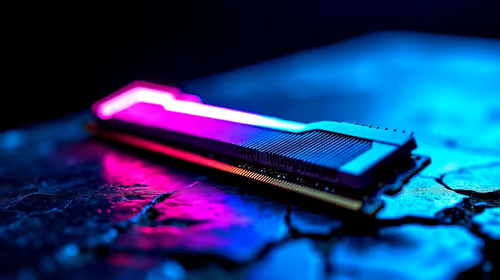
Return the PC to a supported baseline, verify placement and test a representative workload before changing one setting. The R65,999 bundle gives Corsair Vengeance RGB DDR5 a 96GB capacity and 5600MHz rating. Neither number establishes timing or tuning results.
🧾 Describe the unstable behaviour
Separate startup failure, application crash, restart and detected-capacity problems. Note the workload and the last configuration change for each occurrence. A broad "unstable" label makes it difficult to know whether the same fault returns after a correction.
Keep the processor and board context visible. The 9950X3D2 sits on a Crosshair X870E Extreme WiFi, so firmware guidance remains part of the memory investigation without proving the cause.
Review Evetech's AMD barebone kits for wider platform context after capturing the exact symptom.
🧩 Rebuild the baseline carefully
Follow the Crosshair manual for module positions and safe reseating. Confirm the full intended capacity before enabling optional frequency settings. Do not copy timings or a tuning profile from another DDR5 kit simply because its rated speed looks similar.
If isolation is appropriate under the board procedure, change one module, position or setting at a time. Save every result, including failures. This creates a path back to the last passing configuration and prevents accidental progress from being mistaken for a diagnosis.
🧪 Use workloads that can reproduce the issue
Select a memory test and real application or game that previously exposed the fault. Keep duration and surrounding system settings consistent. One clean minute cannot prove long-term stability, while one crash under changed conditions cannot isolate memory.
Test capacity recognition, baseline operation and optional 5600MHz configuration as distinct stages. If a later stage fails, return to the previous one and reproduce the difference. Do not change CPU tuning or cooler controls during the same comparison.
Evetech's Ryzen 9 upgrade-kit page places the 96GB memory beside its CPU, board and cooler without replacing model-level checks.
📝 Close with a usable configuration note
Write down the board firmware, module arrangement, capacity, frequency state and tests that passed. Avoid adding unknown timings. The note should let another person reproduce the working setup without remembering a chain of trial-and-error changes.
If errors continue at the supported baseline, use appropriate motherboard or memory support with the captured evidence. Do not infer a defective component before physical, firmware and configuration layers have been checked.
Use a staged stability record. First capture whether the intended 96GB is recognised, then run a controlled memory-focused check, followed by the actual game or professional workload that revealed concern. Give every stage a clear pass condition and duration. If the problem appears only in the final application, keep that distinction; it may not be a generic memory failure. Preserve the last configuration that completed all earlier stages, because it becomes a reliable return point. This approach does not assign blame in advance and avoids confusing capacity, frequency, software and platform support questions. Repeat the passing stage after a cold start and after the system has been running for a while. A fault tied to one state is easier to investigate than a report that omits timing. Store the exact error text or screenshot with the configuration notes.
Save the exact application input that first exposed instability so every later correction faces the same challenge.
Frequently Asked Questions
Where should a DDR5 stability diagnosis begin?
Begin with the last passing configuration, correct module placement and a supported motherboard baseline.
Why separate capacity and frequency changes?
Changing one property at a time shows which stage introduced the repeatable failure.
Which memory belongs to this kit?
Its memory set is Corsair Vengeance RGB DDR5, totalling 96GB at a 5600MHz rating.
Are exact timings available for this diagnosis?
No timing values should be guessed. Use the precise memory and board details when timing-level work is required.
What makes a useful stability test?
It reproduces the prior issue under controlled conditions and runs long enough to provide meaningful evidence.
What is the price of this 96GB platform?
R65,999 is the price of this full 9950X3D2 component group.
Ready to restore DDR5 stability one variable at a time?
Explore Evetech's Ryzen 9 upgrade kits after preserving the failing state and rebuilding a supported memory baseline.