


650W PSU Planning for RTX 5090 Builds in SA
650W for RTX 5090 needs a full-build check, not a simple yes. Review GPU guidance, CPU draw, transient load, connectors, PSU quality, and upgrade plans before deciding.
Read moreHow to fix FPS drops on X870E motherboard starts with BIOS, chipset drivers, PCIe settings, and memory stability. SA gamers can check EXPO, resize BAR, thermals, display refresh, and background apps before replacing components.
If your X870E motherboard keeps causing FPS drops mid-match, the fix almost always comes from one measurable change rather than a fresh parts list.
Start by locking your X870E motherboard to one test scene, then confirm refresh rate, frame cap, and the latest stable drivers. An X870E board typically costs from R7,800 thanks to its USB4 and PCIe 5.0 layout. Measure frame rate before and after each change so the fix is evidence-based.
Log temperatures during your scene and confirm the system is on a high-performance power profile, not a battery-saver or eco mode. Heat throttling and conservative power limits make frame rate sag on an otherwise healthy X870E motherboard. Targeting dual Gen5 M.2 as a reference keeps your expectations grounded while you tune airflow and limits.
Change a single option, re-run the identical scene, and write down the frame rate result before touching the next one. Bundling changes hides which one helped and which hurt. This disciplined loop turns FPS drops on a X870E motherboard from a guessing game into a short, repeatable diagnosis.
Lock the in-game preset and resolution first; only then touch one tuning option so you can attribute any gain correctly.
Pick a single in-game area you can reload on demand and run it the same way each time. Note whether FPS drops arrives during loading, busy fights, online play, or only after the X870E motherboard warms up. A capable setup can still feel rough when USB4 40 Gbps settings or background tasks are unsettled, so a fixed scene gives you comparable frame rate readings instead of vague impressions.
That pattern points to thermals or power limits. Log temperatures through your scene, improve airflow, and confirm no part is throttling. frame rate that recovers when cool confirms heat as the cause.
Use an on-screen overlay and the same in-game scene each test. Capture a 60-second run, note the average and the lows, then compare after every change. Consistent scenes make small differences visible.
Often nothing, since most fixes are configuration changes. An X870E board typically costs from R7,800 thanks to its USB4 and PCIe 5.0 layout. If a measured bottleneck remains after tuning, spend on the single part your data points to rather than a full rebuild.
Fix the cause, then shop smart. When your before-and-after numbers point to a clear limit on your X870E motherboard, the right Evetech motherboard pick becomes obvious.
650W for RTX 5090 needs a full-build check, not a simple yes. Review GPU guidance, CPU draw, transient load, connectors, PSU quality, and upgrade plans before deciding.
Read more
How to fix FPS drops Windows 11 RX 9070 XT starts with GPU drivers, overlays, power plans, and frame pacing checks. For SA gaming PCs, verify chipset updates, HAGS, refresh rate, thermals, and per-game graphics settings.
Read more
RTX 5060 is popular with SA students because it can fit gaming, coursework, and creative app needs in one setup. Compare total system price, cooling, RAM, storage, and screen quality before picking a desktop or laptop.
Read more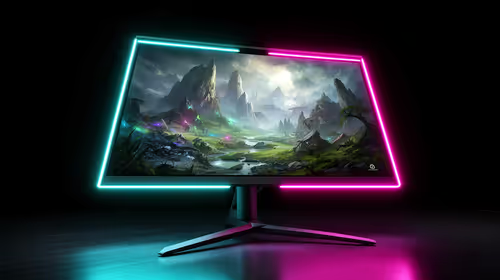
1440p is the sweet spot for SA gamers because it balances sharp visuals, high frame rates, and GPU cost better than 4K. It is a practical monitor target for players who want smoother upgrades without the heavier hardware demands of 4K.
Read more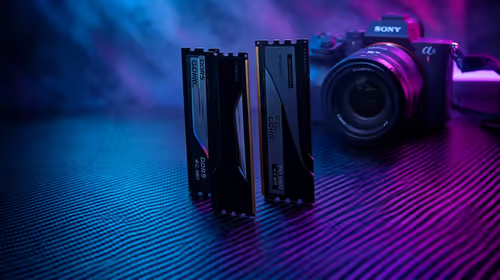
RAM pricing for Midrand gamers can shift with exchange rates, supply, specs, and model tier. Treat the title as a buying prompt, then compare SA warranty, timing, and build priorities.
Read more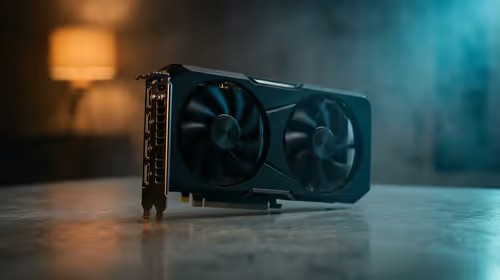
RTX 5060 popularity with SA students comes from a balance of gaming features, efficiency, and upgrade appeal. East London buyers should weigh monitor resolution, study workloads, case fit, and total PC budget before choosing.
Read more
From 1 October 2026, WhatsApp Business Platform service replies in South Africa are expected to cost about $0.0076, or 12 cents, per delivered message.
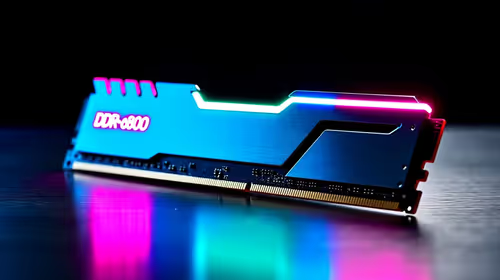
DDR5-8000 RAM Kits pros and cons depend on the build, budget, and workload. Weigh gaming needs, platform fit, power, cooling, warranty support, and South African pricing context before shortlisting it.
Wi-Fi 6E vs Wi-Fi 6 depends on AAA single-player gaming needs, platform limits, and budget fit. Compare compatibility, latency, upgrade path, and real setup constraints before choosing for an SA build.
Ryzen 9 9950X3D dead pixel checks should isolate the panel first. Run colour fills, inspect the monitor menu, test another cable or input, and capture proof before linking it to the SA CPU upgrade.

YouTube will count public views from the first frame across video formats from 24 August, while earnings and eligibility remain tied to engaged viewing.
Canonical expects Ubuntu on WSL users to outnumber native Ubuntu desktop users before the end of 2026. The software is open source and runs inside supported Windows PCs.
Telkom's daily bundles pair WhatsApp access with 10 all-network voice minutes. The R15 option includes 300MB, while the R17 option uses a fair-use threshold.
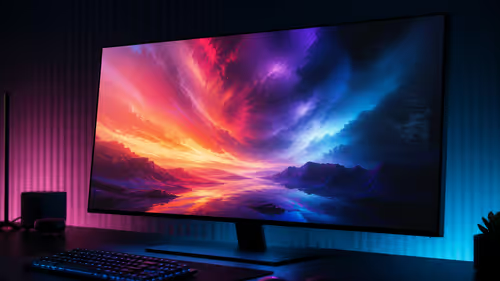
A 10,000-hour test found similar image retention across older and newer OLED TVs, while newer panels were brighter and more efficient. Local OLED monitors started at R9,999.
From 1 October 2026, WhatsApp Business Platform service replies in South Africa are expected to cost about $0.0076, or 12 cents, per delivered message.
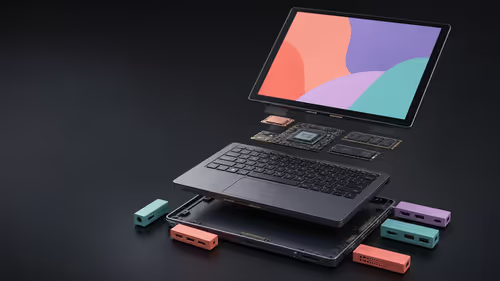
Framework has refreshed Laptop 12 with Intel Core Series 3 processors, Thunderbolt 4, a backlit keyboard and a claimed battery-life increase.

A Windows 11 Experimental Insider build adds per-app camera, microphone and location controls for Win32 programs, plus permission prompts.
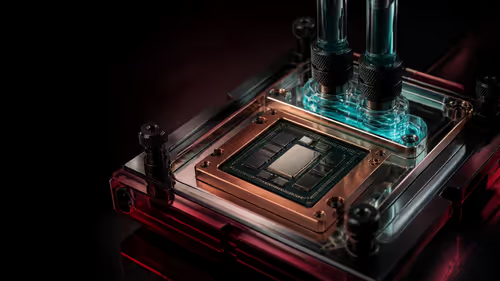
Thermal Grizzly is selling a tested, delidded Ryzen 9 9950X3D2 with its own 24-month warranty for experienced direct-die cooling builds.