The quickest path past low FPS on a DDR5 build is to pin down which subsystem is actually overloaded.
Quick Answer
Start by locking your DDR5 build to one test scene, then confirm refresh rate, frame cap, and the latest stable drivers. A 32GB DDR5-6000 kit sits around R1,450, while a fast 6400 CL30 pair runs closer to R2,100. Measure average frame rate before and after each change so the fix is evidence-based.
Recreate low FPS With One Repeatable Scene
Pick a single in-game area you can reload on demand and run it the same way each time. Note whether low FPS arrives during loading, busy fights, online play, or only after the DDR5 build warms up. A capable setup can still feel rough when 6000 MT/s settings or background tasks are unsettled, so a fixed scene gives you comparable average frame rate readings instead of vague impressions.
Update Drivers From A Clean State
Install the latest stable GPU and chipset drivers, reboot once, and avoid stacking other changes in the same pass. A clean driver state removes a frequent trigger for low FPS on a DDR5 build. If a recent update introduced the problem, roll back to the previous known-good version and retest the same scene.
Fix the cause, then shop smart.
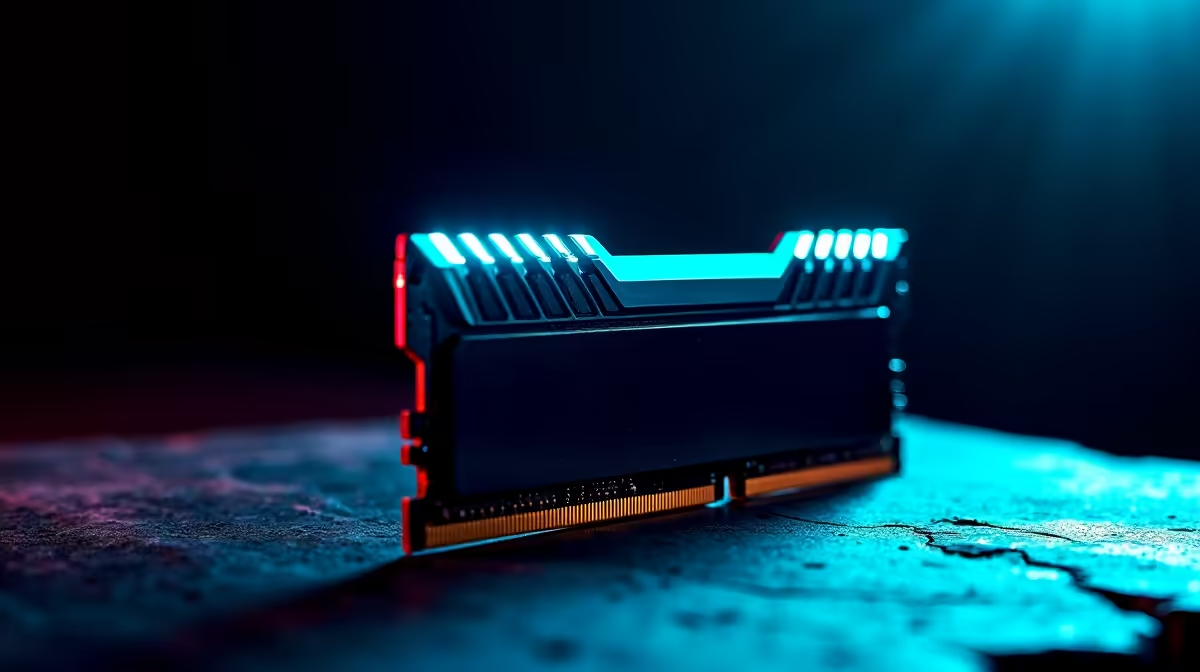
When your before-and-after numbers point to a clear limit on your DDR5 build, the right Evetech memory kit pick becomes obvious.
Verify Cables, Ports And Connections
Swap to a known-good certified cable and a different port, since a marginal link can cause low FPS that looks like a deeper fault. On a DDR5 build this is a two-minute check that rules out a whole class of problems. Reseat the connection, retest the same scene, and record the result before moving on.
FAQ
How do I measure average frame rate reliably on a DDR5 build?
Use an on-screen overlay and the same in-game scene each test. Capture a 60-second run, note the average and the lows, then compare after every change. Consistent scenes make small differences visible.
How much should I budget to properly address this on a DDR5 build?
Often nothing, since most fixes are configuration changes. A 32GB DDR5-6000 kit sits around R1,450, while a fast 6400 CL30 pair runs closer to R2,100. If a measured bottleneck remains after tuning, spend on the single part your data points to rather than a full rebuild.
Is low FPS on a DDR5 build a hardware fault or a settings problem?
Most of the time it is settings, drivers, or background load rather than a broken part. Run one repeatable scene, change a single variable, and watch average frame rate. Only consider a replacement once a clean configuration still shows the issue.
Test Smart
a short log: setting changed, before value, after value. A 30-second repeatable run is worth more than testing three different games.