


1000W PSU Planning for RTX 5090 Builds in SA
1000W for RTX 5090 needs a full-build check, not a simple yes. Review GPU guidance, CPU draw, transient load, connectors, PSU quality, and upgrade plans before deciding.
Read moreAn anti-spy privacy filter reduces casual side viewing when you work around other people. This R299 model covers a 15.6-inch 16:9 display, while its anti-glare surface also helps control distracting reflections.

Someone glancing across a cafe table needs only a few seconds to read a name, subject line or spreadsheet value. A laptop privacy screen narrows that casual side view, but it works best as one part of a sensible seating plan rather than as a shield for every direction.
To reduce shoulder surfing, place the laptop so the intended user faces the display directly, then add an anti-spy filter matched to the panel. Priced at R299, the 15.6-inch Laptop Privacy Screen Protector Filter pairs side-view privacy with anti-glare treatment for a 16:9 screen. It does not replace awareness of people standing behind you.
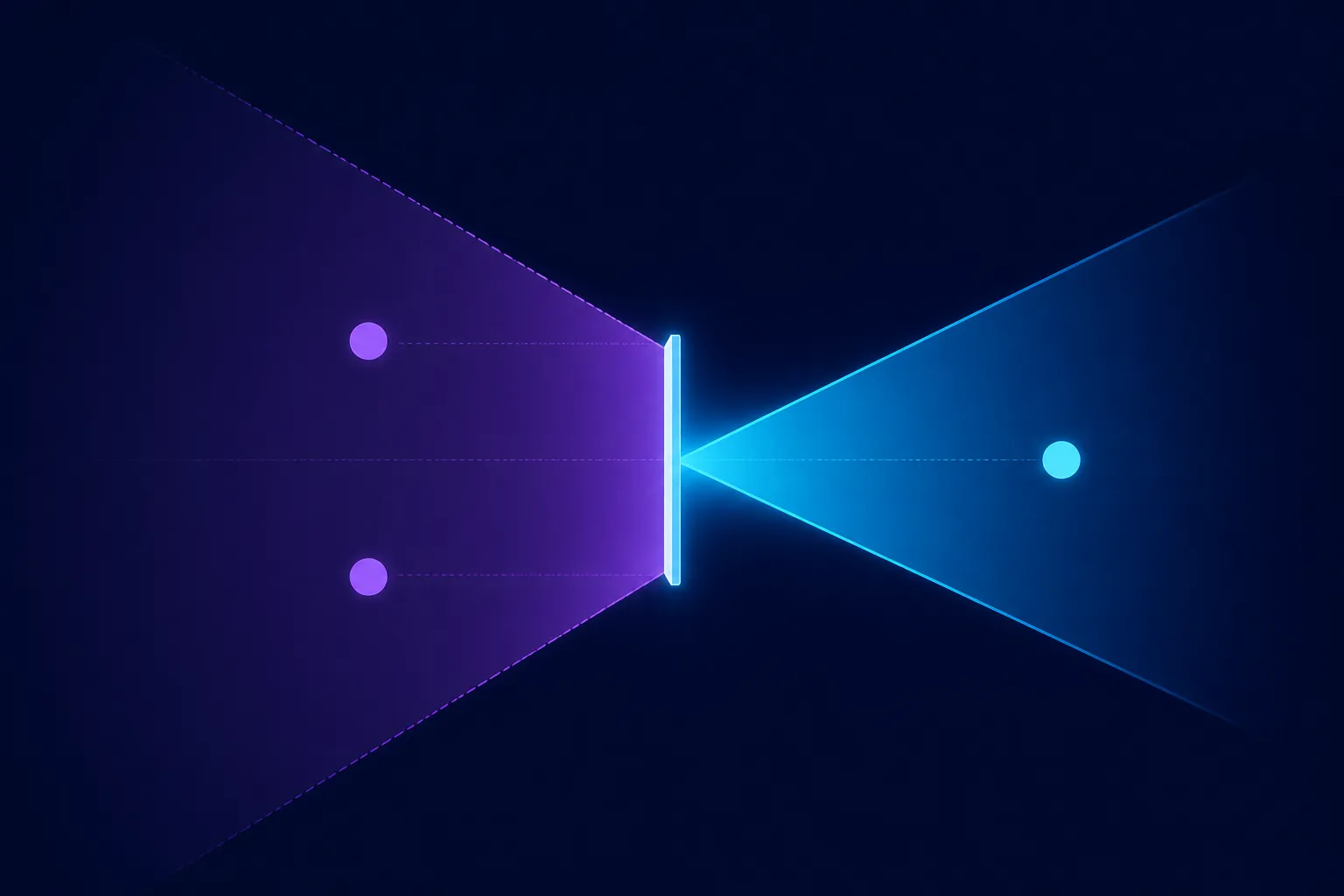
Shoulder surfing is a line-of-sight problem. A person beside the laptop is the main use case for anti-spy filtering, while somebody directly behind the user may still share the same viewing path. Before opening sensitive work, look at the room from the display's perspective. Doorways, waiting queues and closely spaced tables deserve more attention than an empty wall.
Turn the desk or chair so passing traffic sits off to one side. Keep the screen close enough that you do not compensate by enlarging confidential text unnecessarily. If the working position changes during the day, repeat the check instead of assuming yesterday's layout still protects today's document.
The Evetech gaming accessories selection is a useful place to compare privacy tools with the rest of a mobile setup. Treat the filter as a physical viewing aid, not as protection for files, passwords or network traffic.
A 15.6-inch diagonal alone does not describe the panel shape. This filter is made for a 15.6-inch, 16:9 display, so both values belong in the compatibility check. Find the laptop's display specification, confirm the diagonal, then verify the aspect ratio before judging privacy performance.
Poorly matched edges can distract the user and make a careful side-view test difficult. Do not trim a larger filter or infer fit from the laptop family name. Two machines can share a diagonal while using different proportions or surrounding bezel designs.
For alternatives around the display, browse Evetech monitor accessories after noting the exact screen format. That order keeps size from becoming an afterthought once attractive features enter the comparison.
Sit squarely in front of the laptop and confirm that normal work remains readable. Next, ask a helper to move to one side while a harmless test page is open. The aim is to see whether casual side visibility is reduced from realistic nearby positions; there is no need to expose real customer or company information during the test.
Now move a lamp or change the screen's orientation toward a bright area. Anti-glare treatment deals with reflections, which is a different outcome from limiting side views. Separating those checks makes it easier to identify whether a problem comes from room lighting, screen placement or the privacy layer.
No numerical viewing angle is needed for this practical assessment. Mark the positions where text becomes difficult to read, then compare those positions with the seats and walking routes around the actual workspace.
Use privacy-friendly placement before opening the document, not after noticing an observer. Close or minimise sensitive windows when leaving the chair, and avoid presenting confidential material on a screen facing a queue. These habits still matter with an anti-spy layer installed.
R299 is modest compared with the cost of many laptop upgrades, but value depends on recurring exposure. A home user working alone may gain more from glare control, while a commuter or shared-office worker may prioritise the reduced side view. The same product can therefore solve different practical problems without promising total concealment.
This filter narrows useful viewing to the person positioned directly in front of the 15.6-inch screen, addressing the shoulder-surfer's off-centre position. Its anti-glare face also reduces distracting reflections, while a scratch-proof layer protects against dust, oily marks and routine handling. The thin, easily removable construction lets a mobile worker add that privacy in public and take it away when the environment changes.
No. It reduces casual viewing from the sides, while a person behind the user may still have a direct line of sight. Screen orientation remains important.
It is intended for a 15.6-inch display with a 16:9 aspect ratio. Confirm both specifications, because diagonal size alone is not a complete fit check.
A sample document lets another person assess side visibility without exposing genuine confidential information. It also makes repeated seating tests safer and easier.
Glare control and side-view filtering answer different problems. Evaluate reflections under the room's lighting, then assess privacy from nearby seats as a separate step.
Ready to make public laptop work less exposed? Compare display-friendly accessories at Evetech, then choose around your exact screen format and usual seating environment.
No. It reduces casual viewing from the sides, while a person behind the user may still have a direct line of sight. Screen orientation remains important.
It is intended for a 15.6-inch display with a 16:9 aspect ratio. Confirm both specifications, because diagonal size alone is not a complete fit check.
A sample document lets another person assess side visibility without exposing genuine confidential information. It also makes repeated seating tests safer and easier.
Glare control and side-view filtering answer different problems. Evaluate reflections under the room's lighting, then assess privacy from nearby seats as a separate step.
1000W for RTX 5090 needs a full-build check, not a simple yes. Review GPU guidance, CPU draw, transient load, connectors, PSU quality, and upgrade plans before deciding.
Read more
RTX 5080 Super with a 750W PSU is more comfortable than lower wattage if the unit is quality. SA builders should still confirm GPU guidance, CPU draw, connector type, airflow, and upgrade room.
Read more
How to fix FPS drops after a RX 9070 XT starts with driver cleanup, chipset updates, thermals, and power checks. For SA gaming PCs, confirm PCIe seating, monitor refresh, frame caps, and per-game graphics settings before replacing parts.
Read more
How to fix low FPS Windows 11 Wi-Fi 7 issues starts by checking whether the problem is frame rate or network lag. Test ping, drivers, power settings, Ethernet, and game FPS before adjusting visuals.
Read more
AM5 is smart for SA builders because it supports newer Ryzen CPUs, DDR5 memory, and a longer upgrade path. Compare board cost, cooling, gaming needs, and local part availability before choosing your next PC platform.
Read more
AM5 gives Randburg gaming builders a longer upgrade path. For SA buyers, DDR5 support, newer board features, and future CPU options can justify the platform. Weigh board cost, cooler support, BIOS maturity, and upgrade timing before choosing.
Read more
RTX 5090 on a 550W PSU leaves almost no practical room for OC plans. Treat the setup as constrained, with CPU draw, power spikes, cable quality, thermals, and stability checks more important than chasing extra clocks.
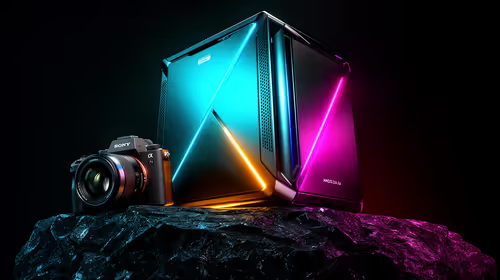
FPS drops on a Ryzen 9 9950X3D build often have a fixable cause. Check settings, drivers, thermals, background tasks, network conditions, and bottlenecks before assuming a part must be replaced.

The difference between PCIe 5.0 and PCIe 4.0 for SA gamers is mostly bandwidth headroom. Compare GPU slot needs, NVMe speed, motherboard support, and upgrade timing before paying extra for a newer platform.

Gaming PC stuck pixel checks in South Africa should confirm the monitor fault first. Use colour tests, screenshot comparison, cable swaps, display menu checks, and clear photos before deciding on support.

AMD's current driver now lists a Radeon RX 9050 4GB, while product coverage details a narrowed memory system. SA buyers should weigh the low VRAM ceiling against current local Radeon options.

Samsung Display has demonstrated a 16-inch 2.5K OLED laptop panel running at 300Hz. SA buyers should wait for a named notebook, full panel specifications and a local price before planning an upgrade.

Microsoft says some Windows 11 game crashes after recent updates are linked to RGB-related drivers. Affected SA gamers should confirm the update and driver before using the published registry workaround.
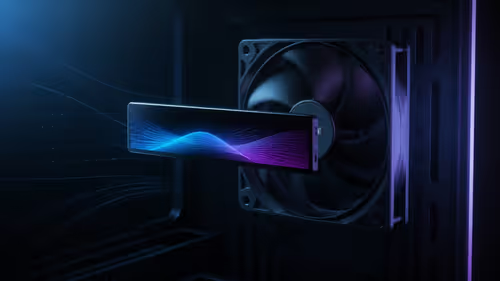
Thermalright's Fan Frame Vision-1 adds a 640x172 status screen to a standard 120mm fan. SA builders should check clearance, USB routing and local support before treating it as an easy upgrade.

Shokz OpenFit Air 2 earbuds weigh 7.2g each and use a redesigned dual-driver open-ear layout. SA buyers should choose them for comfort and awareness, not maximum isolation.

A fake 113GB GTA VI ISO reportedly used empty padding around a small malware payload. SA gamers should delete unofficial builds, keep Windows security active and wait for official channels.
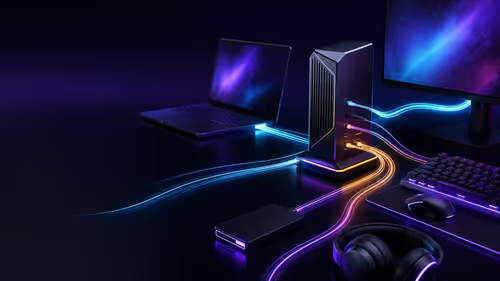
The ROG Flux Charger Dock combines 260W total output, 140W laptop charging and HDMI 2.1. SA buyers should check laptop USB-C limits, display needs and local warranty first.

ASRock's Rock 360 Digital AIO adds a 1.05-inch CPU temperature display, 360mm radiator and simplified wiring. SA builders should check case fit, socket support and local warranty.