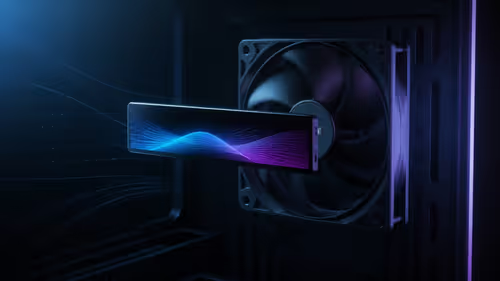
A portable display can remain black even when its USB-C plug fits, because the host and cable still have to deliver the required signals. A 120Hz OLED portable monitor setup begins with the connection path, then adds resolution, refresh and HDR settings one at a time. The UPERFECT UColor O2 costs R7,199.
Quick Answer
The UColor O2 can run its 2880x1800 OLED panel at 120Hz through a compatible full-featured USB-C route, with external power added if the source cannot supply enough.
Connect the UColor O2 to a USB-C host path that can carry power, audio and video, then select its native 2880x1800 resolution. Enable 120Hz only after the 3K image is stable. The R7,199 monitor uses a 16-inch OLED panel; test the exact computer, port and cable rather than assuming every USB-C connection supplies the same capabilities.
🧭 Prove the signal path first
Start with the monitor, one cable and the intended laptop. Remove docks, adapters and other displays until the panel receives a reliable image. If the connection fails, try another suitable port or cable individually and note which change restores operation. Connector shape alone cannot identify video support or available power.
Once the direct route works, add the normal dock or peripherals separately. This order makes a weak link visible before refresh-rate changes complicate diagnosis.
Compare connection needs across complete models in Evetech's portable-screen selection.
🧭 Set native detail before speed
Choose 2880x1800 in the operating system and adjust scaling until text, menus and application controls remain readable across 16 inches. Check a detailed document and the programs used every day. A higher pixel count creates potential workspace, while scaling decides how much of it is comfortable.
After the layout is stable, select 120Hz and confirm that the setting remains active after sleep and reconnection. Use a scrolling page or familiar game menu to observe motion without turning that impression into a performance benchmark.
🧭 Treat OLED and HDR separately
OLED describes how the panel produces light. The UColor O2 also carries a 500-nit HDR specification and 10-bit colour, but a named HDR standard, gamut measurement and calibration result need their own checks. Enable HDR with a known image or clip, then compare shadow detail, bright areas and neutral tones without altering several controls together.
Keep the application colour mode visible. A desktop that looks vivid is not proof that a creative output is accurate.
🧭 Save a recovery profile
Write down the working port, cable, native resolution, Windows scale, refresh rate and HDR state. Disconnect the display, restart the host and reproduce the setup from those notes. A reliable portable arrangement should return without guesswork.
For a wider desk comparison, browse Evetech's PC-monitor range. A fixed screen may suit a permanent workstation, while this 6.5mm portable format serves buyers who repeatedly move the second display.
Run a cold-start acceptance test
Shut the laptop down completely, disconnect the display and wait before rebuilding the route. Start with the labelled cable, select the external panel and open one familiar application. Note detection time, the resolution first presented and whether 120Hz returns without intervention. Repeat once on battery power if that matches the intended routine, recording the result rather than predicting battery life.
The setup passes when the native desktop and chosen refresh return consistently. A successful warm reconnect can hide a path that fails after a real journey or overnight shutdown.
Keep an application compatibility row
Some programs remember their last monitor position or scale poorly when the second screen is absent. Move a window between panels, close it on the UColor O2 and reopen it after disconnection. Check menus, text and dialogue placement. Save a recovery shortcut for windows that open off-screen.
This small application test turns hardware setup into a usable work environment. It also prevents a software-layout problem from being misdiagnosed as a USB-C or OLED fault.
One cable can carry video, audio and power, but OLED demand means a weak host may still need the separate supply. After the picture appears, select 120Hz explicitly and confirm the source can sustain the mode. The 1ms response, 100,000:1 contrast and 100% DCI-P3 gamut then describe the monitor side, while the user's cable, port and GPU determine whether the intended setup reaches it.
Frequently Asked Questions
Should 120Hz be selected before 3K resolution?
No. Establish a stable 2880x1800 picture first, then change refresh rate while keeping the connection and scaling unchanged.
Does any USB-C cable carry monitor video?
No universal result follows from the connector. Test the host port and cable together for the required power, audio and video route.
Does OLED automatically configure HDR correctly?
No. Panel technology and HDR settings answer different questions. Use known content and preserve a readable non-HDR baseline.
What should be saved after setup?
Keep the successful port, cable, resolution, scale, 120Hz selection and HDR state in a short recovery note.
Ready to build a repeatable portable OLED setup?
Compare Evetech portable and desktop monitors with your host connection, scaling and refresh requirements written down.