Quick Answer
Yes, Ethernet ports on mesh nodes are worth paying extra for if you have a gaming PC, console, or NAS to plug in; a wired connection to a node gives a stable sub-10ms local latency that Wi-Fi cannot match. If everything in your home is wireless, the extra ports add little value.
When Ethernet ports on mesh nodes matter
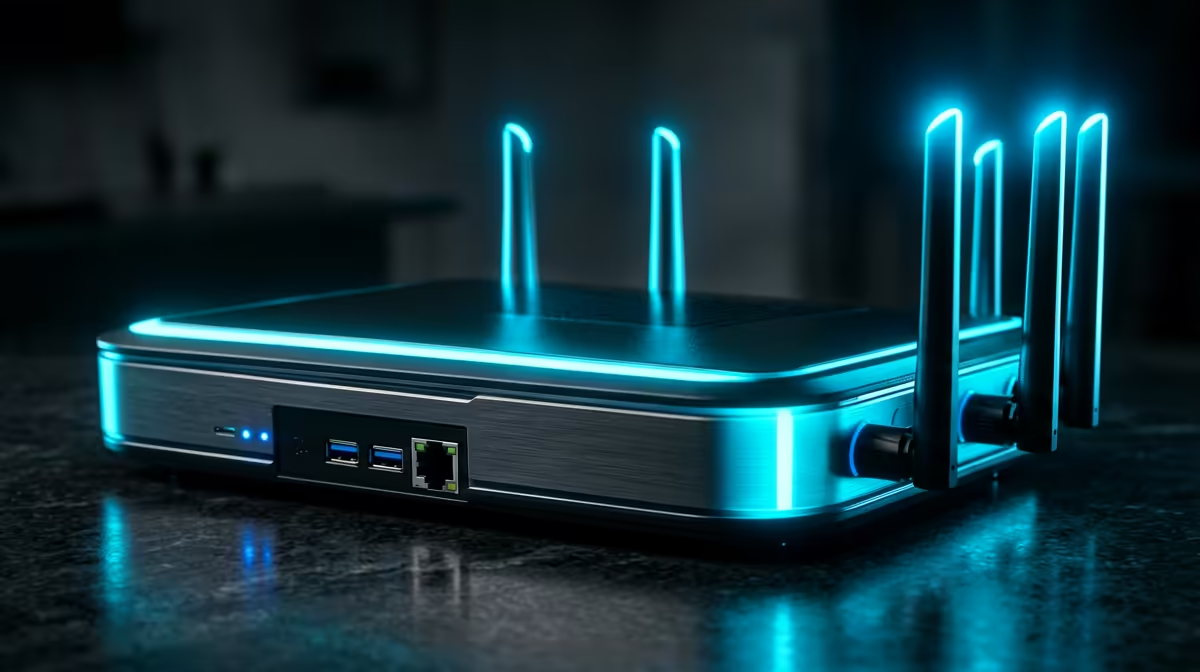
A gaming PC or PS5 plugged into a mesh node's Ethernet port gets rock-steady latency and full throughput, ideal on a 100Mbps Vumatel or Openserve fibre line. Ports also enable wired backhaul between nodes, which keeps full bandwidth at each hop instead of halving it over wireless. For a home office with a desktop and a NAS, those ports are the difference between a reliable and a flaky setup.
When you can skip them
If your household is all phones, tablets, and laptops on Wi-Fi, the Ethernet ports sit unused and you can pick a cheaper kit. A typical mesh two-pack runs around R2,500-R4,500 at Evetech; port count and wired-backhaul support are the features worth the premium if you wire devices.
What to look for
Prefer nodes with at least two Gigabit Ethernet ports each so you can both wire a device and run backhaul. Wi-Fi 6 nodes future-proof multi-device homes.
FAQ
Should I wire my gaming PC to a mesh node?
Yes. A wired link gives stable sub-10ms local latency and full throughput, which is more consistent than Wi-Fi for online gaming and large downloads.
What is mesh wired backhaul?
It is connecting two mesh nodes by Ethernet cable so the link between them keeps full bandwidth, avoiding the speed loss of a wireless hop.
How many Ethernet ports should a mesh node have?
Look for at least two Gigabit ports per node so you can wire a device and still run wired backhaul if you choose.
Wiring a gaming PC or NAS? Choose a mesh kit at Evetech with at least two Gigabit Ethernet ports per node so you can hard-wire devices and run wired backhaul.