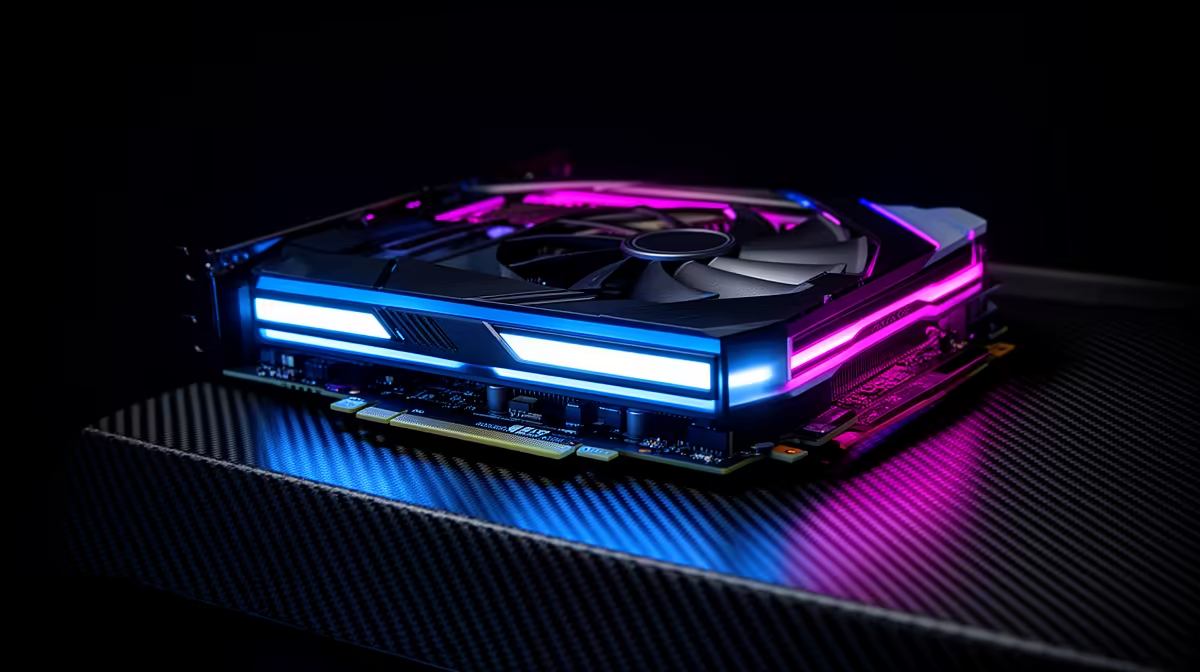
Here is a straight, South African answer to the question in the heading, with the trade-offs spelled out instead of a vague reply.
Quick Answer
Yes for the right setup; skip it if you are on a tight budget. Weigh it against the rest of your build and your real usage before spending. As a rule of thumb, only commit once the core parts are sorted and you have at least R6,000 spare for the extra.
When it is genuinely worth it
There are clear cases where it pays off: heavy daily use, a specific competitive need, or a build that is otherwise complete. Outside those, the budget tends to stretch further elsewhere.
What you actually gain
Be honest about the measurable upside. If the upgrade adds fewer than 20 percent more frames, comfort or clarity, the money is usually better held back for a part that moves the needle harder.
The South African budget angle
Local pricing means every choice has an opportunity cost. R6,000 spent here is R6,000 not spent on a GPU or monitor, so weigh the swap against what else that money could fix.
Quick recap
Keep the steps above in order, test one change at a time, and only spend money once a single cause is confirmed. For a South African build, a clear diagnosis beats an expensive guess every time.
FAQ
How do I know if I actually need a GPU?
Name the specific problem it solves. If you can point to a real, repeated frustration it fixes, it is worth it; if not, hold the budget for a bigger upgrade.
Does it make sense on a tight budget?
Only if it removes a genuine pain point. On a stretched budget, the safer move is to finish the core build first and add the GPU later.
What should I sort before buying a GPU?
Get the parts that limit your experience right first. A GPU is a refinement, so it makes sense once the GPU, monitor and storage are already where you need them.
Spend where it counts
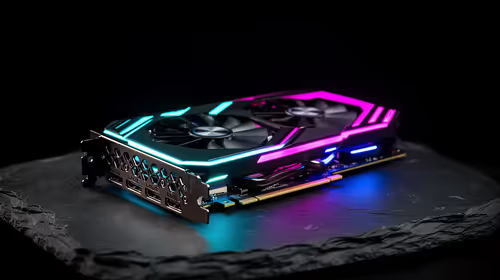
Compare the graphics cards on Evetech and put your budget toward the upgrade that fixes your real bottleneck first.