Switching from Intel to AMD for your next gaming PC is mostly a platform decision, since AMD's X3D chips lead in gaming while the AM5 socket promises a longer upgrade life. For SA upgraders, the move can pay off well.
Quick Answer
Switching to AMD for a new gaming build is worth it for many SA upgraders, since the X3D chips lead in gaming and the AM5 platform offers a long upgrade path. You will need a new motherboard and DDR5 memory, so factor that cost. If you are building fresh anyway, AMD's gaming-focused chips are a strong choice.
Why AMD appeals for gaming
AMD's X3D processors, with their large cache, lead in many games and run efficiently, which keeps cooling needs modest. The AM5 socket is set to support several generations, so a board bought now can host future CPU upgrades. For a gamer building a new system, this combination of gaming performance and a long upgrade runway is a compelling reason to switch.
What the switch actually costs
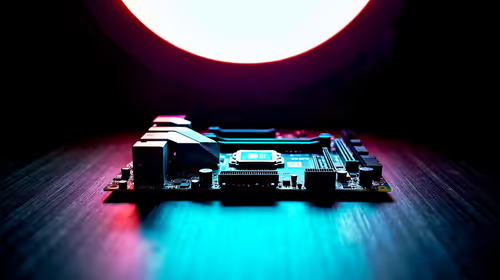
Moving from Intel to AMD means a new AM5 motherboard and DDR5 memory if you are not already on them, since the sockets and sometimes the memory differ. If you are building fresh, that cost is part of any new platform. Reusing a GPU, case, and PSU keeps the switch affordable, so price the board and memory before deciding the move is worthwhile.
FAQ
Do I need new parts to switch to AMD?
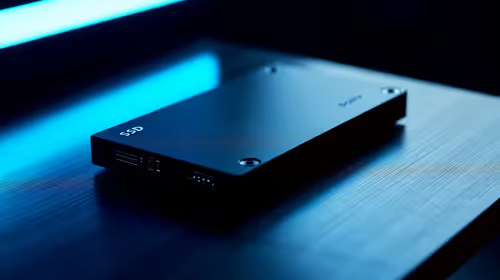
You need an AM5 motherboard and DDR5 memory. Your GPU, case, PSU, and storage usually carry over, so price the board and memory to gauge the switch cost.
Are AMD X3D chips better for gaming?
Their large cache gives them a lead in many games while running efficiently. For a gaming-focused build, they are among the strongest choices available.
Will the AM5 platform last for future upgrades?
AMD has committed to supporting AM5 across several generations, so a board bought now can host future CPU upgrades, extending the platform's useful life.
If you are building fresh, AMD's gaming chips reward the switch. Compare AM5 CPUs and boards at Evetech and price the platform before you commit.