Quick Answer
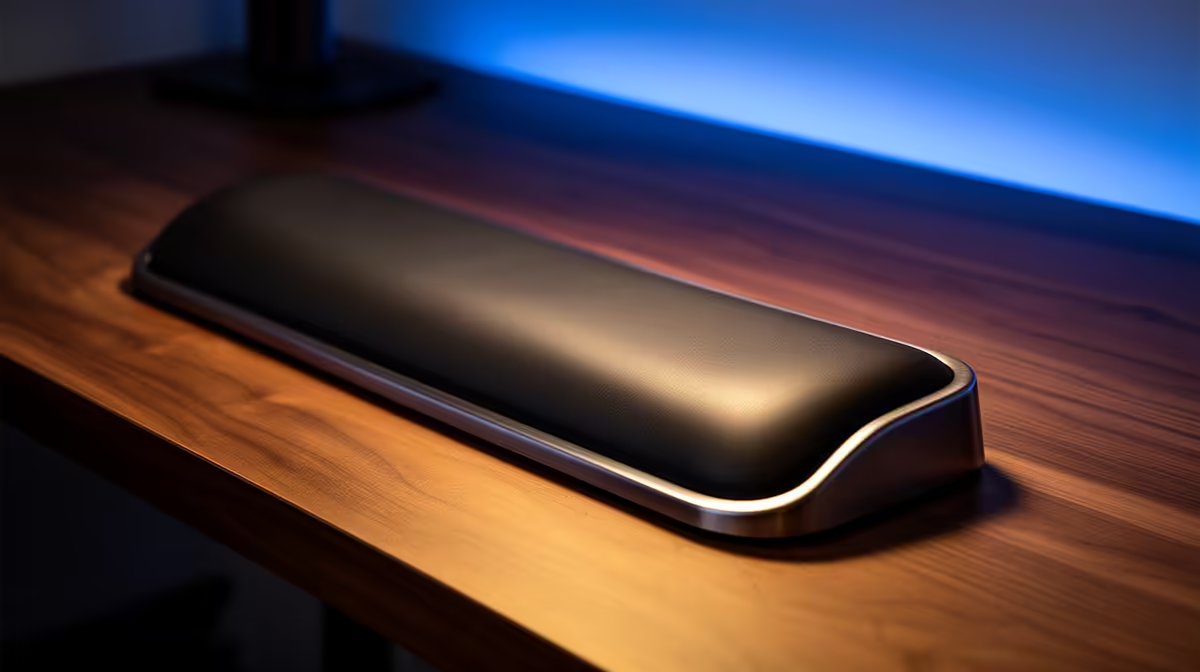
Yes, a wrist rest is a worthwhile R120-R450 upgrade if you type or game for more than two hours at a time, because it keeps your wrist neutral and cuts the strain that causes aches. A memory-foam or gel rest under R300 fixes most desk-height mismatches; skip it only if your keyboard is already low-profile and your forearm sits flat.
Who Actually Benefits
If your keyboard is a tall mechanical board (40mm+ at the back), your wrist bends upward to reach the keys, and over long sessions that angle causes fatigue and tingling. A wrist rest lifts the heel of your hand to match, keeping the wrist neutral. Students writing essays, coders, and anyone in ranked sessions for 3-4 hours gain the most; a casual half-hour player will barely notice.
Foam vs Gel vs Wood
Memory foam (R120-R250) is soft and cheap but compresses over a year. Gel rests (R200-R400) hold shape longer and wipe clean. Wooden or aluminium rests (R350-R600) are firm and durable but offer no give. For all-day study-and-game use, a gel or firm-foam rest around R250 is the sweet spot. Match the rest height to your keyboard's back edge.
Sizing for SA Desks
Measure your keyboard width: a full-size board needs a 440mm rest, a tenkeyless needs about 360mm, and a 60% board pairs with a compact 300mm rest. A rest that is too short leaves part of your hand unsupported. Pair it with a separate mouse wrist rest (R80-R150) if you play long aim-heavy sessions; even a fully kitted comfort upgrade stays under R1,000 against a chair or desk costing R2,500 or more.
FAQ
Is a wrist rest worth it for typing and gaming?
Yes, if your sessions run past two hours and your keyboard sits tall. A R250 gel rest keeps the wrist neutral and cuts fatigue; short casual sessions need it less.
Foam or gel wrist rest, which lasts longer?
Gel rests (R200-R400) hold their shape far longer than memory foam, which compresses within a year. For daily study-and-game use, gel or firm foam is the better buy.
What size wrist rest do I need?
Match it to your keyboard: roughly 440mm for full-size, 360mm for tenkeyless, and 300mm for a 60% board, so your whole hand stays supported.
rest level with your keyboard's back edge so your wrist runs flat; if it still tilts up, lower the keyboard feet rather than buying a taller rest.