


1000W PSU Planning for RTX 5090 Builds in SA
1000W for RTX 5090 needs a full-build check, not a simple yes. Review GPU guidance, CPU draw, transient load, connectors, PSU quality, and upgrade plans before deciding.
Read moreLinux handhelds boot straight into a lightweight game launcher optimised for emulation, while Android handhelds run the full Android OS and install emulators from app stores. The right choice depends on whether you want simplicity or flexibility from your retro device.
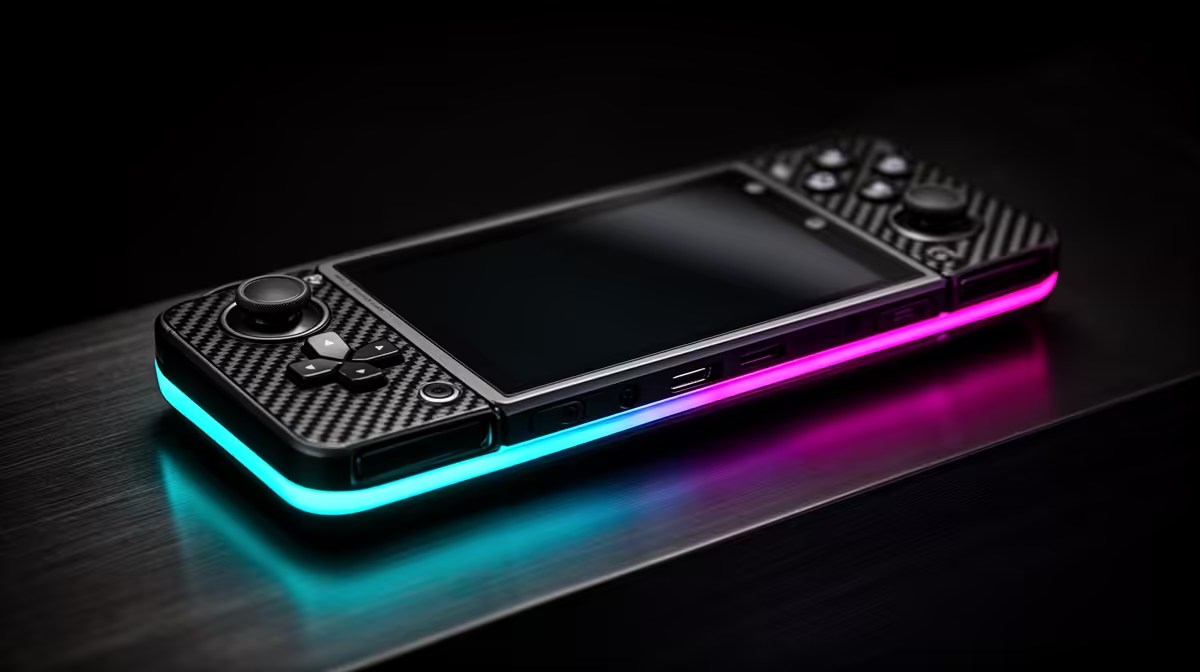
Two handhelds can sit side by side with near-identical chips and feel completely different to live with, and the reason is the operating system. The Linux vs Android handheld choice for emulation comes down to one question: do you want a device that boots straight into games, or one that behaves like a pocket computer you can load anything onto?
A Linux handheld boots into a lean game launcher built purely for emulation, with fast suspend-and-resume and minimal clutter. An Android handheld runs the full Android operating system, so you install emulators from app stores and get far more flexibility, at the cost of more setup. Pick Linux for simplicity, Android for breadth.
Custom Linux builds such as ROCKNIX and Knulli turn the device into a single-purpose emulation machine. They boot a real Linux kernel straight into a front-end like EmulationStation, with emulators preconfigured and the operating system kept out of your way. The standout perk is suspend and resume: put the device down mid-game, pick it up later, and you are exactly where you left off. The trade-off is reach. Some emulators are older than their Android equivalents, and a few are not available on Linux at all, though Port Master compensates by running Linux ports of modern PC games like Stardew Valley and Celeste.
An Android handheld runs the same operating system as your phone, so you install emulators from app stores, sideload others, and run streaming, browser and store apps alongside your games. That flexibility is the draw. The newest, most actively developed emulators often land on Android first, and you are not limited to what a custom firmware bundles. The cost is friction: more configuration per emulator, more menus, and an OS that was not designed solely for gaming. Many enthusiasts dual-boot, keeping Android for breadth and a Linux build for clean, fast retro sessions on the same device. The handheld gaming console range at Evetech covers devices across both camps.
Choose Linux if you want to switch on and play, value instant suspend and resume, and mostly stick to retro consoles up to the mid generations. Choose Android if you want the latest emulators, run PlayStation 2 and later systems, or want game streaming and apps on the same device. There is no universally right answer, only the one that matches how you actually play. To see which models SA gamers are picking, the best-selling PCs and gaming devices at Evetech is a quick reference before you commit.
Linux is better for a clean, switch-on-and-play retro experience with fast suspend and resume. Android is better for flexibility, newer emulators and heavier systems. The right pick depends on whether you value simplicity or breadth.
On many devices, yes. Dual-booting lets you keep Android for its app and emulator range and a Linux build for streamlined retro sessions, switching between them as suits the moment.
Generally yes. Many Linux-based handhelds struggle with PS2, while Android often has more capable, actively developed emulators for heavier systems, making it the stronger choice for later consoles.
Simplicity and speed. It boots straight into a games front-end with emulators ready to go, and its suspend-and-resume lets you stop and continue instantly without losing progress.
The OS shapes the whole experience, so match it to how you play. Browse the gaming handheld range at Evetech and find a device that fits your emulation style: https://www.evetech.co.za/PC-Components/handheld-gaming-consoles-357
Linux is better for a clean, switch-on-and-play retro experience with fast suspend and resume. Android is better for flexibility, newer emulators and heavier systems. The right pick depends on whether you value simplicity or breadth.
On many devices, yes. Dual-booting lets you keep Android for its app and emulator range and a Linux build for streamlined retro sessions, switching between them as suits the moment.
Generally yes. Many Linux-based handhelds struggle with PS2, while Android often has more capable, actively developed emulators for heavier systems, making it the stronger choice for later consoles.
Simplicity and speed. It boots straight into a games front-end with emulators ready to go, and its suspend-and-resume lets you stop and continue instantly without losing progress.
1000W for RTX 5090 needs a full-build check, not a simple yes. Review GPU guidance, CPU draw, transient load, connectors, PSU quality, and upgrade plans before deciding.
Read more
RTX 5080 Super with a 750W PSU is more comfortable than lower wattage if the unit is quality. SA builders should still confirm GPU guidance, CPU draw, connector type, airflow, and upgrade room.
Read more
How to fix FPS drops after a RX 9070 XT starts with driver cleanup, chipset updates, thermals, and power checks. For SA gaming PCs, confirm PCIe seating, monitor refresh, frame caps, and per-game graphics settings before replacing parts.
Read more
How to fix low FPS Windows 11 Wi-Fi 7 issues starts by checking whether the problem is frame rate or network lag. Test ping, drivers, power settings, Ethernet, and game FPS before adjusting visuals.
Read more
AM5 is smart for SA builders because it supports newer Ryzen CPUs, DDR5 memory, and a longer upgrade path. Compare board cost, cooling, gaming needs, and local part availability before choosing your next PC platform.
Read more
AM5 gives Randburg gaming builders a longer upgrade path. For SA buyers, DDR5 support, newer board features, and future CPU options can justify the platform. Weigh board cost, cooler support, BIOS maturity, and upgrade timing before choosing.
Read more
RTX 5090 on a 550W PSU leaves almost no practical room for OC plans. Treat the setup as constrained, with CPU draw, power spikes, cable quality, thermals, and stability checks more important than chasing extra clocks.
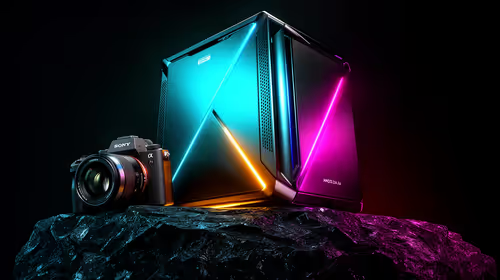
FPS drops on a Ryzen 9 9950X3D build often have a fixable cause. Check settings, drivers, thermals, background tasks, network conditions, and bottlenecks before assuming a part must be replaced.

The difference between PCIe 5.0 and PCIe 4.0 for SA gamers is mostly bandwidth headroom. Compare GPU slot needs, NVMe speed, motherboard support, and upgrade timing before paying extra for a newer platform.

Gaming PC stuck pixel checks in South Africa should confirm the monitor fault first. Use colour tests, screenshot comparison, cable swaps, display menu checks, and clear photos before deciding on support.

AMD's current driver now lists a Radeon RX 9050 4GB, while product coverage details a narrowed memory system. SA buyers should weigh the low VRAM ceiling against current local Radeon options.

Samsung Display has demonstrated a 16-inch 2.5K OLED laptop panel running at 300Hz. SA buyers should wait for a named notebook, full panel specifications and a local price before planning an upgrade.

Microsoft says some Windows 11 game crashes after recent updates are linked to RGB-related drivers. Affected SA gamers should confirm the update and driver before using the published registry workaround.
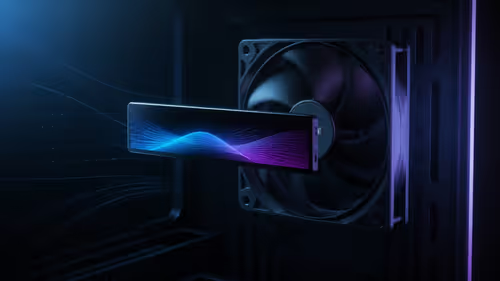
Thermalright's Fan Frame Vision-1 adds a 640x172 status screen to a standard 120mm fan. SA builders should check clearance, USB routing and local support before treating it as an easy upgrade.

Shokz OpenFit Air 2 earbuds weigh 7.2g each and use a redesigned dual-driver open-ear layout. SA buyers should choose them for comfort and awareness, not maximum isolation.

A fake 113GB GTA VI ISO reportedly used empty padding around a small malware payload. SA gamers should delete unofficial builds, keep Windows security active and wait for official channels.
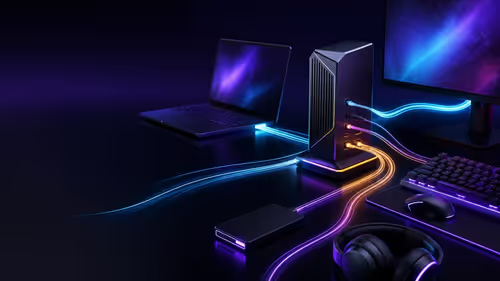
The ROG Flux Charger Dock combines 260W total output, 140W laptop charging and HDMI 2.1. SA buyers should check laptop USB-C limits, display needs and local warranty first.

ASRock's Rock 360 Digital AIO adds a 1.05-inch CPU temperature display, 360mm radiator and simplified wiring. SA builders should check case fit, socket support and local warranty.