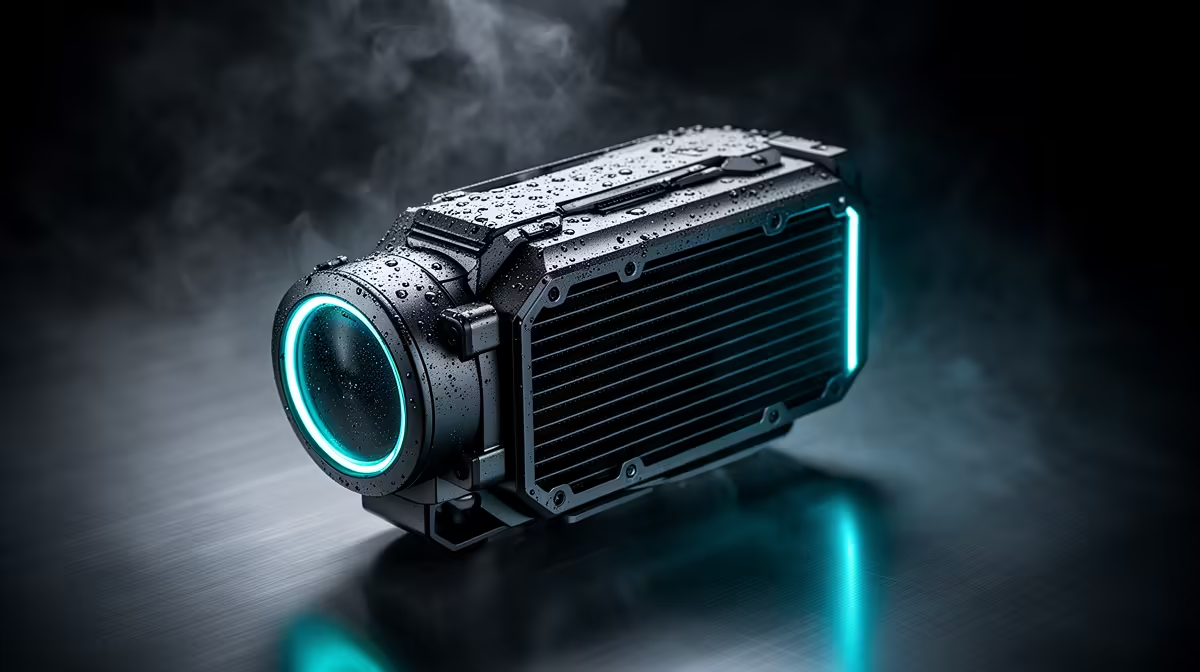
An AIO liquid cooler has wear parts, sealed fluid and flexible tubing, so it will not last forever. Five to seven years can be a planning window for some units, but model quality, duty cycle, radiator position and warranty vary too much for a fixed replacement date.
Quick Answer
Keep a stock CPU temperature and noise baseline when the cooler is healthy. Check it every few months under the same workload. Replace or seek support when temperatures climb after dust and mounting checks, the pump develops grinding noise, speed becomes erratic or any leak appears.
Use the AMD desktop CPU range or Intel processor listings to confirm the cooling load of an upgrade. Match the replacement cooler to the exact processor, socket, case clearance and sustained power.
What Ages Inside an AIO
Pump bearings and the impeller run whenever the cooler is powered. Fluid can pass through tubing at a slow rate over years, leaving more air in the loop. Deposits or material interaction can reduce flow. Fans have their own bearings and may fail before the pump.
A small air pocket is expected in a sealed loop. Position matters because the pump should not become the place where air collects. Follow the cooler maker's orientation guidance for the pump and radiator.
Track Change, Not One Number
Log room temperature, CPU package power, pump speed, fan speed and hottest-core temperature during a ten-minute render. Repeat with the same fan profile. A rise of several degrees can come from a warmer room, dust or new CPU power settings, so compare the whole record.
Clean radiator fins and filters before blaming internal wear. Check mounting pressure and paste when the cooler has been moved. A pump reading of zero, repeated surging or a new mechanical rattle deserves prompt attention.
Act Fast Around Leaks
If you see moisture, residue or swelling around a fitting, shut the PC down and isolate mains power. Do not run another test to confirm it. Photograph the condition and follow the seller or manufacturer support route.
Keep the invoice, serial number and warranty terms. Warranty length can be useful context for the maker's intended support period, but it is not a promise that failure will occur on a schedule.
Plan the Fallback
If the PC earns money or cannot be offline, keep a compatible air cooler or replacement plan ready before the AIO ages into a concern. Check socket hardware and case height in advance. A pump can fail with less warning than a fan, so a known fallback cuts downtime without forcing an early replacement.
FAQ
Must I replace every AIO after five years?
No. Use model guidance, condition, performance history and warranty rather than one universal age.
Does a higher CPU temperature prove pump wear?
No. Dust, paste, mounting, room temperature and changed power settings can cause the same symptom.
Can I refill a sealed AIO?
Only if the maker designed and documents that process. Opening an ordinary sealed loop can create leak and support risks.
Record a healthy AIO baseline, repeat the same load as the cooler ages and replace it when verified heat, noise, speed or leak evidence points to failure.