


1000W PSU Planning for RTX 5090 Builds in SA
1000W for RTX 5090 needs a full-build check, not a simple yes. Review GPU guidance, CPU draw, transient load, connectors, PSU quality, and upgrade plans before deciding.
Read moreChoose magnetic or adhesive fitting according to the laptop and how often the filter needs to move. For this R299 option, compare its anti-spy, anti-glare and 15.6-inch 16:9 strengths after checking the fitting method.
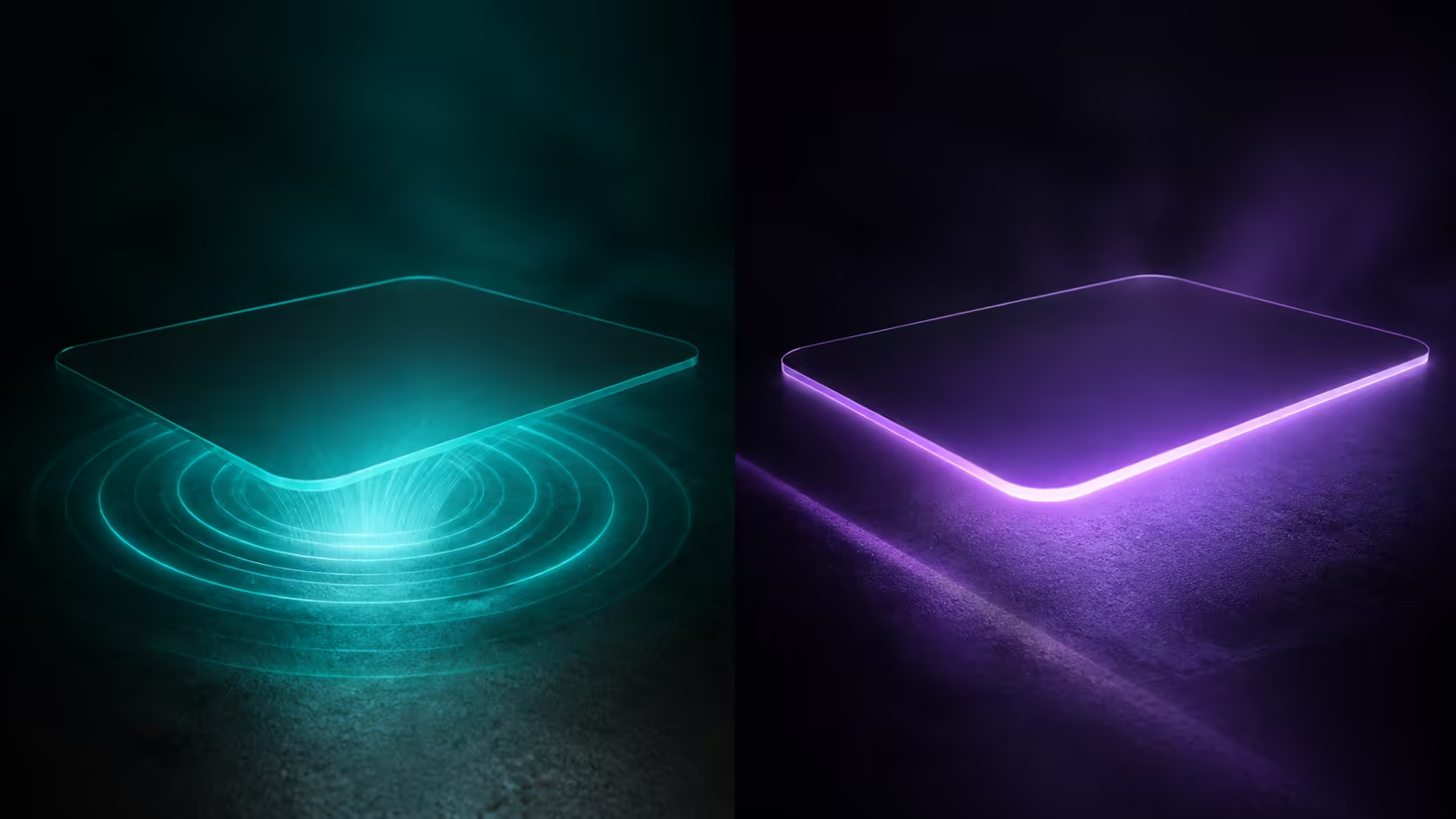
Magnetic and adhesive privacy screens describe how an accessory stays with the display, not how well it fits or limits a side view. The best privacy screen installation method depends on the laptop's design and whether the user wants frequent removal or a more fixed arrangement.
Choose magnetic fitting for easy removal when the laptop supports it, and consider adhesive placement when a steadier, less frequently moved layer suits the routine. At a R299 reference point, the 15.6-inch Laptop Privacy Screen Protector Filter is anti-spy and anti-glare for a 16:9 display. Check its own fitting guidance before deciding which installation family it belongs to.
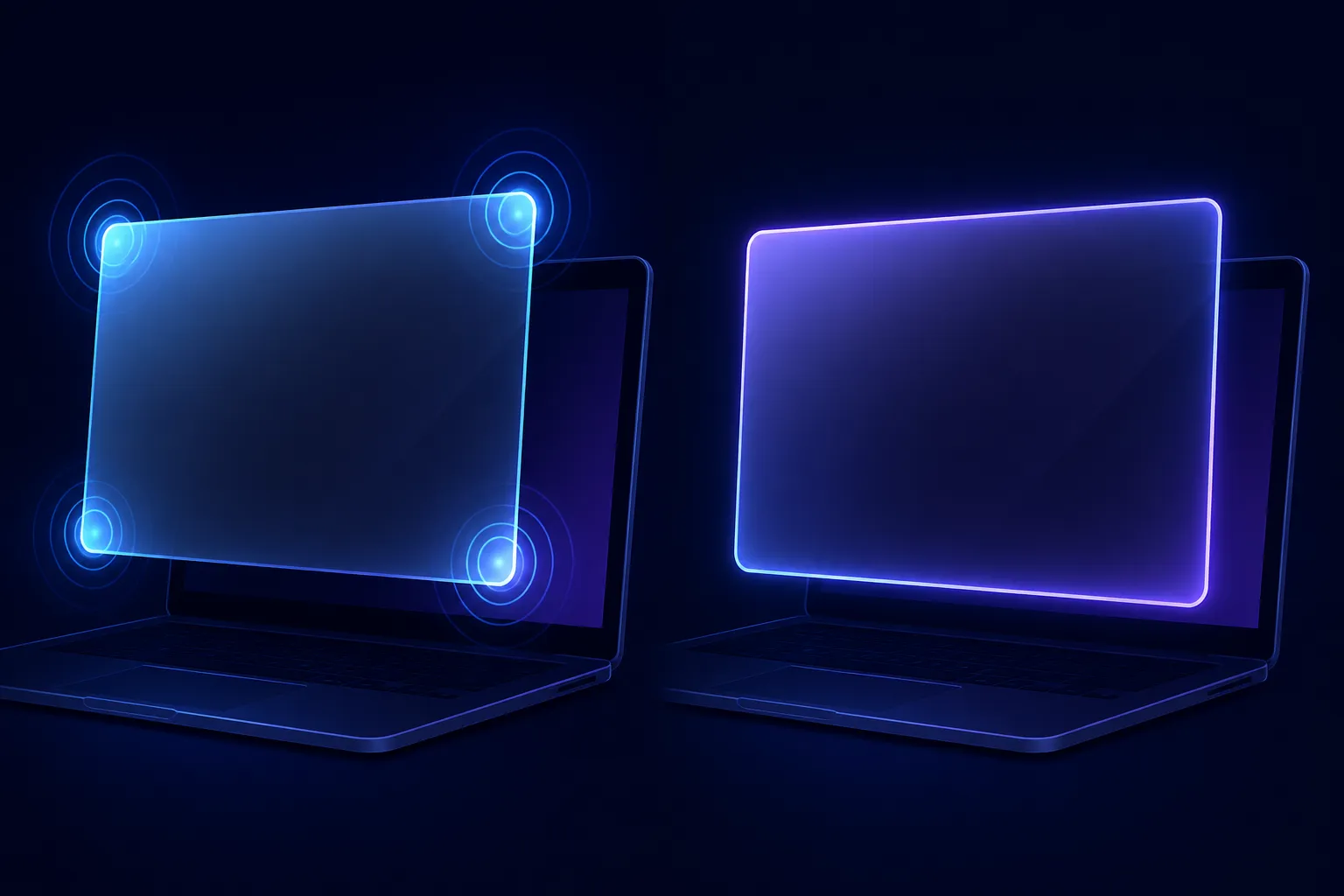
A magnetic design is attractive when the filter needs to come off for colour-sensitive work, private-room use or cleaning. Its convenience depends on a laptop and accessory designed to meet correctly. A magnetic label should never override screen size, aspect ratio or the physical layout around the panel.
Think about the daily sequence. If the laptop moves from a shared office to a controlled home desk, fast removal may be useful. If the layer would remain in place for weeks, that advantage carries less weight. Check whether opening, closing and carrying the machine remains practical under the exact product instructions.
Evetech's gaming accessories category provides context for the rest of a mobile setup. Compare how often each accessory needs to be attached, removed or packed rather than judging installation names in isolation.
An adhesive fitting can suit a user who wants the privacy layer to stay aligned through a regular routine. Different products may use different adhesive arrangements, so inspect where contact occurs and follow the included placement steps. Do not transfer a technique from a phone protector or another laptop filter.
Preparation matters. Work on a clean, stable surface, keep dust away from the display and align the top edge before committing to the full placement. If the instructions allow adjustment, make small changes instead of repeatedly pulling at one corner.
The R299 example targets a 15.6-inch screen with a 16:9 shape. Confirm both specifications before comparing magnets, tabs or adhesive contact. An elegant installation method cannot correct a filter cut for another panel proportion.
Inspect the active display outline rather than measuring the outer laptop lid. Then consider webcams, bezels and the normal closing path without assuming that one fitting method suits every chassis. This is a device-specific physical check, not a verdict that magnetic or adhesive is universally better.
Buyers reviewing display extras can use the Evetech monitor accessory category to organise the search. Keep fitting method as one column beside supported format, privacy purpose and anti-glare treatment.
Write down when the filter would come off. Reasons might include image editing, a private presentation, cleaning or a change of workplace. If that list is long, removability deserves more attention. If the layer is intended to remain in place, alignment stability may dominate.
After fitting, test the centre view and nearby side positions with a harmless page. Then examine reflections near the strongest room light. Anti-spy and anti-glare performance still need evaluation regardless of the attachment approach.
The product's R299 price covers the privacy and glare functions for the matching format; it does not decide whether magnetic or adhesive handling fits the owner. Let the laptop design, instructions and removal pattern settle that question.
This filter attaches and detaches easily as the working situation changes. Magnetic and adhesive systems remain two general methods, but neither construction applies automatically to this model. Its thin build confirms that portability and frequent changes of environment are central to the design. Choose between named mechanisms only after the exact candidate identifies how it fastens.
Easy removal is the concrete benefit; the fastening technology remains a separate buying distinction.
Removal frequency should influence that final mechanism choice.
It is useful when regular removal matters and the laptop supports the magnetic design. Convenience should be confirmed with the exact accessory and device.
A more persistent arrangement can suit someone who plans to keep the filter aligned through everyday work rather than removing it often.
No. The 15.6-inch 16:9 format addresses compatibility, while the laptop design and product instructions govern the fitting approach.
Privacy from side positions, central-view usability and reflection control remain useful tests whether a filter attaches magnetically or with adhesive.
Ready to choose a fitting style around real use? Check your laptop design and removal routine, then compare compatible screen accessories across Evetech's categories.
It is useful when regular removal matters and the laptop supports the magnetic design. Convenience should be confirmed with the exact accessory and device.
A more persistent arrangement can suit someone who plans to keep the filter aligned through everyday work rather than removing it often.
No. The 15.6-inch 16:9 format addresses compatibility, while the laptop design and product instructions govern the fitting approach.
Privacy from side positions, central-view usability and reflection control remain useful tests whether a filter attaches magnetically or with adhesive.
1000W for RTX 5090 needs a full-build check, not a simple yes. Review GPU guidance, CPU draw, transient load, connectors, PSU quality, and upgrade plans before deciding.
Read more
RTX 5080 Super with a 750W PSU is more comfortable than lower wattage if the unit is quality. SA builders should still confirm GPU guidance, CPU draw, connector type, airflow, and upgrade room.
Read more
How to fix FPS drops after a RX 9070 XT starts with driver cleanup, chipset updates, thermals, and power checks. For SA gaming PCs, confirm PCIe seating, monitor refresh, frame caps, and per-game graphics settings before replacing parts.
Read more
How to fix low FPS Windows 11 Wi-Fi 7 issues starts by checking whether the problem is frame rate or network lag. Test ping, drivers, power settings, Ethernet, and game FPS before adjusting visuals.
Read more
AM5 is smart for SA builders because it supports newer Ryzen CPUs, DDR5 memory, and a longer upgrade path. Compare board cost, cooling, gaming needs, and local part availability before choosing your next PC platform.
Read more
AM5 gives Randburg gaming builders a longer upgrade path. For SA buyers, DDR5 support, newer board features, and future CPU options can justify the platform. Weigh board cost, cooler support, BIOS maturity, and upgrade timing before choosing.
Read more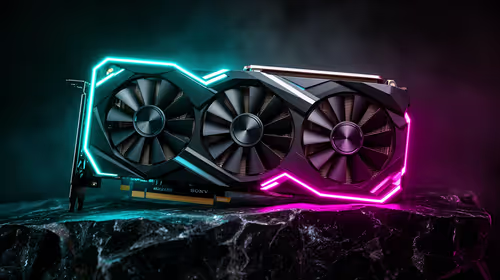
RTX 5090 on a 550W PSU leaves almost no practical room for OC plans. Treat the setup as constrained, with CPU draw, power spikes, cable quality, thermals, and stability checks more important than chasing extra clocks.
FPS drops on a Ryzen 9 9950X3D build often have a fixable cause. Check settings, drivers, thermals, background tasks, network conditions, and bottlenecks before assuming a part must be replaced.

The difference between PCIe 5.0 and PCIe 4.0 for SA gamers is mostly bandwidth headroom. Compare GPU slot needs, NVMe speed, motherboard support, and upgrade timing before paying extra for a newer platform.

Gaming PC stuck pixel checks in South Africa should confirm the monitor fault first. Use colour tests, screenshot comparison, cable swaps, display menu checks, and clear photos before deciding on support.

AMD's current driver now lists a Radeon RX 9050 4GB, while product coverage details a narrowed memory system. SA buyers should weigh the low VRAM ceiling against current local Radeon options.

Samsung Display has demonstrated a 16-inch 2.5K OLED laptop panel running at 300Hz. SA buyers should wait for a named notebook, full panel specifications and a local price before planning an upgrade.

Microsoft says some Windows 11 game crashes after recent updates are linked to RGB-related drivers. Affected SA gamers should confirm the update and driver before using the published registry workaround.
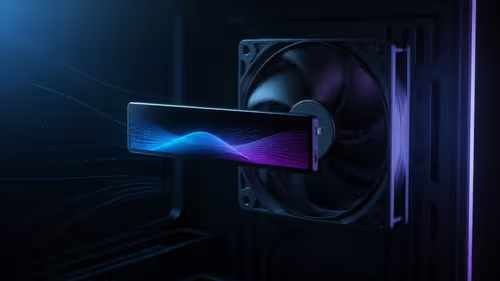
Thermalright's Fan Frame Vision-1 adds a 640x172 status screen to a standard 120mm fan. SA builders should check clearance, USB routing and local support before treating it as an easy upgrade.

Shokz OpenFit Air 2 earbuds weigh 7.2g each and use a redesigned dual-driver open-ear layout. SA buyers should choose them for comfort and awareness, not maximum isolation.

A fake 113GB GTA VI ISO reportedly used empty padding around a small malware payload. SA gamers should delete unofficial builds, keep Windows security active and wait for official channels.

The ROG Flux Charger Dock combines 260W total output, 140W laptop charging and HDMI 2.1. SA buyers should check laptop USB-C limits, display needs and local warranty first.

ASRock's Rock 360 Digital AIO adds a 1.05-inch CPU temperature display, 360mm radiator and simplified wiring. SA builders should check case fit, socket support and local warranty.