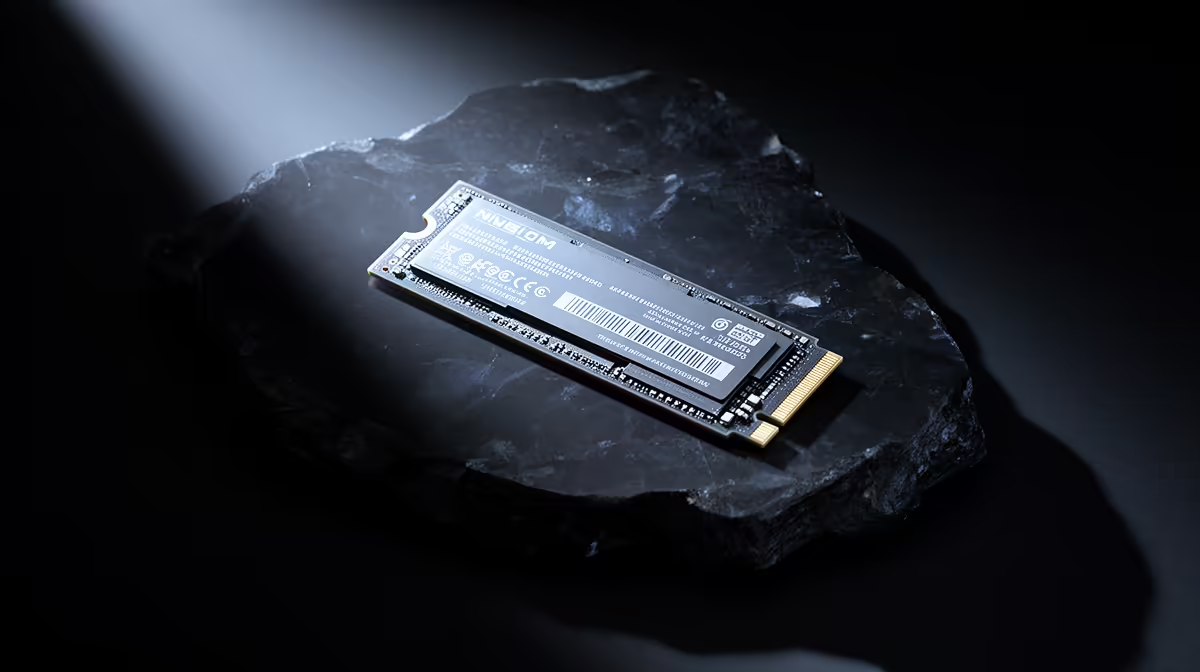
The 2026 NAND price jump matters because NAND is the storage inside SSDs, phones and data-centre systems. The pressure did not stop at accelerator memory. Expanding context stores and server storage also pulled more flash into infrastructure while industry supply stayed tight.
Quick Answer
NAND prices rose as data-centre storage demand strengthened against constrained supply and manufacturers prioritised higher-value products. Micron said AI was expanding the addressable market for SSDs while memory allocation remained very tight. Evetech's SSD category had a R4,599 median in July 2026, although buyers must compare exact interfaces and capacities.
🗄️ AI needs somewhere to keep context
Large models read and write vast datasets, checkpoints and context. That creates demand beyond the accelerator rack, including server SSDs designed for throughput, endurance and scale.
Consumer SSDs are different products, but NAND fabrication and investment decisions connect the markets. Strong enterprise demand can reduce the industry's incentive to flood consumers with cheap flash.
AI infrastructure also changes the type of storage being purchased. Enterprise drives prioritise endurance, sustained performance, power management and fleet reliability. Those products are not substitutes for a home NVMe drive, yet their demand can steer manufacturer capacity and product planning.
The result should be described as pressure, not a one-step cause. Controllers, drive assembly, channel inventory and the Rand still separate a NAND contract movement from the price on a South African product page.
🧾 Contract prices reach retail unevenly
Drive makers buy NAND, assemble products and sell through inventory held at several stages. A contract-price change can reach South African retail later, and different brands may move at different times.
That delay explains why two drives of the same capacity can follow different price paths. They may use different NAND, have arrived in different shipments or sit at different points in their product cycle. Compare the exact model rather than assuming all 1TB SSDs moved together.
Evetech's solid-state drive range includes portable, SATA and NVMe products. A single category average cannot replace a like-for-like drive comparison.
📦 Capacity decisions matter more now
A nearly full drive creates daily friction, but unused terabytes tie money up during an expensive cycle. Estimate the next year of games, projects and recordings, then leave sensible free space.
Interface comes before capacity. A SATA-only system cannot use an NVMe drive in the intended way, while an M.2 slot may support SATA, NVMe or both. Check the motherboard or laptop manual so the storage purchase solves space rather than creating a return.
Evetech's SSD best sellers help establish local choices. Record the exact model, interface and price when tracking the market.
Keep enough free space for updates and sustained everyday use after the migration.
Frequently Asked Questions
What caused NAND prices to jump?
Strong data-centre and AI storage demand met tight industry supply and a product mix focused on higher-value markets.
Is this the same as the RAM crisis?
NAND and DRAM are separate technologies, but AI demand and constrained manufacturing affect both.
Do small SSDs avoid the pressure?
No. Capacity, controller and NAND type change the amount, but smaller drives use the same underlying flash market.
Will prices keep rising?
No reliable source can guarantee the direction. Buy against a dated local need rather than a forecast.
Need storage without making a commodity bet?
Compare exact SSD models at Evetech by capacity, interface and endurance, then buy the drive that solves a measured space problem.