Two tiny PCs can sit side by side on a desk and behave completely differently inside. A NUC versus SFF decision is really a choice between a sealed, low-power book-sized unit running mobile chips, and a compact desktop that still takes standard parts and a real graphics card. The shapes look similar; the trade-offs are not.
Quick Answer
A NUC-class mini PC is a sealed, book-sized unit built on low-power mobile chips, prized for silence and tiny footprint but with little upgrade room. An SFF (small form factor) PC is a shrunken desktop that accepts standard components and an add-in GPU, trading some compactness for real upgradability and gaming performance.
What a NUC actually is
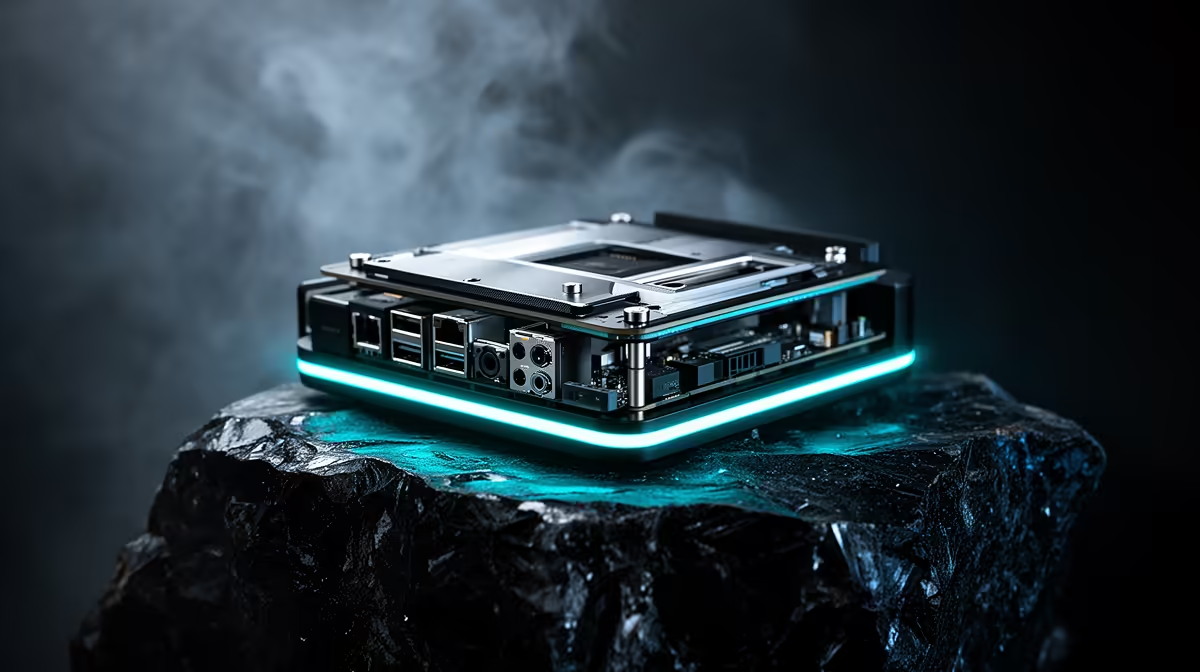
NUC originally referred to Intel's Next Unit of Computing, and the name has come to describe the whole class of palm-to-book-sized mini PCs. These use laptop-grade, low-power processors with integrated graphics, soldered or limited components, and a sealed chassis. The payoff is a machine that is nearly silent, sips power, and disappears behind a monitor or under a TV.
The limitation is the flip side: you generally cannot add a discrete graphics card, and upgrades are often confined to swapping the RAM and storage if the model even allows it. A NUC is a finished appliance more than a platform.
What an SFF PC actually is
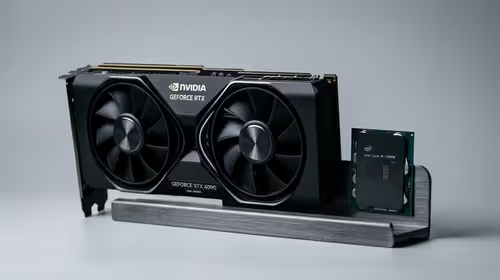
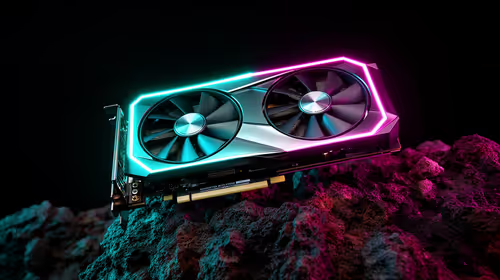
A small form factor PC is a desktop that has been condensed into a compact case, often a few litres in volume, while still using standard desktop building blocks. Many SFF builds take a full desktop processor, standard memory, and crucially an add-in graphics card, though usually a shorter or smaller one to fit the case.
That means an SFF machine can deliver genuine gaming or content-creation performance from a box that still fits on a desk, and you can upgrade the GPU, storage, and often the CPU down the line. The cost is a slightly larger footprint than a NUC and, usually, a bit more fan noise under load. For a sense of what fits this brief locally, the mini PC range at Evetech covers the compact end of the spectrum.
Picking between them
The right choice comes down to what the machine is for.
Choose a NUC if you want a silent, power-sipping unit for browsing, office work, media, light development, or a home theatre PC, and you do not need a discrete GPU. Its size and quiet running are the whole appeal.
Choose an SFF if you want desktop-class performance, the ability to run a real graphics card for gaming or creative work, and the option to upgrade later, all while keeping a small footprint. It is the better long-term platform if your needs might grow.
Power and noise also differ in practice. A NUC runs cool and quiet because there is little heat to move. An SFF works its cooling harder under load, so it draws more power and can be audible during gaming, though good cases manage this well. To see which compact builds people are actually buying, the PC best sellers list is a quick gauge.
Frequently Asked Questions
What is the main difference between a NUC and an SFF PC?
A NUC uses sealed low-power mobile chips and rarely accepts a discrete GPU, while an SFF PC uses standard desktop parts and can take an add-in graphics card. NUCs favour silence and size; SFF favours performance and upgradability.
Can a NUC play modern games?
Only lighter titles, since most NUCs rely on integrated graphics. For serious gaming you want an SFF PC that can house a discrete graphics card, or a full desktop.
Is an SFF PC upgradable?
Generally yes, far more than a NUC. SFF builds use standard components, so you can usually upgrade the GPU, storage, and often the CPU, within the size and power limits of the case.
Which is quieter, a NUC or an SFF?
A NUC, almost always. Its low-power chips generate little heat, so the cooling stays quiet, whereas an SFF works its fans harder under load and can be audible during demanding tasks.