Quick Answer
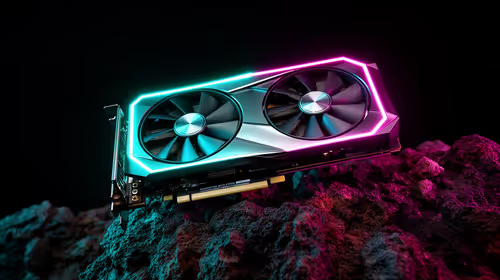
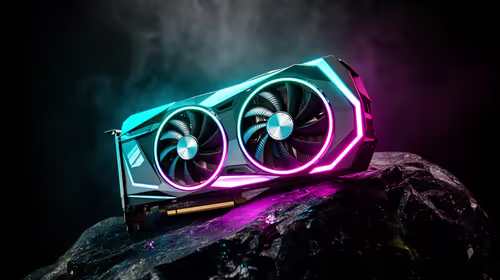
RTX 50 GPUs are the right shortlist when you want the newest NVIDIA features, stronger ray tracing, and more headroom for 1440p, 4K, or AI workloads. Match RTX 5060, 5070, 5080, and 5090 tiers to the monitor before paying for unused performance.
Buyer Summary
Use RTX 5060 class cards for 1080p, RTX 5070 for 1440p, RTX 5080 for high-refresh 1440p or entry 4K, and RTX 5090 only for premium 4K, creator, or local AI use. Higher tiers may need 850W-1000W PSUs and native 12V-2x6 cabling. In SA, add the cost of the supporting platform: motherboard, PSU, case airflow, monitor, and warranty route can change the final value more than a small spec difference.
What To Compare First
Start with the workload, then match the spec. Gaming buyers should check resolution, refresh rate, and expected FPS; creator buyers should check RAM, VRAM, storage speed, and export or render behaviour. A buyer using a 1080p 75Hz monitor does not need the same part as someone using 1440p 165Hz or a 4K TV.
SA Value Signals
Use broad category bands instead of chasing a single live price: entry parts often sit in the lower thousands, midrange parts in the stronger value band, and premium parts move sharply once extra VRAM, RGB, or flagship cooling appears. Check whether the product has the connector, warranty term, and case clearance needed for your build before comparing looks.
FAQ
What is the safest NVIDIA RTX 50 GPUs choice for most SA buyers?
The safest choice is the part that matches the monitor or workload without forcing a PSU, case, or motherboard replacement. For most buyers, the middle tier gives better long-term value than the cheapest or most expensive option.
Should I wait for a newer model?
Wait only if the current option fails your performance target or costs too close to a clearly stronger tier. If the part meets your FPS, capacity, or workload target today, the better decision is usually to buy the right tier cleanly.
What spec should I check before checkout?
Check capacity or VRAM, power connector, physical clearance, warranty term, and whether your motherboard or monitor can use the advertised feature. Those checks prevent most expensive mismatches.
Pro Tip
Before checkout, write your monitor resolution, refresh rate, PSU wattage, and case clearance on one line, then reject any option that does not fit that line.