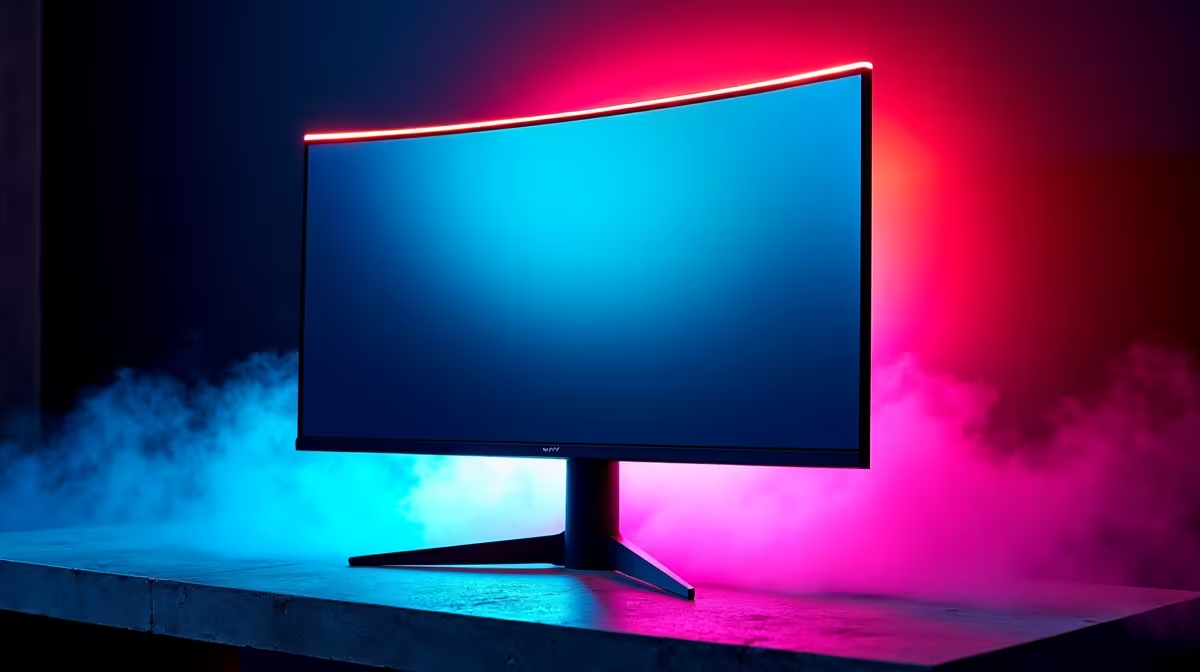
An OLED panel changes how everything on screen looks, from inky night scenes to crisp motion.
Quick Answer
For a quiet desk setup, an OLED's perfect blacks and instant pixel response are the real draw - not the biggest refresh number. A 1440p OLED in the R12,500 to R22,000 range at Evetech hits the value sweet spot; very high refresh only earns its price for fast competitive play.
When refresh rate is worth paying for on a quiet desk setup
OLED panels already switch pixels almost instantly, so motion looks clean even at 120Hz. Jumping from 120Hz to 240Hz or 360Hz sharpens fast competitive shooters but is wasted on slower, story-driven or productivity work. For a quiet desk setup, decide honestly whether you play twitch titles competitively; if not, spend the saved rands on size or resolution instead of chasing the highest Hz on the box.
Resolution, size and panel care
1440p at 27 inches is the crisp, efficient default; 4K at 32 inches looks gorgeous but demands a stronger GPU to drive it. OLED's contrast makes HDR content genuinely pop. To protect the panel, enable pixel-shift and screen-refresh features and avoid hours of static elements, since burn-in is the one real long-term OLED concern.
Spending wisely on OLED for a quiet desk setup
Confirm your GPU can actually feed the resolution and refresh you choose - a 240Hz panel fed 70 fps wastes its headroom. Check the panel's brightness for your room, the ports (DisplayPort or HDMI version) for your hardware, and the warranty's burn-in coverage. A well-matched 1440p OLED delivers more visible quality for a quiet desk setup than an over-specced screen your system cannot drive.
FAQ
Is a 240Hz OLED worth it for a quiet desk setup?
Only if you play fast competitive titles. OLED already looks smooth at 120Hz, so for a quiet desk setup the money is often better spent on resolution or size than on the highest refresh rate.
Should I worry about OLED burn-in?
It is a manageable risk, not a dealbreaker. Use the panel's pixel-refresh tools, vary content, and avoid hours of static HUDs. Mixed daily use rarely causes visible burn-in for years.
Will my GPU drive an OLED at high refresh?
Check your frame rates first. A 240Hz panel needs the GPU to push those frames; otherwise you pay for headroom you never use. Match the panel's resolution and refresh to real performance.
Match the OLED's resolution and refresh to what your GPU truly delivers, enable pixel-refresh care features, and compare 1440p OLED panels at Evetech for a quiet desk setup.