Simple editing is often more useful than a feature-heavy suite when the job is a school recap, community clip or short product demonstration. OpenShot video editing software gives beginners a timeline for cutting local footage, arranging sound and exporting a finished video without requiring every decision to happen in a browser.
Quick Answer
OpenShot is a free, open-source editor aimed at straightforward projects: trim clips, add titles, arrange audio, apply basic transitions and export common formats. It is sensible for a first timeline, provided the editor works from copies of the source files and allows time for slower, highly compressed footage to process. Download the current installer from the official OpenShot project and check that it supports your operating system before installing.
📶 Build a project that stays manageable
Create a project folder before dragging media onto the timeline. Put footage, music, stills and exports in clear subfolders, then use copies rather than the only phone recording from an event. That small habit makes relinking easier if a file moves and prevents a rushed edit from becoming the only place an important clip exists.
For South African creators, local editing can be particularly practical when upstream fibre is busy or LTE data is capped. Once the program and media are on the computer, trimming a class presentation or family video does not need a continuous upload. Save the project regularly, though: offline work protects data use, not against a power interruption or an accidental overwrite.
✅ Learn the timeline before effects
Start by placing the main story in order, then cut the dead space and duplicate takes. Add B-roll, titles and transitions only after the basic sequence communicates clearly. A simple cut on a useful beat normally feels more confident than a page of effects trying to disguise footage that has no structure.
Keep an eye on audio while editing. Dialogue should be understandable before music is added, and abrupt changes between clips can be softened with short fades. Headphones reveal problems that laptop speakers often hide, particularly room noise, traffic and clipping on a phone recording.
🧩 Deal with stuttering honestly
Timeline playback can stutter even when the finished export will be acceptable. Large frame sizes, long-GOP phone codecs, layered effects and slow storage all add work. Make lower-resolution proxy copies for editing if necessary, then reconnect the original files before the final export.
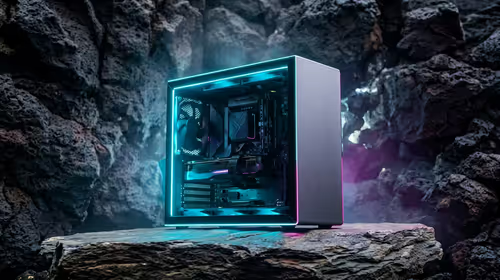
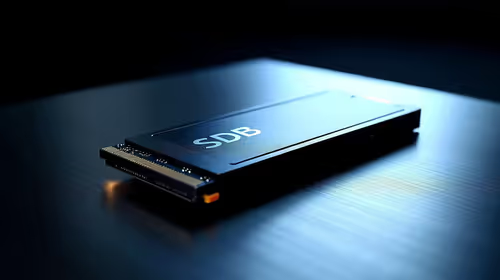
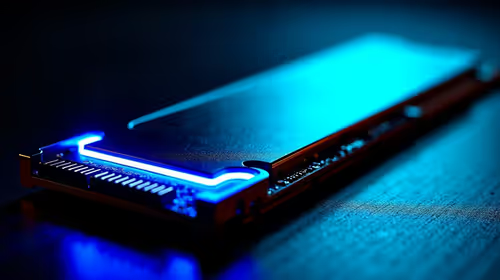
Storage speed matters because the editor has to read footage, write cache files and create the result at once. An internal SSD can make a media folder easier to work with, but it will not solve every decoding or software limitation. If several video jobs, graphics and browsers are open together, a workstation PC may offer more useful headroom than expecting one component to fix the whole workflow.
🔌 Export for the destination
Match resolution and frame rate to the footage unless there is a deliberate reason to change them. A 25 fps source need not be forced into 60 fps, and a small social upload does not always benefit from an enormous bitrate. Export a short test first when a platform has strict limits, then watch it on the kind of screen the audience will use.
Retain a high-quality master as well as the delivery copy. That gives you something sensible to return to when a teacher, client or family member asks for a vertical version, subtitles or a shorter cut.
Frequently Asked Questions
What is OpenShot used for?
It handles common timeline tasks such as cutting clips, arranging audio, adding titles, transitions and exporting a finished video. It is most comfortable when the project has a clear, simple structure.
Is OpenShot free to use?
OpenShot is open-source software. Use the official project for the installer and review its current support information rather than relying on an old download mirror.
Can OpenShot edit video without internet access?
Yes, once the software and source files are on the computer, local editing can happen offline. That is helpful when a connection is needed for other people in the household or when mobile data must be conserved.
Why does an OpenShot timeline stutter?
Compressed video, high resolution, effects, limited memory and slow storage can all make preview playback difficult. Proxy media can reduce the burden while preserving the original footage for export.
What export settings should I choose?
Choose settings that match the delivery platform and the source material: resolution, frame rate, codec and bitrate all matter. A short test export is safer than discovering a mismatch after a long render.
Ready to give your next edit a calmer workspace?
Explore Evetech hardware categories when local video projects start asking more of your computer.