


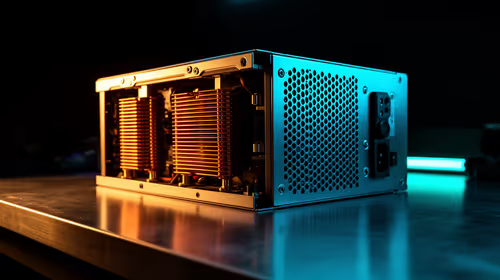
1000W PSU Planning for RTX 5090 Builds in SA
1000W for RTX 5090 needs a full-build check, not a simple yes. Review GPU guidance, CPU draw, transient load, connectors, PSU quality, and upgrade plans before deciding.
Read moreCase clearance is the first check before this build decision - radiator thickness, fan stack height and motherboard VRM heatsink all eat into top-mount and front-mount space. SA pricing, warranty cover and current stock are factored in.
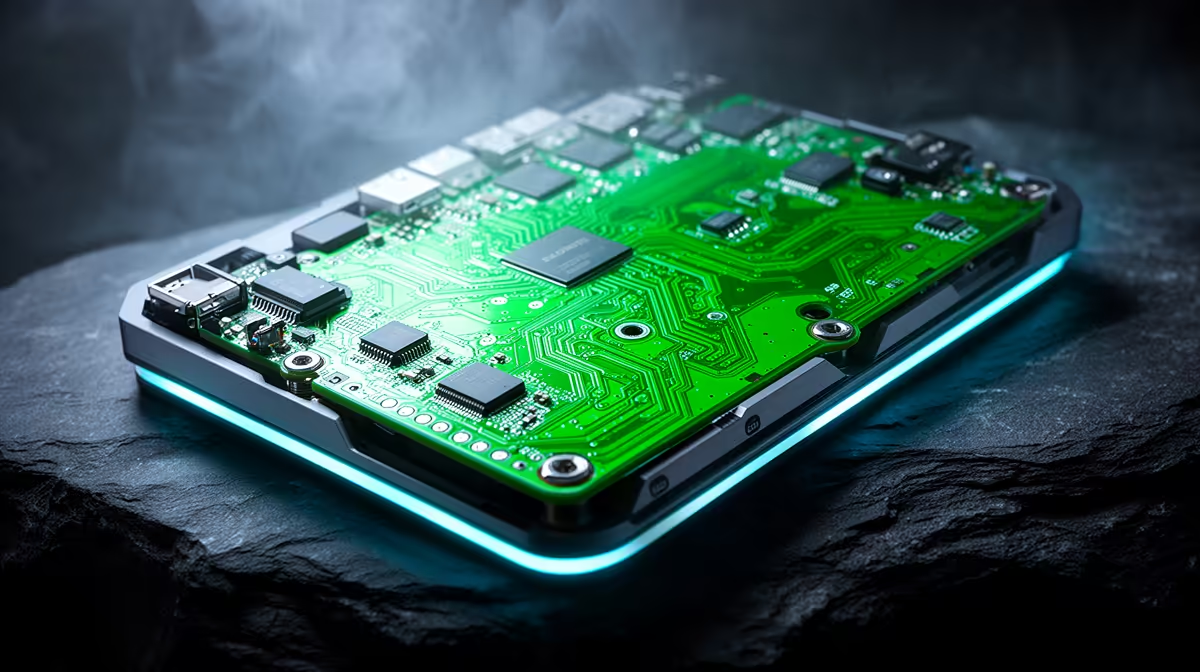
PCB coating in a power supply is a thin conformal layer applied over the circuit board to protect solder joints and components from dust, moisture and conductive contamination. PSUs with full conformal coating last longer in humid or dusty environments and are far less likely to develop corrosion-related faults.
A bare PCB inside a power supply is exposed to whatever air flows through the unit. Dust particles accumulate across solder joints and between component leads, and in humid conditions moisture condenses on those particles, creating conductive bridges that cause short circuits or current leakage. Conformal coating, typically an acrylic or silicone compound sprayed or dip-coated onto the assembled board, creates a moisture-resistant barrier that prevents this bridging effect. It also reduces the risk of static discharge arcing between closely spaced components, relevant in high-voltage primary-side circuitry. Some manufacturers describe this as military-grade or IP protection, referencing the same approach used in industrial and defence electronics.
South Africa's coastal cities, including Cape Town and Durban, experience significant humidity for extended parts of the year. Durban in particular routinely sees relative humidity above 80% during summer months. A PSU without conformal coating in a Durban home can accumulate moisture-laden dust on its PCB within a year of use, particularly if the PC sits near an open window or air conditioning vent. Inland cities like Johannesburg are drier but have intense dust during the dry winter months. Coating provides protection against both scenarios. For a build where the PSU is expected to run for five or more years, coating is not a marketing gimmick but a genuine reliability differentiator.
Manufacturers do not always use identical terminology. Look for phrases like conformal coated PCB, military-grade circuit protection, full board coating, or humidity-resistant PCB treatment in the product description. Some brands, including ASUS ROG, Seasonic and Corsair's high-end lines, explicitly list conformal coating in their feature bullets. If the spec sheet is silent on this topic, the unit most likely does not have it, as brands that invest in the process always advertise it. Budget units under R1,500 rarely include any coating. Units in the R2,500 to R5,000 range from reputable brands are far more likely to carry the feature.
If you live in Durban or another coastal SA city and your PC sits in a room without consistent air conditioning, choose a PSU with explicit conformal coating and pair it with silica gel desiccant packets inside the case. Replace those packets every six months to maintain effective moisture absorption around sensitive components.
No coating is fully waterproof. Conformal coating significantly reduces moisture penetration but will not protect a unit that is directly exposed to water ingress. It is designed for environmental humidity and condensation, not liquid spills.
Technically yes, spray-on acrylic conformal coat is sold in DIY electronics stores. However, applying it correctly requires masking connectors and heat-sensitive components, and incorrect application can cause failures. It is not recommended unless you have electronics rework experience.
No. Potting fills the entire component with resin, making it non-serviceable. Conformal coating is a thin surface layer that can be removed with solvent for repairs. PSUs use conformal coating, not potting.
Building for the long term in SA's variable climate? Evetech stocks power supplies from brands that invest in PCB protection features, giving your components durable, reliable power for years.
1000W for RTX 5090 needs a full-build check, not a simple yes. Review GPU guidance, CPU draw, transient load, connectors, PSU quality, and upgrade plans before deciding.
Read more
RTX 5080 Super with a 750W PSU is more comfortable than lower wattage if the unit is quality. SA builders should still confirm GPU guidance, CPU draw, connector type, airflow, and upgrade room.
Read more
How to fix FPS drops after a RX 9070 XT starts with driver cleanup, chipset updates, thermals, and power checks. For SA gaming PCs, confirm PCIe seating, monitor refresh, frame caps, and per-game graphics settings before replacing parts.
Read more
How to fix low FPS Windows 11 Wi-Fi 7 issues starts by checking whether the problem is frame rate or network lag. Test ping, drivers, power settings, Ethernet, and game FPS before adjusting visuals.
Read more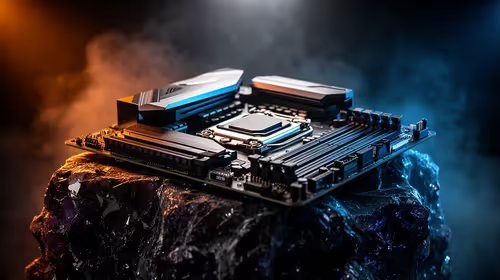
AM5 is smart for SA builders because it supports newer Ryzen CPUs, DDR5 memory, and a longer upgrade path. Compare board cost, cooling, gaming needs, and local part availability before choosing your next PC platform.
Read more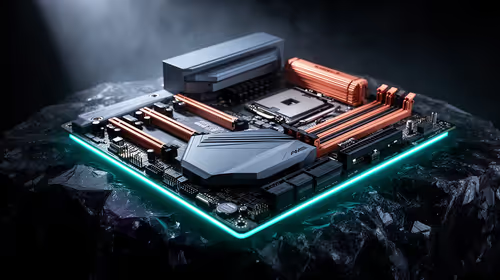
AM5 gives Randburg gaming builders a longer upgrade path. For SA buyers, DDR5 support, newer board features, and future CPU options can justify the platform. Weigh board cost, cooler support, BIOS maturity, and upgrade timing before choosing.
Read more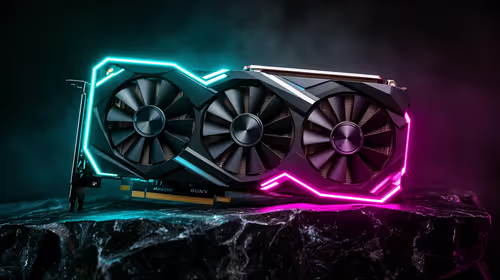
RTX 5090 on a 550W PSU leaves almost no practical room for OC plans. Treat the setup as constrained, with CPU draw, power spikes, cable quality, thermals, and stability checks more important than chasing extra clocks.

FPS drops on a Ryzen 9 9950X3D build often have a fixable cause. Check settings, drivers, thermals, background tasks, network conditions, and bottlenecks before assuming a part must be replaced.

The difference between PCIe 5.0 and PCIe 4.0 for SA gamers is mostly bandwidth headroom. Compare GPU slot needs, NVMe speed, motherboard support, and upgrade timing before paying extra for a newer platform.

Gaming PC stuck pixel checks in South Africa should confirm the monitor fault first. Use colour tests, screenshot comparison, cable swaps, display menu checks, and clear photos before deciding on support.

AMD's current driver now lists a Radeon RX 9050 4GB, while product coverage details a narrowed memory system. SA buyers should weigh the low VRAM ceiling against current local Radeon options.

Samsung Display has demonstrated a 16-inch 2.5K OLED laptop panel running at 300Hz. SA buyers should wait for a named notebook, full panel specifications and a local price before planning an upgrade.

Microsoft says some Windows 11 game crashes after recent updates are linked to RGB-related drivers. Affected SA gamers should confirm the update and driver before using the published registry workaround.
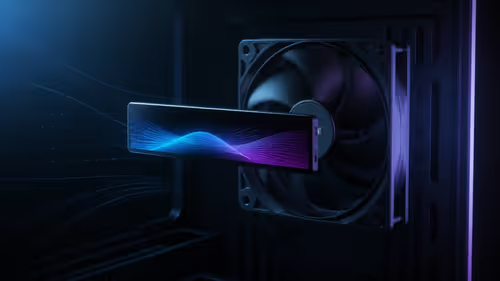
Thermalright's Fan Frame Vision-1 adds a 640x172 status screen to a standard 120mm fan. SA builders should check clearance, USB routing and local support before treating it as an easy upgrade.

Shokz OpenFit Air 2 earbuds weigh 7.2g each and use a redesigned dual-driver open-ear layout. SA buyers should choose them for comfort and awareness, not maximum isolation.

A fake 113GB GTA VI ISO reportedly used empty padding around a small malware payload. SA gamers should delete unofficial builds, keep Windows security active and wait for official channels.

The ROG Flux Charger Dock combines 260W total output, 140W laptop charging and HDMI 2.1. SA buyers should check laptop USB-C limits, display needs and local warranty first.

ASRock's Rock 360 Digital AIO adds a 1.05-inch CPU temperature display, 360mm radiator and simplified wiring. SA builders should check case fit, socket support and local warranty.