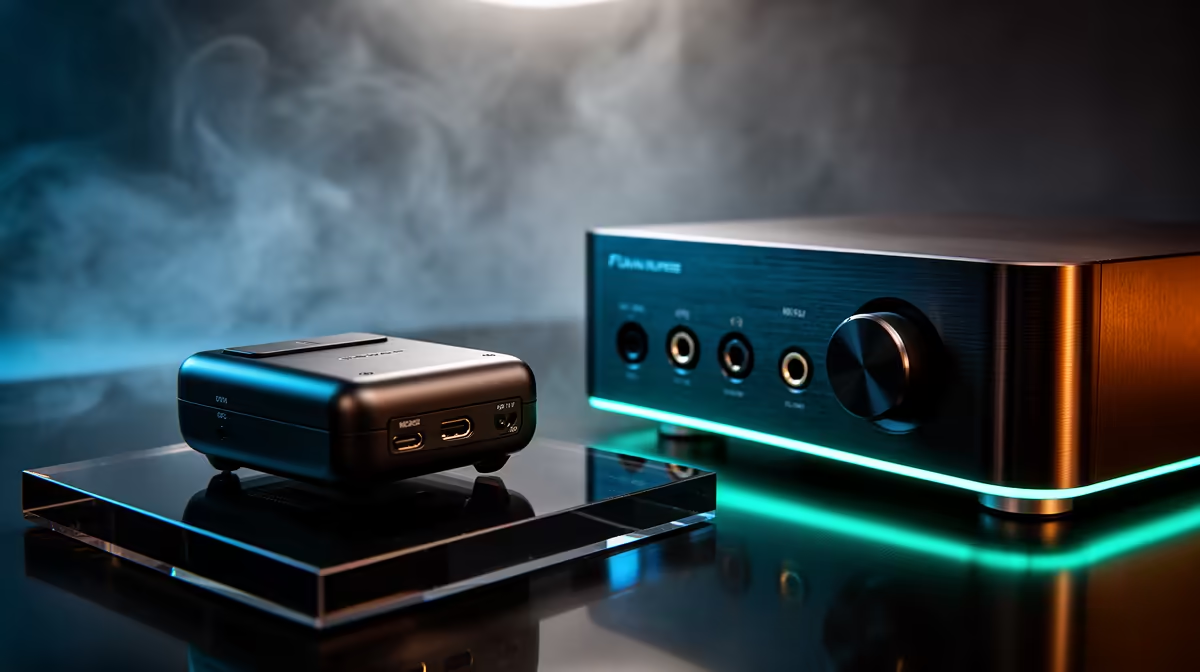
A podcast mixer is not worth buying to self-host applications. It manages microphones, monitoring and audio routing, while hosted services need compute, storage, networking and secure administration. Purchase the mixer only when a defined multi-person audio workflow needs physical controls.
Separate audio from server architecture
List the applications, expected users, storage growth, backup and remote-access method. Then document the microphones, local guests, phone calls and live audio sources used by the show. A simple USB microphone may handle one speaker without a mixer.
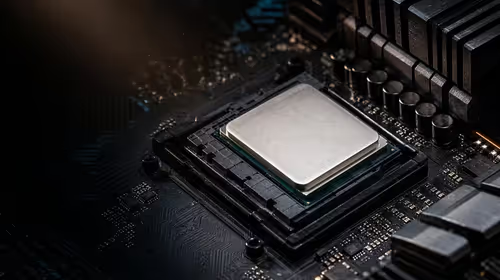
No verified podcast-mixer SKU or price appears in the supplied facts. The NearStream USB/XLR microphone is listed at R676, while the Minisforum UM750L mini PC with a Ryzen 5 7545U, 16GB memory and 1TB storage is listed at R4,600. Confirm microphone connection and monitoring, plus computer ports, operating-system support, network interfaces and warranty.
Do not expose a new home server directly to the internet without secure configuration, updates and tested recovery. Back up application data and credentials independently. For audio, record a full rehearsal and check gain, headphone mixes and routing before adding more channels.
Buy each device for its own job. A compact host and a simple microphone can coexist, but linking the purchasing decisions risks overspending on audio controls that provide no server benefit.
Planning a host and podcast desk? > Compare Evetech mini PCs and microphones for clearly defined functions.