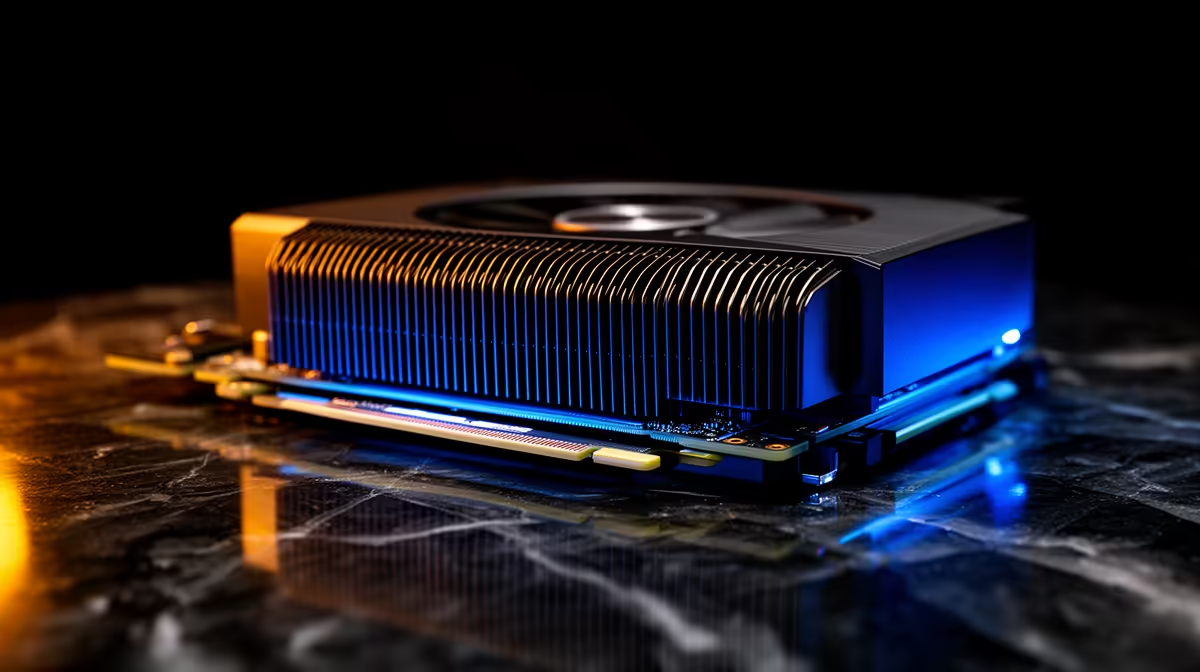
Two graphics cards can post similar numbers in a gaming benchmark chart and still behave completely differently once you drop them into a video editing timeline or a 3D scene. A 24gb creator graphics card is built around a different set of priorities than a gaming card chasing the highest frame rate, and knowing which set of priorities matches your work matters more than any single benchmark score. That split is exactly where the R14,399 ASRock Pro B60 Creator sits, leaning firmly toward the creator side.
Quick Answer
Professional graphics cards prioritise VRAM capacity, driver certification, and stable output over the raw frame rates gaming cards chase. Built with 24GB of GDDR6 and aimed squarely at editing and rendering workloads, the ASRock Pro B60 Creator reflects that priority directly for R14,399 rather than chasing benchmark leaderboards.
🎮 Where gaming cards put their priorities
Gaming graphics cards are tuned around frame rate consistency in games, with drivers optimised and tested primarily against popular titles. That focus is well suited to gaming, but it does not automatically translate into stability inside professional 3D or editing applications, which stress the GPU in different ways than a game engine does.
Why gaming benchmarks do not predict creative performance
A card that tops a gaming benchmark chart can still stutter in a colour grading session or crash during a long render, since those workloads exercise memory management and driver stability differently than a game loop does.
🏗️ What professional cards optimise for instead
Professional cards like the ASRock Pro B60 Creator ship with drivers certified against major creative software, and prioritise memory capacity over squeezing out the last few frames per second in a game. The 24GB of GDDR6 on this card exists to hold large scenes and timelines reliably, not to chase a gaming benchmark number.
Certification matters more than it sounds
Driver certification means the manufacturer has tested that specific driver against applications like 3D suites and editing software for stability, rather than only against games. That testing reduces the odds of crashes during long renders or complex composites.
⚖️ Deciding which category fits your work
If your workload is primarily editing, 3D rendering, or AI-assisted creative tasks, a professional-oriented card built for that purpose, like this one at R14,399, is generally the better fit. Gaming remains a secondary consideration on cards in this category, though DirectX 12 Ultimate support means gaming performance is still perfectly usable.
For a closer look at the specifics, the ASRock Pro B60 Creator page has full pricing. The workstation-class cards available gives a sense of the wider category, and ASRock's full card range shows the brand's other options.
Frequently Asked Questions
Can a professional graphics card still be used for gaming?
Yes, DirectX 12 Ultimate support means gaming performance remains solid, though frame rate is not the primary design focus.
Are professional GPU drivers different from gaming drivers?
Yes, professional cards typically ship with drivers certified against creative software, tested for stability in editing and 3D applications specifically.
Can this card handle ray-traced previews despite its workstation focus?
It can, since DirectX 12 Ultimate is built in, but the priority on this card remains stable rendering and editing rather than gaming visuals.
Why do professional cards often cost more per frame rate than gaming cards?
Their value comes from memory capacity, driver certification, and reliability under creative workloads rather than gaming frame rates alone.
What is the price of the ASRock Pro B60 Creator?
It is priced at R14,399, positioned as a professional-oriented workstation card.
Ready to trade a gaming card for one built for creators?
Explore this 24GB Pro B60 Creator inside Evetech's workstation GPU range at R14,399 ready to swap a gaming-first card for one designed around content creation.