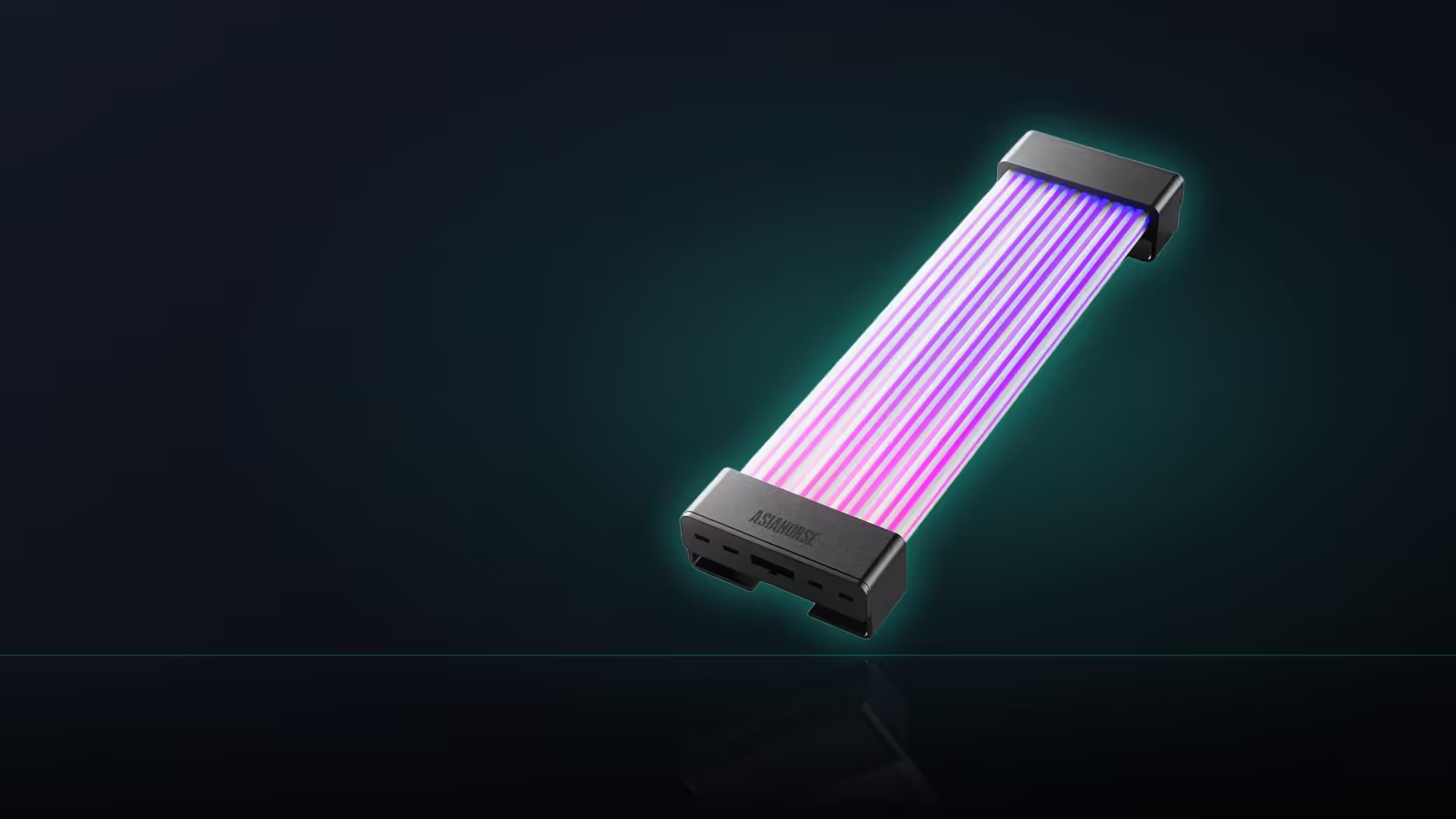
If taking a lit shell off ever starts to feel like a project - loosening ties, working around a drive cage, wondering whether a cable needs disconnecting first - something about the original fit or the routing around it needs a second look. AsiaHorse's Aurora ARGB cover kit was never meant to work that way, and understanding why makes it obvious when removal has quietly become harder than it should be.
Quick Answer
Because the Aurora kit's covers clip on rather than being wired in, removing one should mean simply releasing the clips - nothing electrical is involved at all. If taking a shell off ever looks like it will require dismantling part of the run to get it free, that's a sign the original fit, or the routing built up around it since, needs revisiting rather than something to push through.
🔓 What removing a shell should actually involve
Releasing the clips that hold it closed around the cable, then lifting it away - after which the run sits exactly as it did before the cover ever went on. That's the whole process, by design.
⚡ Is any cable actually disconnected during removal?
None. The covers sit entirely outside the electrical path, so the only lead genuinely involved anywhere in this process is the shared lighting feed running to the motherboard's addressable header - and even that only needs handling if the shell is being fully removed rather than just repositioned.
🚧 What actually makes removal difficult in real builds?
Ties and components fitted close to the shell after it went on - a drive cage loaded up afterwards, cables bundled tightly right beside the covered section - which restrict physical access to the clips rather than anything about the shell itself being hard to release.
✅ How can that be avoided in the first place?
Leaving finger access beside the covered section whenever the surrounding cables get tied down, rather than pulling everything into one tight bundle that happens to include the shell's clip line. A small deliberate gap there costs almost nothing in tidiness and saves real effort later.
🔌 Should the lighting lead be unplugged before handling the shells?
It's sensible to do so first, purely so nothing gets pulled or strained on the lighting connection while the cover itself is being handled and released.
🧴 Does removing a shell repeatedly wear the clips out?
Clips are built to open and close, so occasional removal shouldn't be a concern - though handling them gently, rather than forcing a shell open against resistance, is worth doing regardless of how often it happens.
🔍 What if a clip genuinely won't release?
Check for something pressing on the shell from outside first - resistance in these situations tends to come from the surroundings rather than a fault with the clip mechanism itself. A tie, a nearby component, or a bundle routed too close is the more likely culprit.
Evetech's cable management accessories are worth having to hand for keeping that clip access clear from the outset, rather than fixing it retroactively once removal's already been attempted. Other lit products that clip in and out the same simple way sit in the case lighting range, worth a look for comparison.
Frequently Asked Questions
What does removing a shell actually involve?
Releasing the clips holding it around the cable, after which it lifts away leaving the run exactly as it was before the cover went on.
Is any cable disconnected during a normal removal?
None - the covers sit outside the electrical path, and the only lead involved at all is the shared lighting feed to the board header.
What tends to make removal genuinely difficult?
Ties and components fitted close to the shell after it went on, which restrict access to the clips rather than the shell itself.
How can that difficulty be avoided from the start?
By leaving finger access beside the covered section whenever the surrounding cables are tied down, rather than bundling everything tight.
Should the lighting lead be unplugged before handling a shell?
It's sensible to, purely so nothing gets pulled or strained on the connection while the cover is being released or repositioned.
Does frequent removal wear the clips out over time?
Clips are designed to open and close, though handling them gently rather than forcing them is worth doing regardless of frequency.
What if a clip simply won't release?
Check for something pressing on the shell from outside first - resistance usually comes from the surroundings rather than the clip itself.
Want a fit that stays serviceable down the line?
Browse Evetech's cable management accessories to leave proper access around any cover you fit.