


1000W PSU Planning for RTX 5090 Builds in SA
1000W for RTX 5090 needs a full-build check, not a simple yes. Review GPU guidance, CPU draw, transient load, connectors, PSU quality, and upgrade plans before deciding.
Read moreA desktop CPU is worth repasting when temperatures climb several degrees above the original baseline with no other cause, typically three to five years depending on paste quality. Evetech pastes coolers professionally at build time, so most rarely need it before a swap.
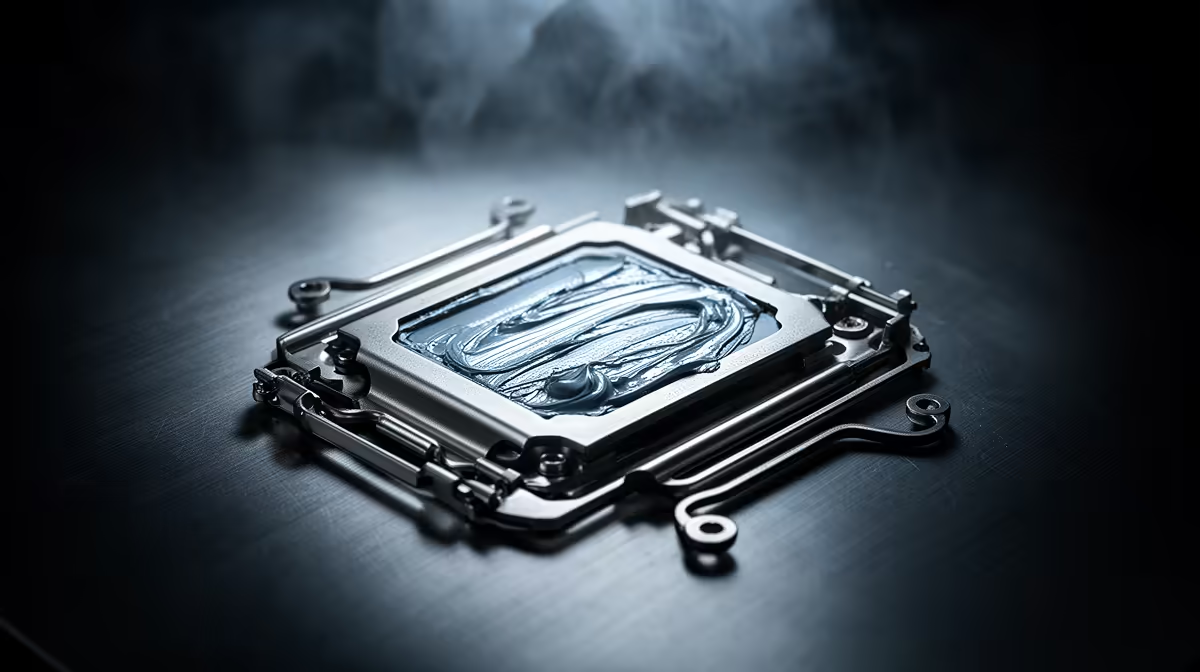
A desktop CPU needs fresh thermal paste when cooler contact is broken or measured cooling performance has declined. Three to five years can be a rough inspection window for some compounds and workloads, but there is no expiry timer. Stable temperatures and clocks are a good reason to leave the cooler seated.
Compare the same sustained CPU load with an older healthy baseline, including room temperature, package power, fan curve and clock speed. Clean filters and verify the fan first. Repaste when unexplained temperature rise or throttling remains, or whenever the cooler is removed and its old interface is disturbed.
Evetech's gaming PC systems give you a reference for current cooler and case combinations. The best-selling PC range helps frame whether an ageing platform needs simple service or a broader upgrade.
Run a repeatable CPU workload after warm-up. Record CPU temperature, package power, sustained clocks and fan speed. A higher temperature with higher power can be normal.
Clean intake filters and check the heatsink for dust. Confirm the pump or fan follows its expected curve. A failed pump, loose mount or hotter room cannot be repaired by adding paste.
Compare like with like. Processor firmware and motherboard limits can change power after an update.
Removing the cooler breaks the spread pattern and can introduce air or contamination. Clean both surfaces with the method and solvent approved by the cooler and paste makers, then apply fresh material.
Use the amount and pattern suited to the CPU heat spreader and paste. Too little can leave dry areas; too much creates mess and can reach the socket area. Electrically conductive compounds need extra care.
Tighten the mount in the specified cross sequence with even pressure. Uneven contact can make the new result worse.
Use a reputable non-conductive paste unless the CPU or cooler maker specifies another interface. Phase-change pads and liquid metal need their own mounting and containment rules. Do not combine materials because one remains on the surface.
Check the paste's storage condition and application guide. A separated, dried or contaminated syringe should be replaced. Keep compound off socket contacts, motherboard components and cooler fins.
Shut down, switch off and unplug the PC. Follow the board and cooler instructions for fan or pump connections. Support the motherboard when a rear backplate can fall or move.
Twist a stuck cooler only as the maker permits after warming the interface through normal operation and shutting down. Pulling straight up on a bonded cooler can lift some socketed processors. Stop when resistance or the socket design makes the safe method unclear.
Run the original warm test with the same room conditions and fan curve. Compare package power and clocks, not temperature alone.
If temperature rises or one core group becomes unusual, shut down and inspect mounting pressure, film removal and cooler seating. A good repaste should restore consistent contact, not chase an arbitrary idle number.
No. Use a measured change in cooling or a removed cooler as the trigger, not age alone.
Yes. Clean and renew the disturbed interface before reinstalling it.
Yes. Poor coverage, contamination or uneven mounting can reduce heat transfer.
Prove the cooling decline under the same package power, then renew the paste and mounting pressure only after airflow and fan faults are ruled out.
No. Use a measured change in cooling or a removed cooler as the trigger, not age alone.
Yes. Clean and renew the disturbed interface before reinstalling it.
Yes. Poor coverage, contamination or uneven mounting can reduce heat transfer. {{PRODUCTS: { facets: { query: "gaming pc" }, limit: 12, title: "Gaming PCs", style: "4" } }}
1000W for RTX 5090 needs a full-build check, not a simple yes. Review GPU guidance, CPU draw, transient load, connectors, PSU quality, and upgrade plans before deciding.
Read more
RTX 5080 Super with a 750W PSU is more comfortable than lower wattage if the unit is quality. SA builders should still confirm GPU guidance, CPU draw, connector type, airflow, and upgrade room.
Read more
How to fix FPS drops after a RX 9070 XT starts with driver cleanup, chipset updates, thermals, and power checks. For SA gaming PCs, confirm PCIe seating, monitor refresh, frame caps, and per-game graphics settings before replacing parts.
Read more
How to fix low FPS Windows 11 Wi-Fi 7 issues starts by checking whether the problem is frame rate or network lag. Test ping, drivers, power settings, Ethernet, and game FPS before adjusting visuals.
Read more
AM5 is smart for SA builders because it supports newer Ryzen CPUs, DDR5 memory, and a longer upgrade path. Compare board cost, cooling, gaming needs, and local part availability before choosing your next PC platform.
Read more
AM5 gives Randburg gaming builders a longer upgrade path. For SA buyers, DDR5 support, newer board features, and future CPU options can justify the platform. Weigh board cost, cooler support, BIOS maturity, and upgrade timing before choosing.
Read more
RTX 5090 on a 550W PSU leaves almost no practical room for OC plans. Treat the setup as constrained, with CPU draw, power spikes, cable quality, thermals, and stability checks more important than chasing extra clocks.
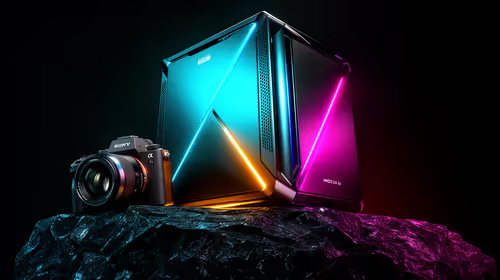
FPS drops on a Ryzen 9 9950X3D build often have a fixable cause. Check settings, drivers, thermals, background tasks, network conditions, and bottlenecks before assuming a part must be replaced.

The difference between PCIe 5.0 and PCIe 4.0 for SA gamers is mostly bandwidth headroom. Compare GPU slot needs, NVMe speed, motherboard support, and upgrade timing before paying extra for a newer platform.

Gaming PC stuck pixel checks in South Africa should confirm the monitor fault first. Use colour tests, screenshot comparison, cable swaps, display menu checks, and clear photos before deciding on support.

AMD's current driver now lists a Radeon RX 9050 4GB, while product coverage details a narrowed memory system. SA buyers should weigh the low VRAM ceiling against current local Radeon options.

Samsung Display has demonstrated a 16-inch 2.5K OLED laptop panel running at 300Hz. SA buyers should wait for a named notebook, full panel specifications and a local price before planning an upgrade.

Microsoft says some Windows 11 game crashes after recent updates are linked to RGB-related drivers. Affected SA gamers should confirm the update and driver before using the published registry workaround.
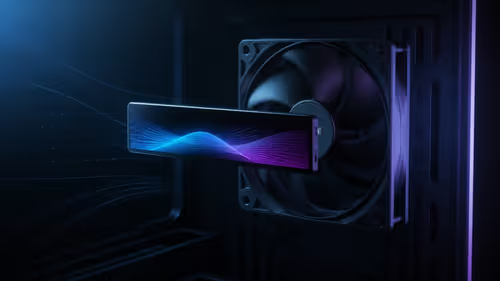
Thermalright's Fan Frame Vision-1 adds a 640x172 status screen to a standard 120mm fan. SA builders should check clearance, USB routing and local support before treating it as an easy upgrade.

Shokz OpenFit Air 2 earbuds weigh 7.2g each and use a redesigned dual-driver open-ear layout. SA buyers should choose them for comfort and awareness, not maximum isolation.

A fake 113GB GTA VI ISO reportedly used empty padding around a small malware payload. SA gamers should delete unofficial builds, keep Windows security active and wait for official channels.
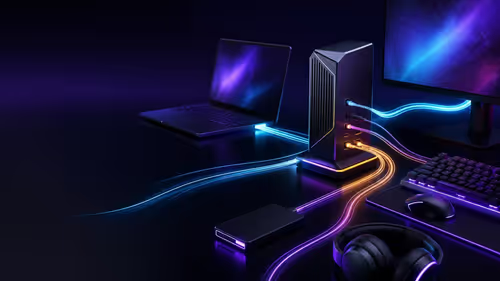
The ROG Flux Charger Dock combines 260W total output, 140W laptop charging and HDMI 2.1. SA buyers should check laptop USB-C limits, display needs and local warranty first.

ASRock's Rock 360 Digital AIO adds a 1.05-inch CPU temperature display, 360mm radiator and simplified wiring. SA builders should check case fit, socket support and local warranty.