Waiting for cheaper memory costs nothing only when today's machine still finishes the work on time. Creator RAM upgrades should follow stalled previews, paging and render delays rather than a forecast for next year's prices.
Quick Answer
Creators should delay a RAM-heavy upgrade until 2027 only when the current system completes paid or personal work without memory pressure and the project calendar can absorb waiting. Upgrade in 2026 when previews stall, applications swap to SSD or renders fail because capacity is exhausted. A forecast price drop is uncertain. Measure peak memory and time lost, choose the capacity your next projects need and compare that productivity value with today's exact-kit cost.
Put a price on the current delay
Open a representative photo catalogue, video timeline or 3D scene. Include the browser, music, chat and background tools used during real work.
Record peak committed memory, Available memory, page-file activity, preview response and export time. Repeat after a clean restart.
When the system waits on storage because RAM is full, count minutes lost per project. Multiply by projects before 2027. That is the cost of waiting.
More RAM changes some stages
Capacity can keep source media, previews and application state in memory and reduce paging. It may improve timeline response and large composite project work.
An export limited by GPU encoding, CPU rendering or source storage may gain little from extra RAM once the project fits. Watch CPU, GPU, storage and memory together.
Do not promise a shorter render from capacity alone. Fix the measured bottleneck.
Choose from project size
Photo editing with modest files can work on 16GB. Large layered images, panoramas, video, After Effects-style compositions, virtual instruments and 3D scenes can use 32GB, 64GB or more.
Check the application's current recommendation for resolution, codec and workflow. Add headroom for the operating system and next project, without doubling capacity for a job that will move to another machine.
Keep one difficult project as a benchmark. Time opening, scrubbing, preview generation and export, then repeat after the upgrade. The result tells you whether future money belongs in memory, storage or the processor.
A partial upgrade can create another purchase
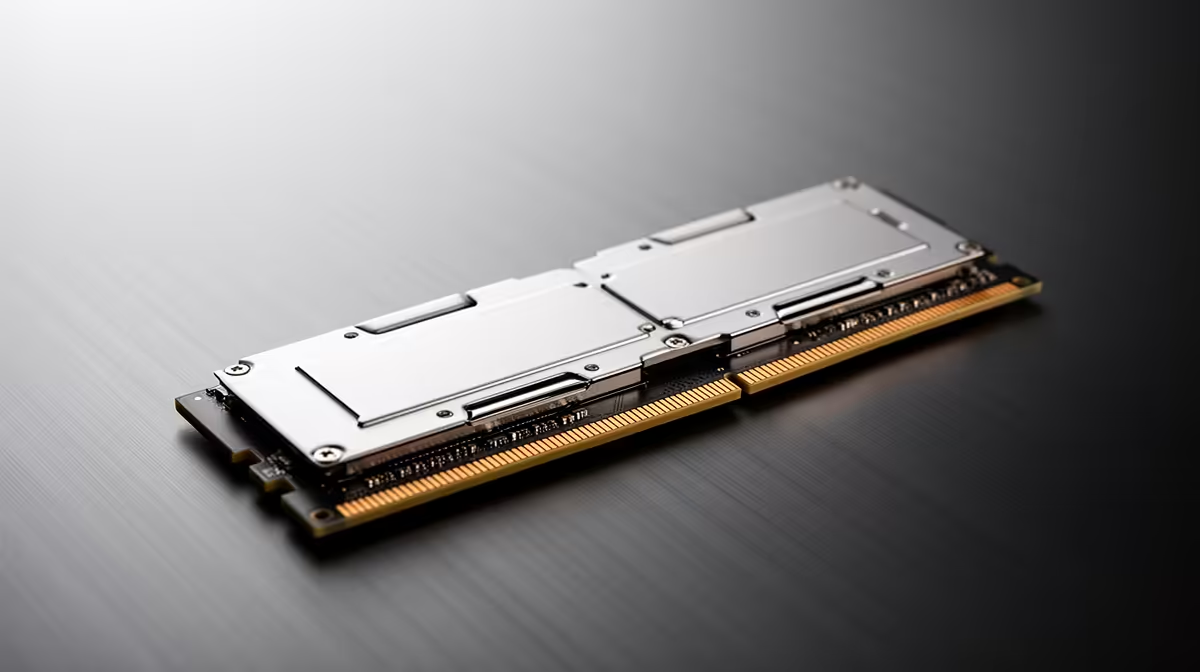
Adding a second kit can reduce memory speed or fail training, especially with high-speed DDR5 and four DIMMs. Compare one complete supported-capacity kit with an add-on.
Check motherboard slots, memory list, CPU controller guidance and cooler clearance. Validate the final kit with bootable and in-system tests before a deadline.
Shop by part number through the DDR5 memory range. For a second current reference, inspect the memory best-seller page and match capacity rather than lighting.
FAQ
Will waiting until 2027 save money?
It might, and prices can move the other way. Compare the uncertain saving with measured work lost before then.
Does more RAM speed every export?
No. It helps when memory pressure is the bottleneck. CPU, GPU and storage can still set export time.
Should I buy part of the capacity now?
Only when the later expansion is supported and tested. One complete kit can be a cleaner DDR5 path.
Measure peak memory and minutes lost on one real project, then buy capacity now only when it repays the wait before 2027.