Quick Answer
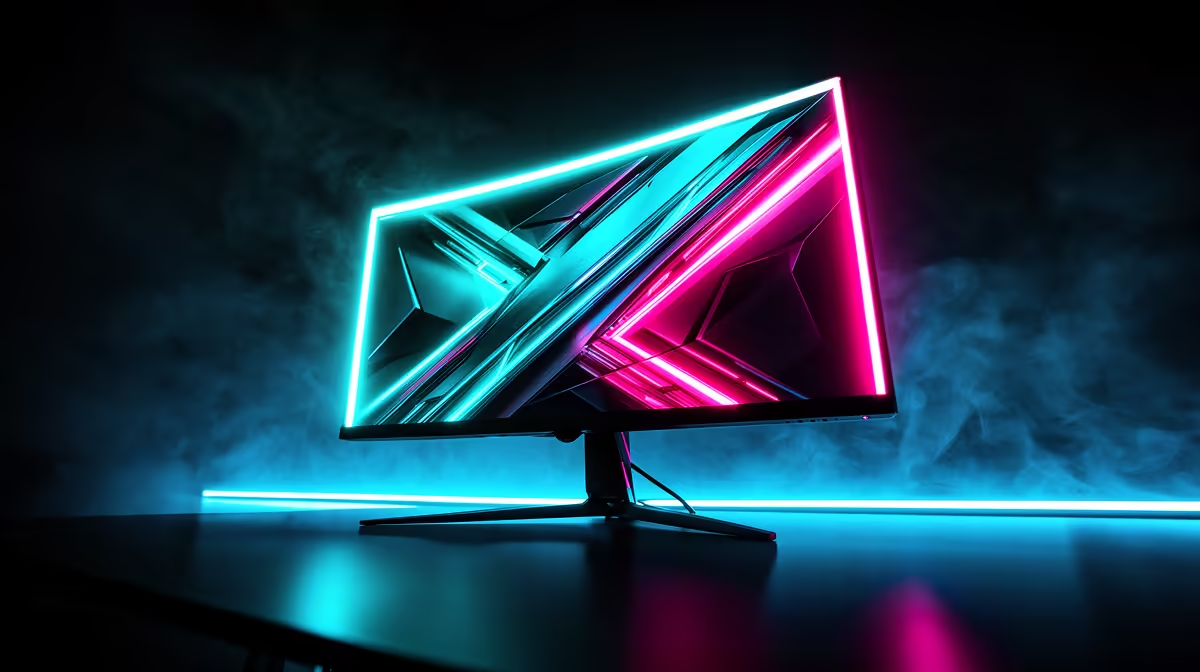
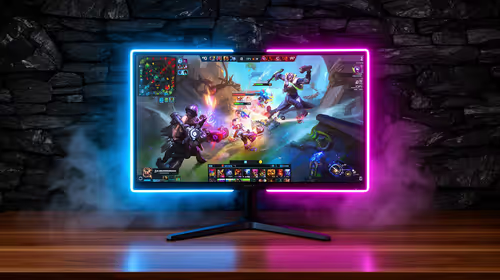
On R80,000 the standout choice is a 32-inch 4K 240Hz QD-OLED, around R28,000-R42,000 in South Africa, paired with an RTX 5080 or 5090 to drive it. This is a near-top-tier setup where the OLED's per-pixel contrast and 0.03ms response meet a GPU strong enough to push 4K past 100fps.
What the R80,000 tier delivers
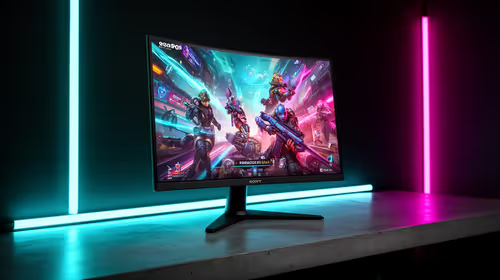
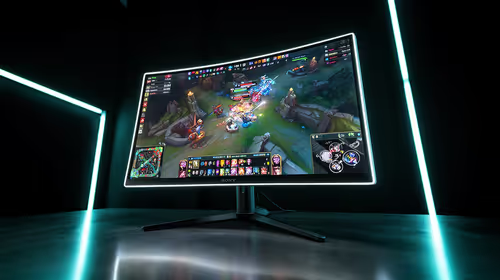
At this budget you are buying the best of the OLED range short of dual-monitor extravagance. A 32-inch 4K 240Hz QD-OLED gives you the sharpest gaming image available, with true blacks, HDR highlights and instant pixel transitions that make both fast shooters and cinematic single-player titles look exceptional. The large panel keeps 4K pixel density crisp, and the 240Hz ceiling means competitive play stays smooth even at this resolution.
Pairing the right RTX card
A 4K 240Hz OLED only earns its keep behind a capable GPU. An RTX 5080 pushes most AAA titles past 100fps at 4K with DLSS Quality, while an RTX 5090 with 32GB of VRAM saturates the panel and future-proofs you for path-traced games. Budget roughly R28,000-R42,000 for the monitor and assign the larger remaining share to the GPU, since a flagship OLED behind a mid-range card wastes its 4K headroom.
FAQ
What OLED should I buy on R80,000?
A 32-inch 4K 240Hz QD-OLED, the top gaming OLED class, paired with an RTX 5080 or 5090. This combination handles both cinematic visuals and high-refresh competitive play at 4K.
Which GPU drives 4K 240Hz OLED?
An RTX 5080 pushes most AAA games past 100fps at 4K with DLSS, and an RTX 5090 fully saturates the panel and handles path tracing. Match the card to the resolution to avoid bottlenecking the display.
How much should the monitor cost?
Plan roughly R28,000-R42,000 for a flagship 32-inch 4K OLED and reserve the larger share of R80,000 for the GPU. The panel needs a strong card to reach its potential.
Buyer Tip
On R80,000, pair a 32-inch 4K 240Hz QD-OLED with an RTX 5080 or 5090 and split the budget so the GPU can push 4K past 100fps.