Quick Answer
For a clear-headed buying decision: An extended warranty on a gaming PC is worth it mainly for high-value builds of R30,000 or more, where a single GPU or board failure outside cover would hurt. For budget builds under R15,000 the premium often costs more than the risk justifies.
Is an extended warranty worth it
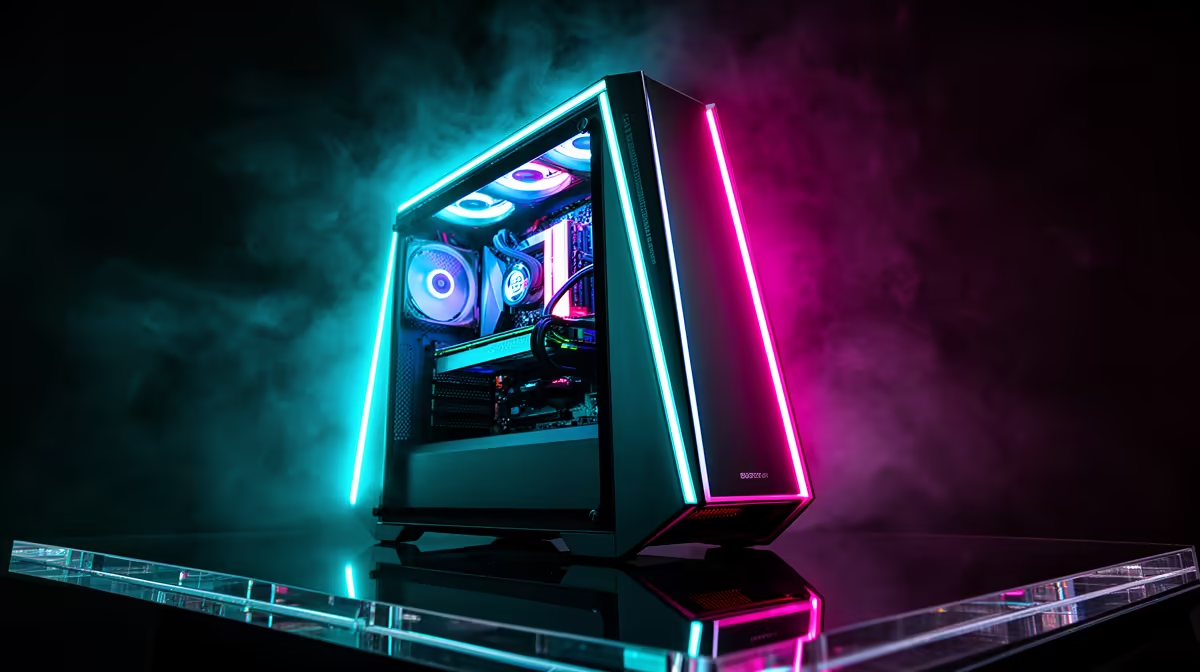
Standard cover on a quality build is usually 2 years, and most failures that happen do so early, within that window. An extended warranty makes most sense on a premium R30,000-plus rig where replacing an RTX 5080 or a high-end board out of pocket would sting. On a sub-R15,000 build, the extension premium can approach the cost of the part it protects, so a self-insurance approach, setting aside the premium amount, often makes more sense.
When to skip it
On budget builds under R15,000, the extension premium often nears the cost of the component it covers, making it poor value. Keeping the standard 2-year warranty and setting the premium aside as a small repair fund usually leaves you better off statistically.
When extended cover pays off
Take the extension on a high-value build, R30,000 and up, where the priciest components carry the highest replacement cost. If a single failure outside the standard 2-year cover would seriously dent your finances, the predictable premium buys real peace of mind, especially on the GPU and PSU.
FAQ
Is an extended warranty worth it on a gaming PC?
Mainly on high-value builds of R30,000 or more, where replacing a top GPU or board out of cover is costly. On budget rigs the premium often outweighs the risk.
Is self-insuring a sensible alternative?
For affordable builds, often yes. Setting aside the premium amount as a repair fund can leave you ahead, since the standard 2-year cover handles most early failures.
Which parts fail most often?
GPUs, power supplies and storage are the usual suspects. If your build leans heavily on an expensive GPU, extended cover targets your biggest replacement risk.
Match warranty cover to your build's value.
Extend it on premium rigs to protect costly parts; keep the standard cover and self-insure on budget builds.