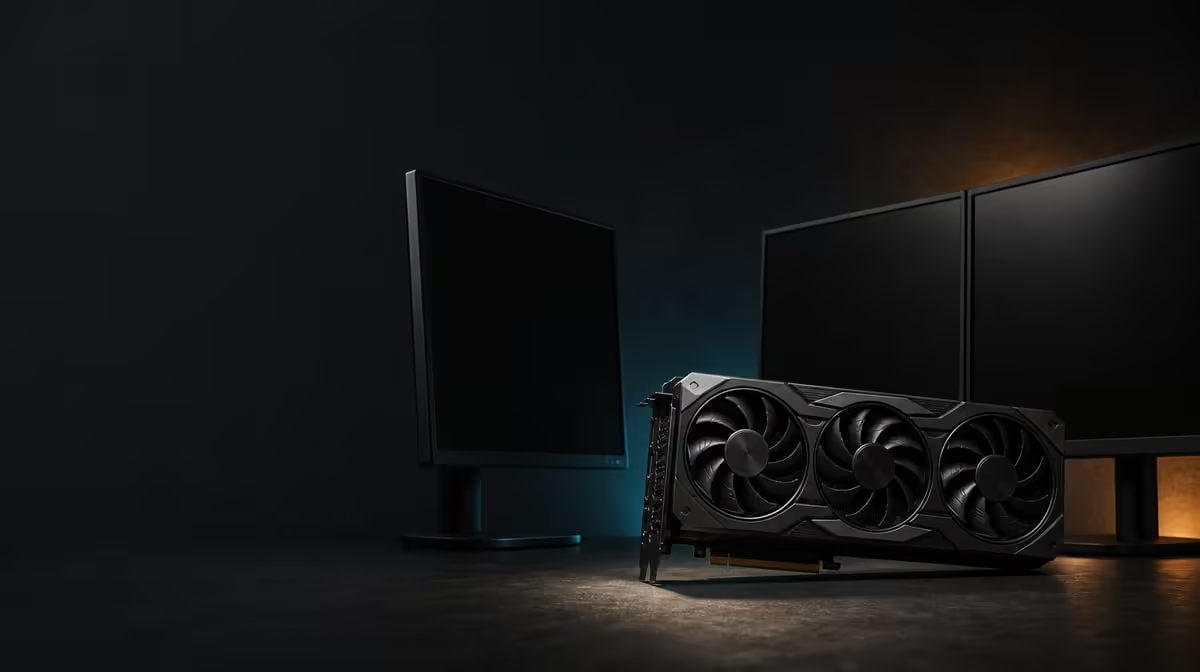
More screens create more workspace, but they also create more decisions. Single-monitor versus multi-monitor gaming setups should be compared by attention, desk area and the jobs performed beside the game - not by counting sockets.
Quick Answer
At R73,599, the ASUS TUF RTX 5090 offers the 3:2 DisplayPort 2.1b-to-HDMI 2.1b output arrangement outputs. A single monitor keeps focus and setup simple; multiple displays add persistent room for chat, monitoring or creative tools when the desk and workflow justify them.
🎯 Start with the player's attention
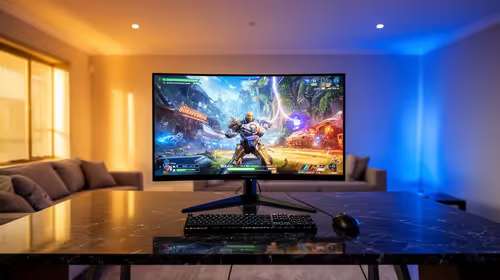
A single display keeps the game, cursor and visual centre in one place. It suits smaller desks, focused play and users who do not need secondary information visible throughout a session.
A second screen can hold chat, streaming controls, a guide or system monitoring. A third may serve a creator preview or communication panel, but each addition should have a regular purpose.
Peripheral vision has a cost as well as a benefit. Bright chat movement beside a competitive game can distract the player, so secondary screens should be placed and dimmed according to what deserves attention.
Do not assume that five physical outputs mean five simultaneous gaming displays at every mode. Confirm the intended combination, resolution and refresh target separately.
Evetech's ASUS GPU range lets you compare output arrangements after deciding how many screen roles exist.
🖥️ Make mixed displays comfortable
Place the main gaming panel directly ahead and align secondary monitors to reduce frequent neck movement. Match their virtual positions in the operating system so pointer travel follows the physical arrangement.
Different scaling, resolution and refresh settings can make windows change size or movement feel uneven between screens. That is manageable, but it adds setup work that a single-monitor desk avoids.
Display height matters as much as width. Align the main viewing area comfortably, then angle side panels toward the seat instead of creating a flat wall that forces repeated neck turns. A monitor arm can recover desk depth, although its fit and load requirements need their own check.
The RTX 5090 provides DisplayPort 2.1b and HDMI 2.1b routes. Choose according to the monitor input and required mode; every screen does not need the same connector when the complete links are suitable.
Cables matter. Label them, confirm their capabilities and test screens one at a time. An adapter or weak link can restrict a demanding mode.
Plan power and sleep behaviour too. Several monitors add wall connections, standby states and possible wake-order differences. Rehearse a full shutdown and restart, noting whether applications return to the correct screen.
Browse Evetech's NVIDIA graphics-card category with the intended monitor map beside you.
🧭 Choose the smallest setup that solves the need
Write down what must remain visible while gaming. If the answer is nothing, one capable panel can be the cleaner choice. If streaming controls or work references are repeatedly hidden, another display may remove real friction.
Estimate the real weekly usage for each secondary panel. A screen dedicated to an occasional monitoring glance may be replaced by a temporary overlay, while a daily editing timeline can justify permanent space. This turns the choice into an ergonomic decision instead of a feature race.
Test power-on, sleep, full-screen games and window recovery. Multi-monitor value depends on an arrangement that returns reliably, not only an impressive desktop photograph.
Watch for pointer traps between panels with unequal vertical resolutions. Adjust the virtual alignment until crossing points match hand expectations. Small software corrections can make a mixed desk feel much more coherent.
Remember that output count does not replace rendering performance. The card's 32GB GDDR7 and 3352 AI TOPs describe other resources, while each game and application determines what it can use.
Review Evetech's GPU best-seller page once screen count has a practical reason and check current availability for the final shortlist.
Frequently Asked Questions
What is the main advantage of a single-monitor setup?
It keeps visual attention, cabling and software configuration concentrated on one screen.
What does a second or third screen add beside gaming?
It can keep chat, streaming controls, guides, monitoring or creator tools visible.
How many output connectors are available on this card?
There are five: the 3:2 DisplayPort 2.1b-to-HDMI 2.1b output arrangement.
Does five connectors confirm five simultaneous game displays?
No. The intended monitor mix and modes need a separate support check.
Why can mixed-resolution monitors feel awkward together?
Different scaling and pixel dimensions can alter window size and pointer movement across the desktop.
Should every monitor use the same connection standard?
Not necessarily. Each complete GPU-to-screen link should match the panel and selected mode.
Which setup better suits a small desk?
A single monitor usually uses less area and demands fewer compromises in placement and viewing distance.
Ready to settle on the right screen count?
Define what must stay visible during play, then compare Evetech graphics cards by the connections that purposeful desk actually requires.