Every extension added to a build leaves behind more than just a tidier visible run - it leaves the original factory cable it extended, still coiled somewhere out of sight. Multiply that by six extensions and the space behind a motherboard tray fills up considerably faster than most builders expect.
Quick Answer
Each of the six extensions adds 30cm on top of a lead that stays in the build. A full fit leaves a good deal more cable behind the tray, so space becomes the constraint. In a compact case that is worth planning first.
➕ Doing the actual maths
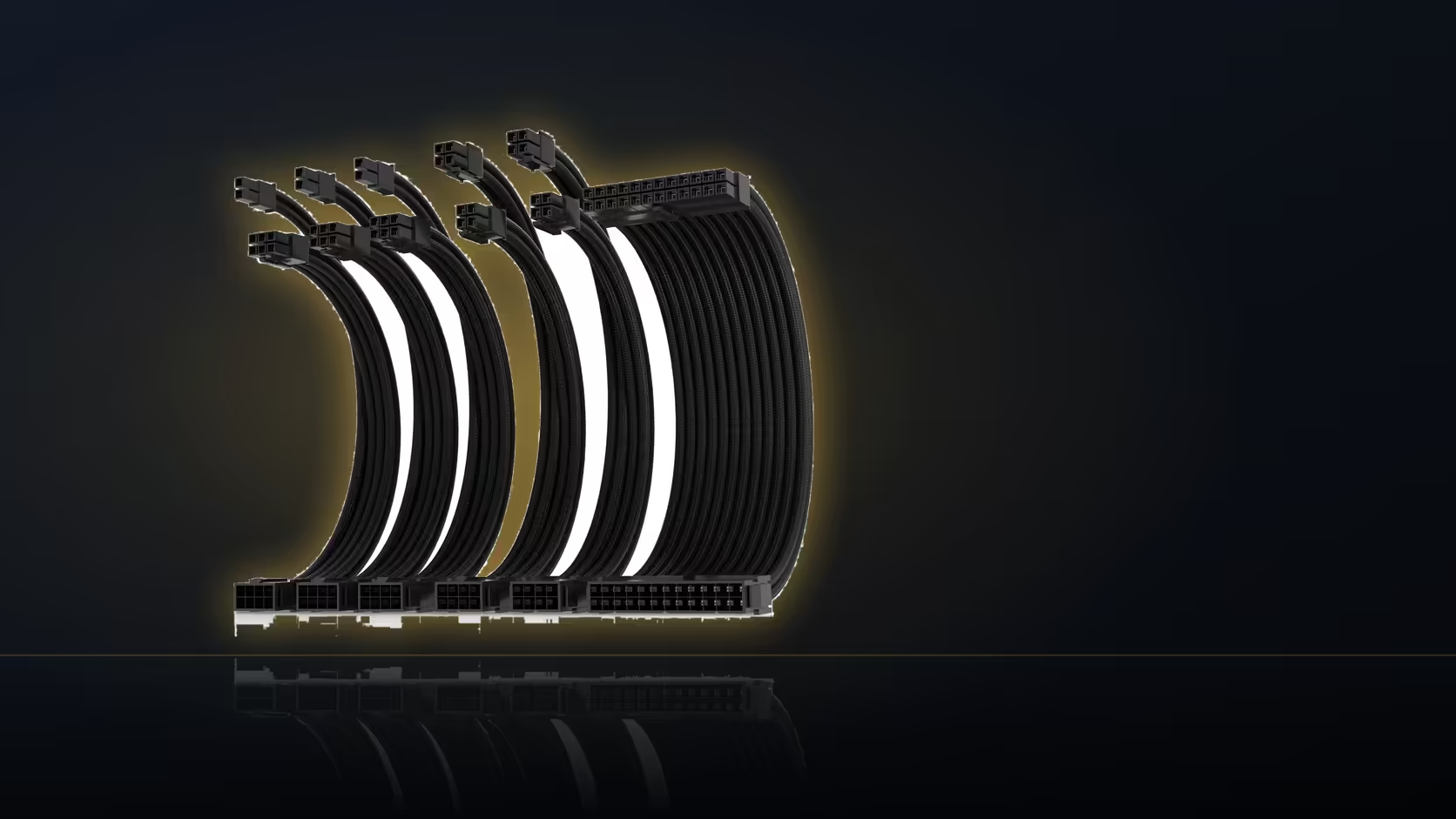
A full six-piece fit adds 30cm per lead across all six leads - 180cm of new sleeved cable in total - plus six separate connector junctions, none of which replaces so much as a centimetre of the factory cable already present in the build. All of that surplus factory length has to live somewhere behind the scenes once the extensions go on, and it does not shrink or disappear simply because a new sleeved section now handles the visible portion of each run.
📦 Where this bites hardest
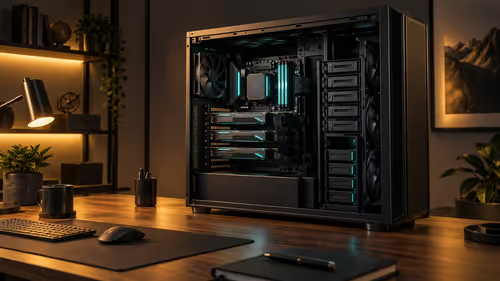
Compact and slim case designs feel this constraint considerably sooner than a roomy mid-tower does, since the channel behind the motherboard tray in those cases tends to be genuinely shallow, with no dedicated basement compartment available to absorb the surplus length. A full six-lead fit in a case like that can turn what should be a straightforward cable job into a genuine space-management puzzle, worth thinking through before a single extension gets fitted rather than discovering the constraint halfway through.
🧹 Managing the slack properly
Distributing the surplus cable evenly along the channel behind the tray, tying it flat in several smaller sections rather than one dense coil, works considerably better than letting it all bunch up in a single spot near one junction. A modular power supply softens this problem only slightly - its stock leads tend to run somewhat shorter than a non-modular unit's factory cables, but the factory lead still stays fully in place once an extension gets added regardless of whether the supply itself is modular or not.
🚨 Knowing when it is genuinely too tight
A side panel that meets real resistance when you try to close it is the clearest warning sign that the channel is overpacked - pressing it home against a bundled mass of cable bows the panel outward and can visibly mark the cables trapped underneath it. In a genuinely tight build, leaving some hidden, non-visible runs undressed is a perfectly reasonable compromise: dress what the window actually shows and leave anything permanently out of sight in its factory finish, rather than forcing all six extensions into a space that was never sized for that much cable. Comb placement itself only affects the visible side of this equation - behind the tray, it is purely the junctions and the coiled surplus deciding whether the panel closes cleanly, regardless of how neatly the exposed sections are dressed. There is more of this kit's range at cable solutions, and a modular-friendly alternative for a genuinely tight case sits at individually sleeved premium cables.
Frequently Asked Questions
How much extra cable does a full fit add?
Thirty centimetres per lead across six leads, plus six junctions, none of which replaces the factory cable already in the build.
Which cases feel this first?
Compact and slim designs, where the channel behind the tray is shallow and there is no basement to take up the surplus.
Can the slack be spread out?
It should be. Distributing it along the channel and tying it flat works far better than leaving one thick coil in a single spot.
Does a modular supply reduce the problem?
A little, since stock modular leads are often shorter, but the factory cable still stays in place when an extension is added.
What is the warning sign that it is too tight?
A side panel that meets resistance. Pressing it home against a packed channel bows the panel and marks the cables underneath.
Should some leads be left undressed to save room?
That is a reasonable compromise in a very tight build. Dress what shows and leave hidden runs alone rather than forcing all six fits.
Does comb placement affect the packing?
Only on the visible side. Behind the tray it is the junctions and the coiled surplus that decide whether the panel closes.
Fitting six extensions into a compact case?
Check Evetech's power supply range and plan where 180cm of surplus cable will actually live before you start.