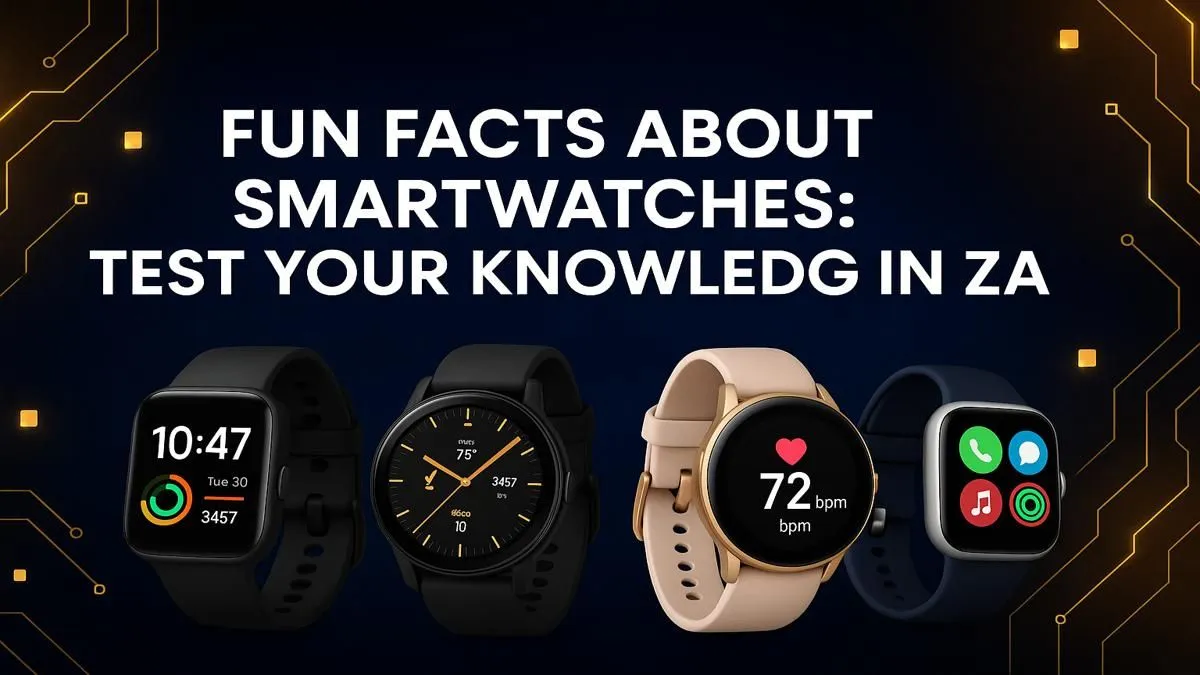
That sleek device on your wrist does more than just count your steps or ping you with WhatsApp notifications. It's a tiny powerhouse of technology with a surprisingly rich history. Ready to uncover some seriously cool smartwatch fun facts? You might be surprised by what your wearable is truly capable of. Let's dive into 10 things you probably didn't know about the gadget that connects you to your digital world. 🚀
Beyond the Basics: Surprising Smartwatch Origins
Before they were tracking our sleep and heart rates, the ancestors of today's smartwatches were paving the way with some wild ideas. These surprising facts show just how far the technology has come.
1. The First "Smart" Watch Was a Calculator
Long before Apple or Samsung entered the scene, Pulsar and Seiko were experimenting. In the 1970s and 80s, they released "calculator watches" that let you crunch numbers right from your wrist. While basic by today's standards, they were the first mainstream attempt at adding computer-like functionality to a timepiece.
2. They Were Inspired by a Comic Book Detective
Remember Dick Tracy's two-way radio watch? That piece of fictional tech, first appearing in the 1940s, inspired decades of engineers to try and make it a reality. It's a classic case of life imitating art, and one of the most enduring smartwatch fun facts out there.
3. They Can Detect a Fall and Call for Help
Modern smartwatches are packed with sophisticated sensors like accelerometers and gyroscopes. These can detect the sudden impact and orientation change of a hard fall. Many models can then automatically alert your emergency contacts or emergency services, providing a vital safety net, especially for the elderly or those who hike alone.
4. Haptic Feedback is More Than a Simple Buzz
That subtle tap you feel for a notification isn't just a generic vibration. It's called haptic feedback, a technology designed to mimic the sense of touch. High-end watches use advanced haptic engines to create distinct, nuanced alerts that feel more intuitive and less disruptive than a loud buzz.
Hidden Smartwatch Features You Can Use Today
Many of the coolest smartwatch features are hiding in plain sight. Here are a few things you didn't know your smartwatch could do that you can start using right away.
5. Your Watch is a Remote for Your Phone's Camera
Ever tried to take a group photo and had to sprint back into the frame? Use your watch! Most smartwatches can act as a remote shutter for your phone's camera. You can prop your phone up, get everyone posed perfectly, and snap the picture with a simple tap on your wrist. ✨
6. You Can Leave Your Phone Behind on a Run
Nothing kills the vibe of a good run like a bulky phone strapped to your arm. Many modern wearables, including options from brands like Promate, feature onboard storage for music and podcasts. Just sync your favourite playlist, connect your Bluetooth headphones, and enjoy true freedom while you exercise.
Battery Life Pro Tip 🔋
Customise your notifications! Go into your watch's companion app and disable alerts for non-essential apps. Every notification wakes the screen and uses the vibration motor, draining your battery. By only allowing important apps like WhatsApp and calls, you can often add an extra day of battery life.
7. It Can Find Your Misplaced Phone
We've all been there... frantically patting our pockets and checking under couch cushions. Most smartwatches have a "Find My Phone" feature. Tapping it forces your connected phone to ring loudly, even if it's on silent mode. It’s a simple tool that can save you a whole lot of stress.
The Tech That Makes It All Possible
Let's peek under the hood at the hardware and software that make these tiny marvels tick. These technical facts highlight the incredible engineering involved.
8. The Screen Isn't Always "On"
To save power, many smartwatches use AMOLED or OLED screen technology. Unlike LCDs, these screens don't have a single backlight. Instead, each individual pixel creates its own light. For an "always-on" display showing the time, the watch only has to power up the few pixels needed, leaving the rest of the black screen completely off and consuming almost no energy.
9. It's a Full Computer on Your Wrist
It’s easy to forget that your watch contains a complete computing system. It has its own processor (CPU), memory (RAM), storage, and operating system. While not as powerful as a laptop, it's more than capable of running complex apps, which is why our full range of smartwatches can handle everything from GPS tracking to mobile payments.
10. You Don't Have to Break the Bank Anymore
Perhaps the best smartwatch fun fact of all is how accessible they've become. A few years ago, getting a decent wearable meant spending a small fortune. Today, thanks to incredible advancements in manufacturing, you can find fantastic smartwatches under R1000 that offer fitness tracking, notifications, and customisable faces.