


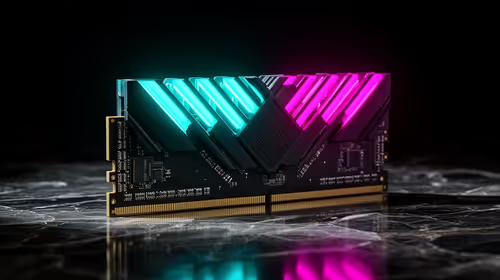
FPS Drops Troubleshooting for DDR5 build
DDR5 build FPS drops needs a methodical troubleshooting pass. Review drivers, thermals, power settings, background apps, cables and game settings before replacing parts in an SA gaming setup.
Read moreThe hidden cost of ignoring dust buildup needs a balanced parts plan, not a random basket. Map the CPU, GPU, RAM, SSD, cooling, and monitor target to the budget so SA builders know where to spend first.
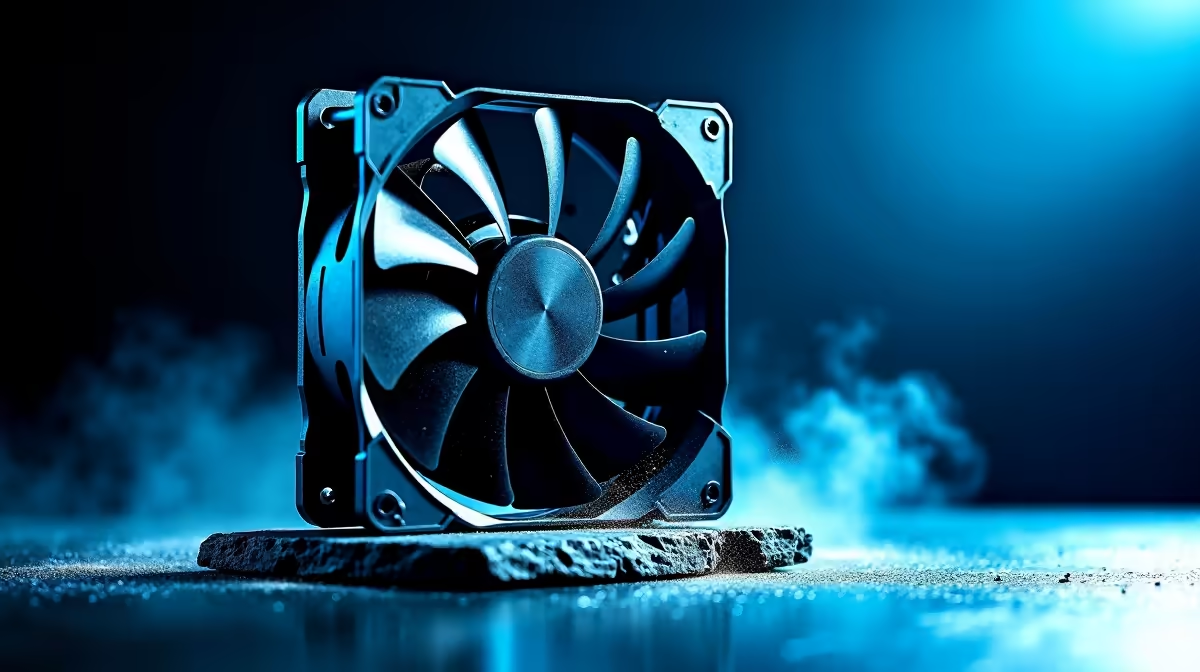
Ignoring dust buildup in case fans quietly costs you performance: a dust-clogged fan and filter can raise GPU temperatures by 8-15C, enough to push an RTX 4060-class card into throttling and shave 5-10fps off your average. A R150 air-duster can and a five-minute monthly clean prevent it. In dusty SA rooms, dust is the cheapest temperature problem to fix and the easiest to ignore.
Dust does not announce itself; it builds on fan blades and filters over weeks, slowly choking airflow. As intake drops, the GPU and CPU run hotter, and once a card crosses its thermal limit it down-clocks to protect itself. That is where the hidden cost lands: a throttling RTX 4060 might fall from 95fps to 85fps at 1080p, and a CPU clocking down adds stutter. Worse, sustained heat ages components and the fan bearings themselves, turning a R150 cleaning job into a R140 fan replacement.
Dust also makes fans louder. A clogged fan spins faster to move the same air, raising noise and wear. So the cost of ignoring dust is hotter temperatures, lost frames, more noise, and shorter hardware life, all of which a quick clean avoids.
Clean the front and bottom dust filters monthly in a typical SA home, more often near carpet or open windows. Use a R150 can of compressed air on the fan blades and heatsinks, holding fan blades still so you do not over-spin them. Positive-pressure airflow, with more intake than exhaust through filtered intakes, keeps internal dust down. This routine keeps temperatures and frame rates where they belong.
A clogged fan and filter can lift GPU temperatures by 8-15C, which is enough to trigger throttling on a mid-range card and cost you 5-10fps. Regular cleaning keeps temperatures and performance stable.
Monthly in a typical SA home, more often near carpet, pets, or open windows. A quick five-minute clean with compressed air prevents the slow buildup that chokes airflow and ages your hardware.
Yes. A dust-clogged fan spins faster to move the same air, raising noise and wear on the bearing. Cleaning restores quiet operation and extends fan life, avoiding an early replacement.
fan blades still with a finger when blasting compressed air; letting them spin freely can over-speed the bearing and damage the fan, turning a cleaning job into a replacement.
DDR5 build FPS drops needs a methodical troubleshooting pass. Review drivers, thermals, power settings, background apps, cables and game settings before replacing parts in an SA gaming setup.
Read more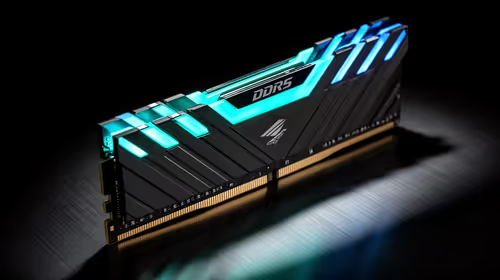
Fps drops on ddr5 build in south africa usually needs a settings, driver, thermal, or power check first. Work through safe SA troubleshooting steps before replacing parts or assuming a full upgrade.
Read more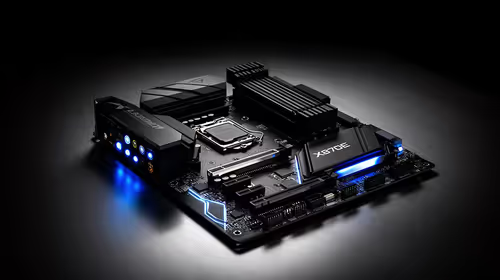
X870E motherboard frame pacing issues needs a step-by-step check before replacing parts. Review drivers, settings, thermals, power, background apps, display limits, cables, and game options before changing hardware.
Read more
4K monitors cost more as sharp panels raise the bar. See why 4k monitors still expensive for gamers in cape town before choosing screen specs, GPU targets, and value trade-offs.
Read more
4K monitors still feel expensive for Gqeberha gamers because panel quality, higher refresh rates, and GPU demands raise total setup cost. Compare 1440p, screen size, ports, and refresh rate before paying more for 4K.
Read more
ARGB cases explain mid-tier SA build appeal with visible style, airflow room, and cable control. For SA buyers, the smarter choice is a case where lighting, fan layout, and GPU clearance work together instead of just looking bright.
Read more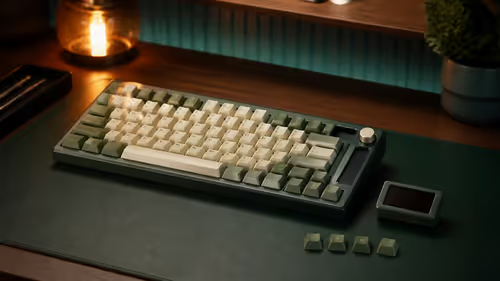
The Epomaker RT75 is a tri-mode 75% keyboard with a removable TFT screen. Local screen-equipped compact boards started at R1,199 in our snapshot.
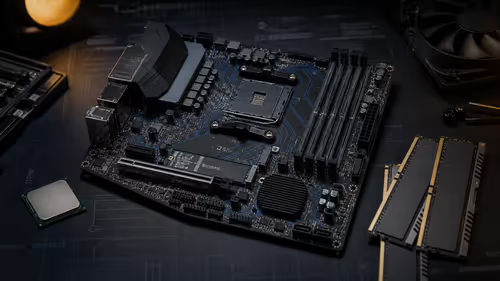
Gigabyte has launched two B450M D3HP boards for Ryzen 3000 to 5000 CPUs. The exact models had no confirmed Evetech listing on 15 August.

Attackers are exploiting a patched Mac screen-sharing flaw to gain root access. Update macOS and remove public port 5900 exposure immediately.

An auto-clamping phone holder offers seamless, one-handed convenience for your vehicle. Discover how it compares to manual cradle mounts to see which keeps your device secure during your daily drive. 🚗📱
A 10,000-hour test found similar image retention across older and newer OLED TVs, while newer panels were brighter and more efficient. Local OLED monitors started at R9,999.
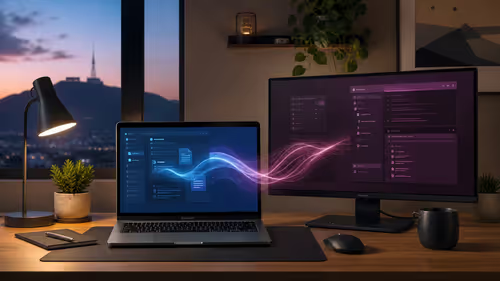
Canonical expects Ubuntu on WSL users to outnumber native Ubuntu desktop users before the end of 2026. The software is open source and runs inside supported Windows PCs.
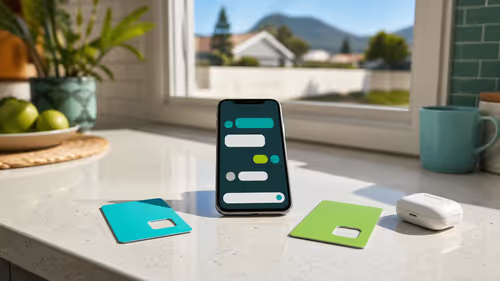
Telkom's daily bundles pair WhatsApp access with 10 all-network voice minutes. The R15 option includes 300MB, while the R17 option uses a fair-use threshold.
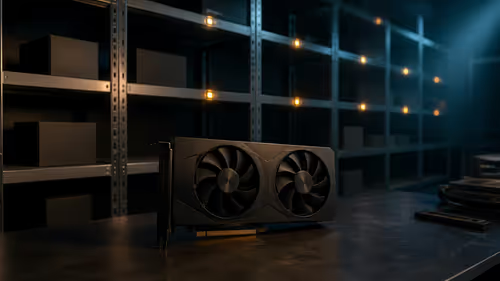
PC Partner expects entry-level graphics-card shortages to worsen in the second half of 2026. Current Evetech GPU listings started at R4,399 in our snapshot.
DDR5 build FPS drops needs a methodical troubleshooting pass. Review drivers, thermals, power settings, background apps, cables and game settings before replacing parts in an SA gaming setup.

Wi-Fi 6E vs Wi-Fi 6 depends on AAA single-player gaming needs, platform limits, and budget fit. Compare compatibility, latency, upgrade path, and real setup constraints before choosing for an SA build.
Fps drops on ddr5 build in south africa usually needs a settings, driver, thermal, or power check first. Work through safe SA troubleshooting steps before replacing parts or assuming a full upgrade.
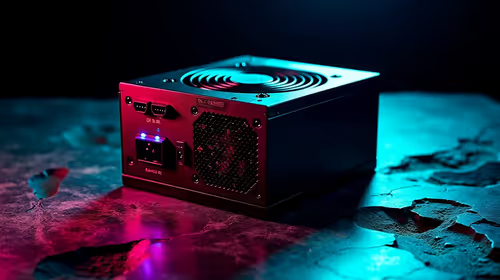
ATX 3.1 vs ATX 3.0 for cinematic story games Difference explained is mostly about compatibility, budget, upgrade path, and setup fit. SA buyers should check device support and real needs before expecting a clear win from either option.