Quick Answer
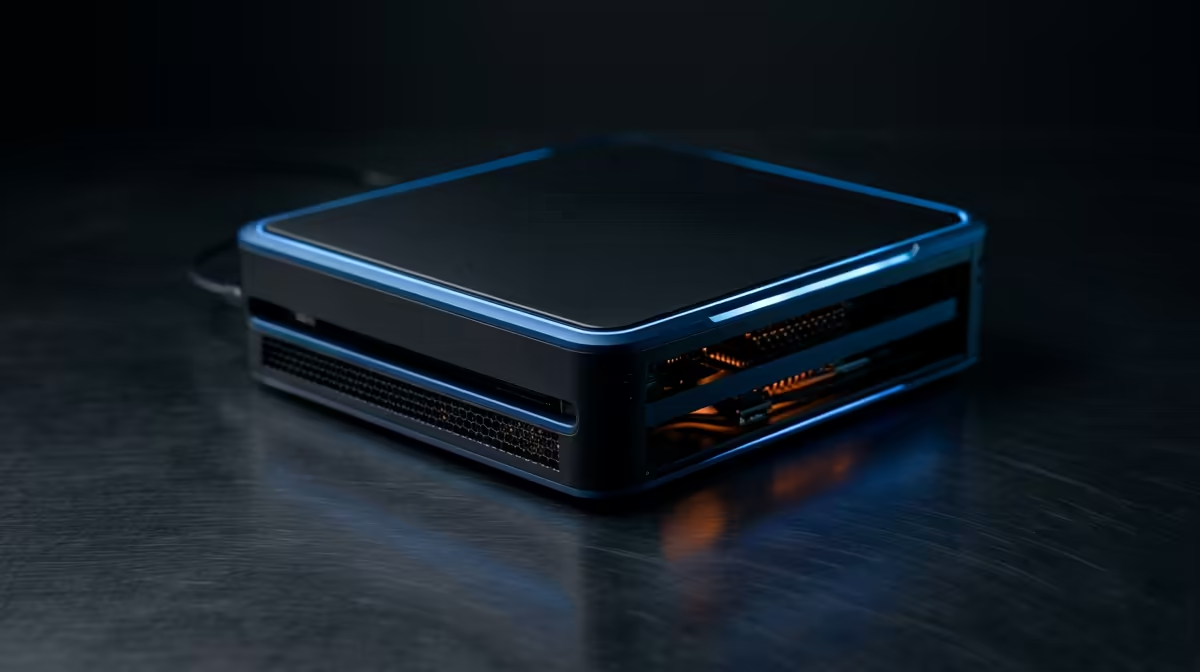
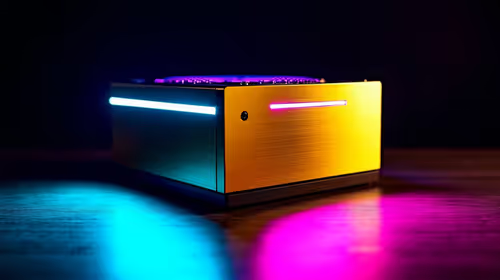
The first failure point in cheap mini PC choices is usually the part you touch, cool, plug in, or rely on every day. Budget around R4,000 to R14,000 so the real cost does not show up as noise, downtime, cable failure, or early replacement.
Decision Rule For The Setup
Start with the problem you can prove. Mini PCs work when the workload is clear, but they get expensive if you expect desktop GPU performance. If the current setup already meets that need, the upgrade is optional. Compare against Intel N100 mini PC, ASUS PN-series mini PC, or a Ryzen 5 mini PC as a named reference point, then check whether your desk, case, laptop, or room can use the same class of feature.
Specs Worth Paying For
The useful floor is 16GB RAM, 512GB NVMe SSD, HDMI or USB-C display output, and enough USB ports. Treat R4,000 to R14,000 as a broad planning band, then confirm live Evetech pricing and stock before checkout. Avoid sealed low-RAM models for Python notebooks, many browser tabs, or dual screens. If removing a premium feature would not change comfort, stability, speed, or compatibility, it should not drive the purchase.
SA Setup Checks
In a campus residence, private digs, or shared flat, noise, cable space, and warranty support often matter as much as the headline spec. Check measurements before checkout: desk width, case clearance, plug space, USB-C support, Wi-Fi room layout, or chair footprint can matter more than the next tier up. For this setup, choose a model you can keep using after the first upgrade.
Buying Order
First confirm compatibility. Then choose the capacity, connector, size, or comfort feature that solves this setup. Add convenience features only when they remove a daily friction point; that keeps the shortlist easier to defend and avoids replacing the same item next term or next holiday.
FAQ
What is the safest budget for a mini PC?
Use R4,000 to R14,000 as a planning range, then confirm the live listing before buying. If the cheapest option misses 16GB RAM, 512GB NVMe SSD, HDMI or USB-C display output, and enough USB ports, wait for a balanced model instead of replacing it quickly.
Which spec should I check first for this setup?
Check compatibility before performance claims. That means ports, size, socket, clearance, wireless support, or desk fit depending on the product, then compare against Intel N100 mini PC, ASUS PN-series mini PC, or a Ryzen 5 mini PC.
When is a premium mini PC worth it?
It is worth it when the premium feature changes daily use: quieter operation, better comfort, stronger stability, faster transfer, or cleaner cable management. It is not worth it when the upgrade only adds styling or a spec your device cannot use.
write down the one limitation you need the mini PC to solve for this setup, then reject any model that does not fix that limitation clearly.