Choosing video editing software is less about collecting effects than about the moment your footage starts fighting the timeline. A short phone clip, a multi-camera wedding, a university documentary and a colour-heavy commercial each ask different things of an editor. For South African crews, the choice also touches 50 Hz indoor lighting and the slower upload side of a shared fibre connection.
Quick Answer
Pick an editor that opens the camera formats you use, handles the finish you need and feels teachable enough to use under deadline. Test it with a real minute of footage before committing a whole project, especially if you expect proxies, captions, cloud review or a lengthy export. The right package is the one that keeps the edit moving without making every delivery step more complicated.
📶 Begin with the footage you actually shoot
Resolution is only one part of the story. A modest-looking clip recorded in a heavily compressed format can demand more decoding work than a larger file with an edit-friendly codec. Before choosing software, make a small test project with the camera, phone or screen recordings you genuinely expect to cut. Import clips, build a few edits, add a title and export a sample. That exercise tells you more than a feature list.
Frame rate deserves the same practical test. South Africa uses a 50 Hz mains environment, so footage made under some mains-powered lights can flicker when camera settings and lighting are out of step. Recording at 25 or 50 frames per second can be a sensible starting point for indoor material, but it is still worth checking a clip in the actual room. An editor cannot repair every lighting problem after the fact.
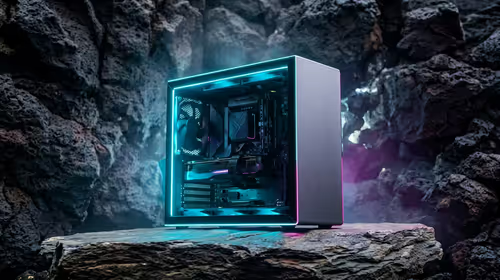
If you are assembling a longer project, give the software enough room to work alongside the hardware. Workstation PCs make more sense when the timeline includes large source files, multiple layers or regular exports; a lightweight editor can be perfectly adequate for occasional clips that need only trims, captions and a clean delivery file.
🧩 Let the timeline reveal the real bottleneck
A sluggish edit is not automatically a reason to replace the editor. First work out whether playback stalls while decoding source material, while applying effects, or only during export. Proxy workflows help by creating smaller working copies for the timeline while retaining the original media for the final render. They can make a long 4K project manageable without changing what the viewer receives at the end.
GPU acceleration matters most where the chosen editor can actually use it: colour work, effects, certain codecs and export paths vary by application and version. It is more useful to compare the editor's documented acceleration support with the footage in front of you than to assume every visual task is GPU-bound. The workstation graphics card options are relevant when that testing shows the graphics workload is truly holding the project back.
Keep scratch media separate from the operating system where possible. Cache files, proxy files and preview renders can multiply quietly as a project evolves. Fast solid-state drives give those temporary files somewhere responsive to live, while a clear folder plan makes it much less likely that an old cache fills the wrong drive on the morning of delivery.
🔌 Treat sharing as part of the edit, not the last chore
Cloud collaboration looks effortless only after the upload has happened. South African fibre packages can have a much lower upstream rate than their download headline, and a busy household or shared studio can make large original files painful to pass around. Send a compressed review copy or proxy set first when the other person only needs to comment on the cut. Reserve the original camera media and final master for a connection that has been tested for sustained uploads.
LTE is useful for messages, approvals and a small transfer, but it is a poor surprise solution for a multi-gigabyte project. Check the file size before pressing upload, and wait for a stable fibre period if the transfer can reasonably wait. This is not about making the workflow fancy; it is about preventing a deadline from being decided by a stalled upload at the very end.
Frequently Asked Questions
How do I choose video editing software as a beginner?
Start with the footage and delivery format you need, then favour an interface you can learn while still meeting those requirements. A short test edit will reveal whether the tools make sense before a larger project depends on them.
Why do some video files play badly in an editor?
Highly compressed camera formats can be difficult to decode frame by frame, even when the file is not especially large. Proxies or transcoded working files can reduce that strain during editing.
Should I record at 25 fps in South Africa?
It can suit indoor work under some 50 Hz mains-powered lighting, particularly when flicker is a concern. Test your camera and lighting together because fixtures and shutter settings still matter.
Do I need a powerful graphics card for video editing?
Only when the editor and your workload make meaningful use of it. Test playback, effects and exports first, then target the part of the workflow that is actually slow.
Why does uploading a final video take so long on fibre?
Upload speed is often lower than download speed, and shared use can reduce the rate further. A large master can therefore take far longer than its file size seems to suggest.
Ready to give demanding projects a steadier editing base?
Explore workstation-focused hardware with the footage, storage plan and export workload in mind.