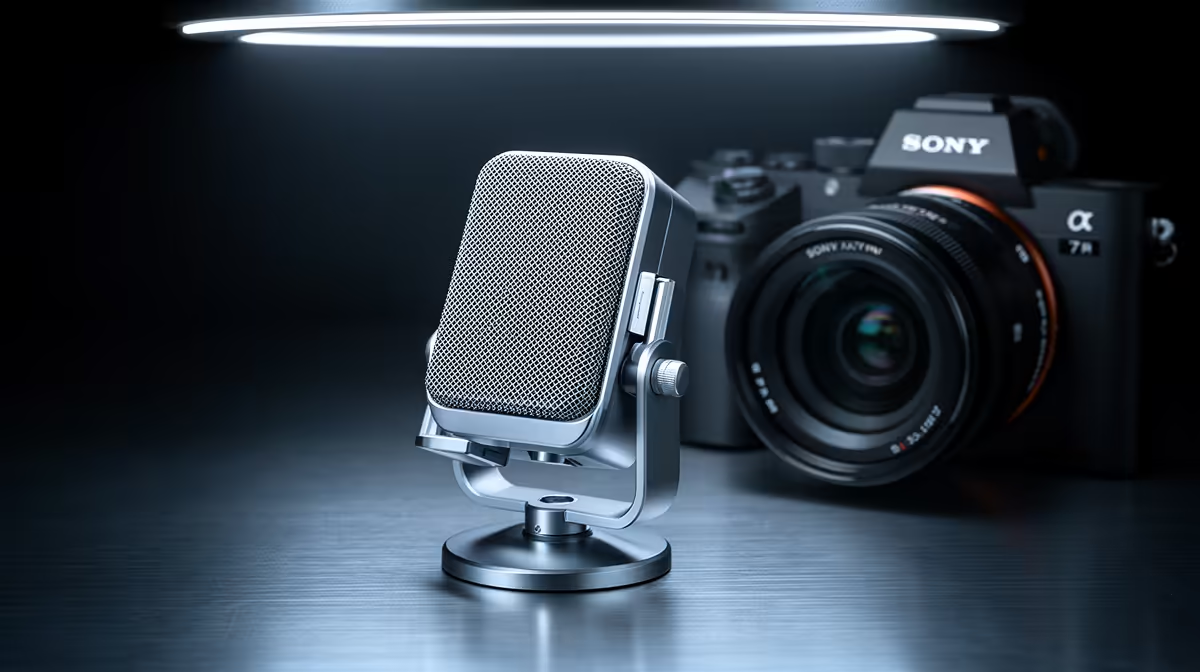
For low-latency online gaming comms, a cheap mic fails first on the connector and the pickup pattern, not the headline specs.
Quick Answer
In cheap mics, the USB connector and the omnidirectional capsule fail you first: they pick up your keyboard and the cable wears loose. A R900-R1,500 cardioid USB mic (FIFINE K688, HyperX SoloCast) keeps comms clean with near-zero added latency on a wired connection.
USB versus XLR, settled
For a single voice in a home or res room, USB wins: one cable, no R1,500 interface, and capsules like the FIFINE K669 (R900) or HyperX QuadCast (R2,000) already sound clean. XLR makes sense only when you run several mics, want to swap capsules, or already own an interface. The MV7+ (~R6,000) hedges with both outputs, but most buyers never plug in the XLR side, so do not pay for it speculatively.
Where cheap mics actually fail
The first failure points on a R250-R400 mic are the moulded USB connector that works loose, the thin capsule that picks up keyboard and room noise, and a level that drifts mid-recording. A cardioid pattern, a metal body and a real gain dial fix all three, which is why the R900-R1,500 bracket is the practical floor. Add a R150 pop filter and place the mic 15-20cm off-axis to kill plosives before they reach editing.
FAQ
USB or XLR mic for a South African home setup?
USB for a single voice; it is one cable and no interface cost. XLR only pays off with multiple mics or a treated room, adding R1,500 or more for the interface alone.
What is the cheapest mic worth buying?
Around R900 gets a FIFINE K669-class cardioid USB mic with a metal body that holds up for years. Below R400 you are buying connectors and capsules that fail first.
Do I need a pop filter and boom arm?
A R150 foam pop filter is worth it for any voice work; a boom arm (R300-R700) is a nice-to-have that frees desk space but is not essential. Spend on the capsule before the accessories.
mic gain so normal speech peaks around -12dB to -6dB in your recording software; that headroom stops clipping without forcing you to shout.