Quick Answer
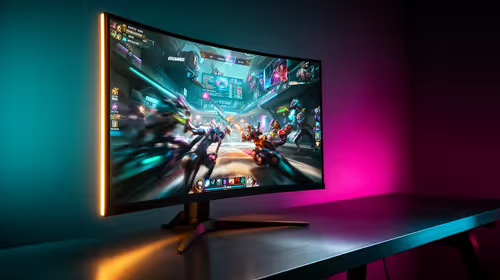
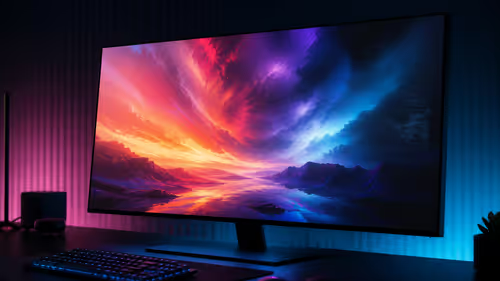
Low FPS on a ultrawide monitor is usually a configuration, driver, power or memory-profile problem before it is a failed component. Confirm Windows power mode, GPU driver, EXPO or XMP, Resizable BAR, temperatures and the monitor refresh setting, then compare average FPS and 1% lows. A Samsung Odyssey G9 49-inch class system should have a clear 60 fps baseline and can target 144Hz or 240Hz only when the GPU and CPU match the screen.
First Test To Run
Record average FPS, 1% lows, GPU usage, CPU usage and temperature in the same scene. A 144Hz screen needs more than a 144 fps average; it needs stable frame pacing too. If GPU usage is below 80% while FPS is low, look at CPU limits, power plans, memory profile or background software. If GPU usage is pinned at 95-99%, lower graphics settings before blaming the ultrawide monitor.
Ultrawide panels often need a stronger GPU than the same game at standard 1440p.
Fix The Hardware And Driver Path
Confirm the cable and refresh path. Set Windows to the panel's real refresh rate, use DisplayPort where practical, and avoid stacking an in-game cap, driver cap and monitor processing mode together. Samsung Odyssey G9 49-inch class panels need the GPU to feed 3440x1440 or 5120x1440, 144Hz to 240Hz; otherwise the monitor exposes the weakness rather than causing it.
Windows And Game Settings
Lower one heavy graphics option such as ray tracing, path tracing, shadows or texture pack size, then compare 1% lows. For esports, start with a 144 fps target before chasing 240 fps. On Windows 11, check Game Mode, Hardware-accelerated GPU scheduling, startup apps, power mode and the active display refresh rate. If FPS improves only when overlays are closed, remove the overlay stack instead of replacing the ultrawide monitor.
FAQ
Can a ultrawide monitor cause low FPS?
Yes, if it affects power, drivers, memory, USB or display mode. Test with average FPS and 1% lows so the result is not based on feel alone.
What FPS target should I test first?
Use 60 fps as the stability baseline, then test 144Hz or 240Hz if the screen supports it. High refresh needs stable 1% lows.
When should SA buyers upgrade instead of tuning?
Upgrade when clean drivers, temperatures and settings still miss the target. Use the R10,000-R30,000 band as a broad planning anchor, check current Evetech pricing.
Practical check
Write down the test scene, refresh rate, driver version and the one result that changed. That note tells you whether to tune, cool, reconnect or upgrade the ultrawide monitor.