Quick Answer
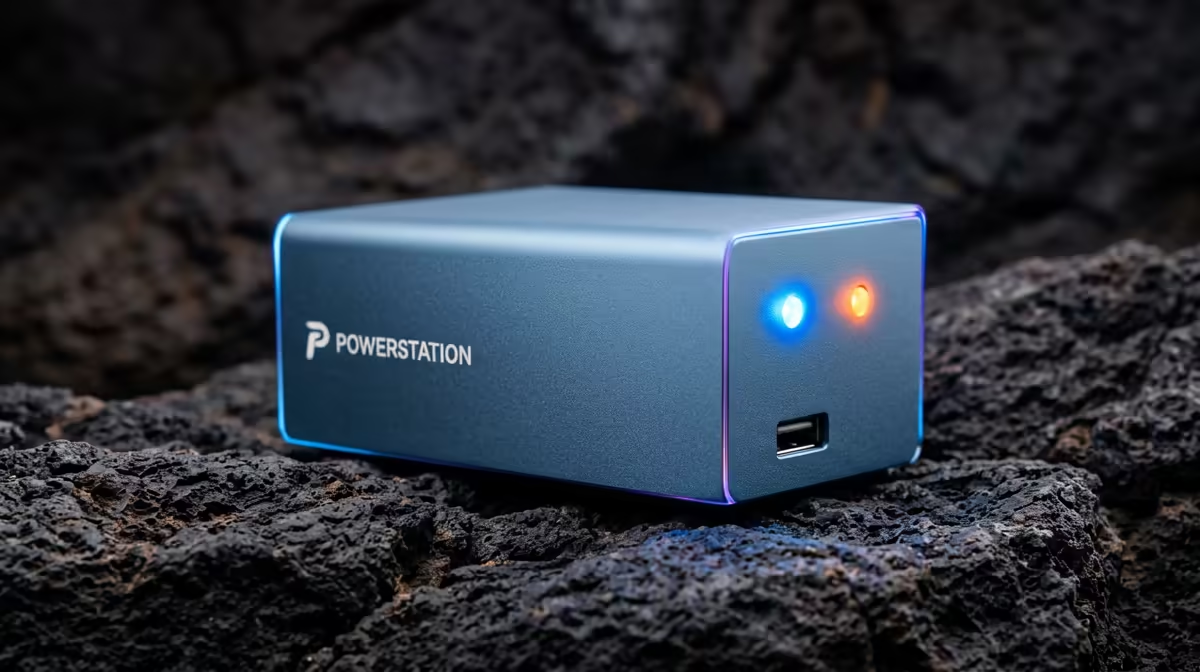
In cheap UPS units used for casual gaming after work, the battery fails first, usually within 1 to 3 years, followed by the cooling fan and the switching relay. A quality 1000VA line-interactive unit with a replaceable battery (about R1,900 to R2,900 currently stocked at Evetech) lasts far longer and lets you swap the battery instead of binning the whole unit.
The Failure Order In Budget Units
Sealed lead-acid batteries are the weak point: cheap units use small cells that lose capacity fast, so a unit that gave 8 minutes when new might give 2 minutes after two years. Next is the fan, which can seize and let the unit overheat, and the transfer relay that clicks every time it switches to battery. Cheap standby units also lack AVR, so they switch to battery on every mild voltage sag, wearing the battery faster. A line-interactive unit with AVR and a user-replaceable battery sidesteps most of this.
Buying One That Lasts For Casual Gaming After Work
For casual gaming after work, choose a line-interactive 1000VA/600W unit with AVR and a battery you can replace yourself; that single feature can double the useful life. Check the joule rating for surge clamping and confirm the outlets you need are battery-backed, not surge-only. Budget about R1,900 to R2,900 currently stocked at Evetech, and plan to replace the battery roughly every 3 to 4 years rather than replacing the whole unit.
FAQ
Do I need a pure sine wave UPS?
For most ATX power supplies a simulated sine wave 1000VA unit is fine. If you run an active-PFC PSU that beeps or trips on battery, step up to a pure sine wave model; those sit roughly R3,500 to R6,000 currently stocked at Evetech.
How big a UPS for a gaming PC plus monitor?
A 1000VA/600W line-interactive unit covers a 300W tower plus a 30W monitor with headroom and gives 6 to 9 minutes for a calm shutdown. A 450W high-end rig wants the 1500VA/900W class.
Will a UPS protect against surges as well as dips?
Yes, line-interactive units add AVR and surge protection alongside the battery, so they clamp spikes and correct mild brownouts. Check the joule rating and that your gear is on the battery-backed outlets, not surge-only ones.
device that must survive a power dip, count only the battery-backed outlets, and pick the smallest unit that leaves about 30% spare wattage.