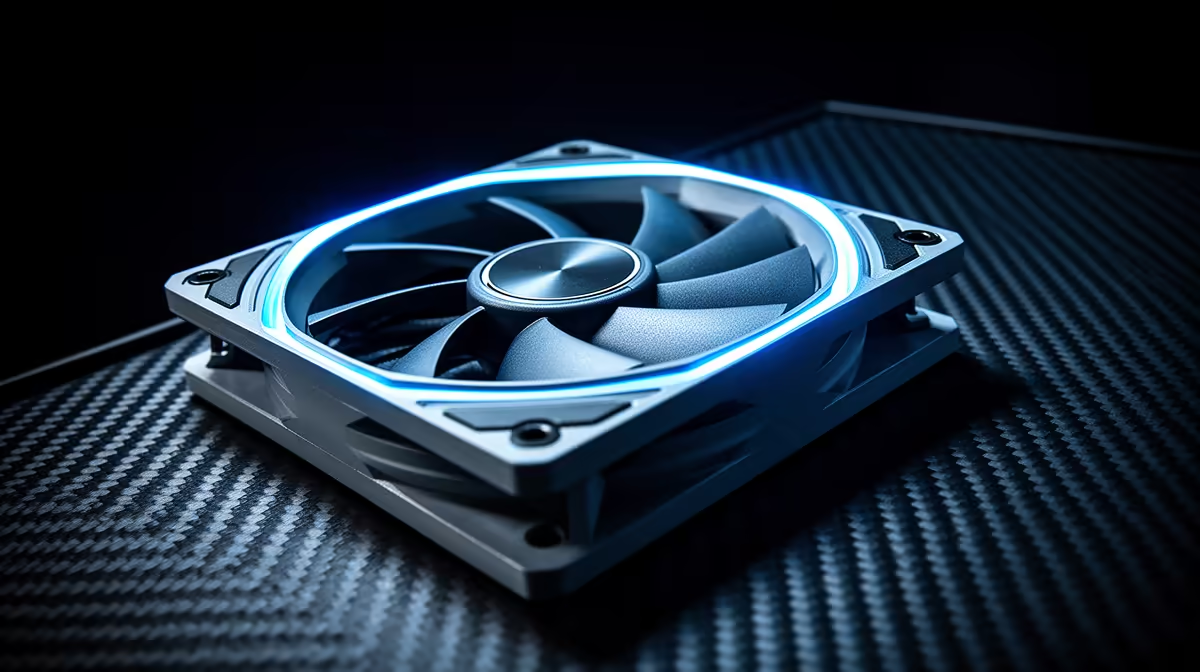
Case fans are cheap, which is exactly why people buy the wrong ones. For deal hunters, a few good fans beat a box of bright, loud ones.
Quick Answer
Buy fans by airflow (CFM), static pressure and noise (dBA), not by RGB. Good 120 mm quiet fans run about R150 to R450 each; a quality three-pack sits around R600 to R1,200. Aim for a slight positive pressure (more intake than exhaust) to cut dust, and keep load noise under 30 dBA for a calm desk.
The mistakes to avoid
Mistake one: buying for looks. RGB does not move air; CFM, static pressure and dBA do. Mistake two: ignoring airflow direction. Mixing intakes and exhausts wrong creates hot pockets, so plan front and bottom intake, rear and top exhaust. Mistake three: running everything at full speed. A sensible fan curve keeps the build quiet until the components are actually hot.
Choosing fans for deal hunters
For deal hunters, prioritise quiet, high-airflow 120 mm or 140 mm fans rated under 30 dBA, with PWM so the motherboard can throttle them. Static-pressure fans suit radiators and dense filters; airflow fans suit open intake slots, so match the fan to the spot. A slight positive pressure with filtered intakes keeps SA dust out, which matters more here than chasing a single extra degree.
FAQ
How many case fans do I need?
Two intake and one exhaust is a solid baseline for an ATX tower. Add a top exhaust for hot components, but more fans past that give diminishing returns and add noise.
Airflow or static-pressure fans?
Airflow fans suit open intake and exhaust slots; static-pressure fans suit radiators and tight dust filters. Many quality fans do both well enough for a typical build.
Does positive pressure really reduce dust?
Yes. With more filtered intake than exhaust, air leaves through unfiltered gaps instead of pulling dust in through them. It keeps a SA build cleaner between maintenance.
slight positive pressure with filtered intakes and a gentle PWM curve. It keeps dust out and the build quiet far better than adding more fans at full speed.