


1000W PSU Planning for RTX 5090 Builds in SA
1000W for RTX 5090 needs a full-build check, not a simple yes. Review GPU guidance, CPU draw, transient load, connectors, PSU quality, and upgrade plans before deciding.
Read moreA 3-axis mechanical gimbal on a drone independently corrects for pitch, roll and yaw movements to keep the camera perfectly level and footage smooth, even when the drone banks or jolts in wind. Without a gimbal, every movement the drone makes translates directly into
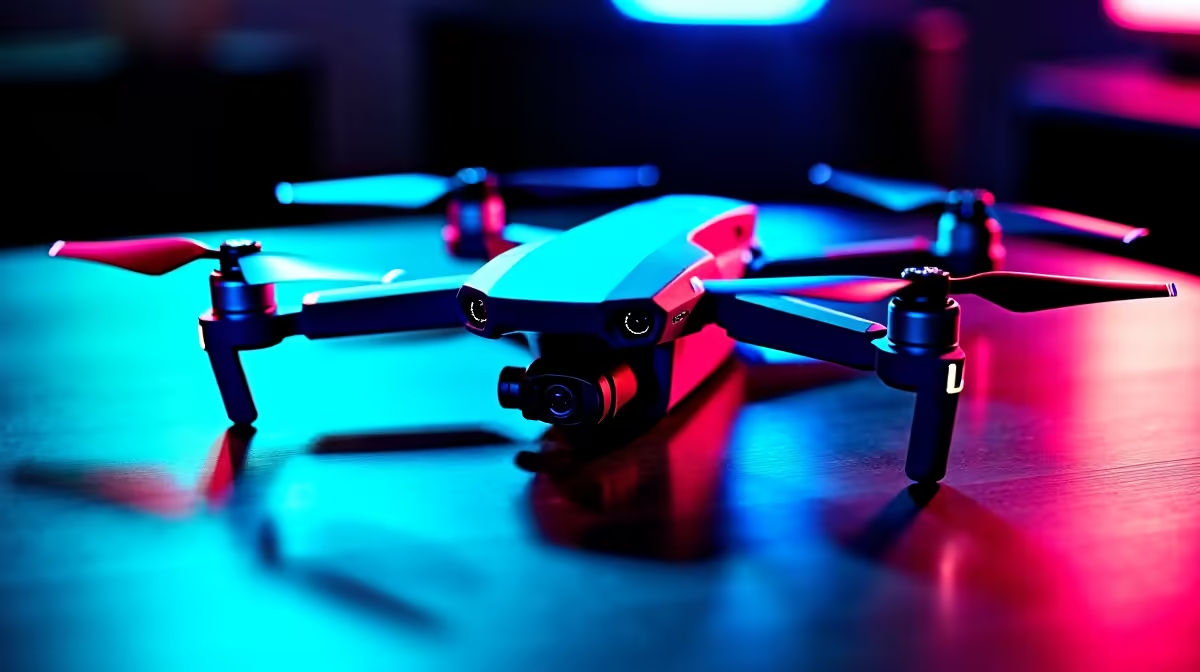
Watch raw footage from a drone with no stabilisation and it is almost unwatchable: every gust, every twitch of the sticks, every motor vibration shudders through the frame. The piece of hardware that turns that mess into glassy, cinematic video is the gimbal, a small motorised cradle that holds the camera dead level no matter what the airframe does around it.
A 3-axis gimbal on a drone is a motorised mount that actively counteracts movement on three rotational axes: pitch (tilt up and down), roll (tilt side to side), and yaw (turn left and right). Tiny brushless motors push the camera in the exact opposite direction of any wobble, so the horizon stays flat and the shot stays smooth even when the drone banks hard or gets shoved by wind.
Think about how an aircraft moves. When a drone tips forward to fly ahead, that is pitch. When it leans to one side to slide left or right, that is roll. When it spins to face a new direction, that is yaw. Without correction, each of those movements drags the camera along, and you get a horizon that tilts and bobs.
A 3-axis gimbal puts an independent motor on each of those axes. Sensors measure the drone's orientation hundreds of times a second, and the motors make instant micro-corrections to keep the camera locked on its target framing. The body of the drone can pitch and roll freely while the lens floats serenely level.
A gimbal does two jobs at once. The obvious one is keeping the horizon straight during deliberate moves, so a banking turn does not roll your whole shot sideways. The subtler one is killing high-frequency vibration, the buzz from the props and motors that turns into an ugly jelly-like wobble across the frame, often called the jello effect.
Cheaper drones sometimes skip the mechanical gimbal and lean on electronic stabilisation, which crops into the footage and smooths it in software. That works in calm conditions but loses detail and struggles in real Cape Town southeaster wind. A proper mechanical 3-axis gimbal corrects before the image is captured, so nothing is lost. Drones and the broader run of connected camera gadgets sit within the smart home and gadget category, and the smart home and gadget range is worth scanning if aerial kit is on your list.
To round out a flying setup, spare props, cases, and storage matter as much as the drone itself, and the accessories people buy most cover those everyday extras.
No. A gimbal is physical hardware that moves the camera with motors. Electronic stabilisation is software that crops and shifts the image after capture. A mechanical gimbal preserves full resolution and handles wind far better.
A 2-axis gimbal usually handles pitch and roll. Adding yaw control locks the camera against the drone's turning motion too, which keeps pans smooth and removes the last source of horizontal wobble.
Yes, the gimbal is one of the more delicate parts of a drone because the motors and arms are exposed. Many drones include a small gimbal guard or cover for transport, which is worth using.
It helps a great deal. When wind pushes the drone around, the gimbal motors fight to keep the camera level, so your footage stays usable in conditions that would otherwise ruin the shot.
Planning your first aerial setup? Browse the drones and smart gadgets at https://www.evetech.co.za/PC-Components/smart-home-appliances-344 and start shooting steady footage from day one.
No. A gimbal is physical hardware that moves the camera with motors. Electronic stabilisation is software that crops and shifts the image after capture. A mechanical gimbal preserves full resolution and handles wind far better.
A 2-axis gimbal usually handles pitch and roll. Adding yaw control locks the camera against the drone's turning motion too, which keeps pans smooth and removes the last source of horizontal wobble.
Yes, the gimbal is one of the more delicate parts of a drone because the motors and arms are exposed. Many drones include a small gimbal guard or cover for transport, which is worth using.
It helps a great deal. When wind pushes the drone around, the gimbal motors fight to keep the camera level, so your footage stays usable in conditions that would otherwise ruin the shot.
1000W for RTX 5090 needs a full-build check, not a simple yes. Review GPU guidance, CPU draw, transient load, connectors, PSU quality, and upgrade plans before deciding.
Read more
RTX 5080 Super with a 750W PSU is more comfortable than lower wattage if the unit is quality. SA builders should still confirm GPU guidance, CPU draw, connector type, airflow, and upgrade room.
Read more
How to fix FPS drops after a RX 9070 XT starts with driver cleanup, chipset updates, thermals, and power checks. For SA gaming PCs, confirm PCIe seating, monitor refresh, frame caps, and per-game graphics settings before replacing parts.
Read more
How to fix low FPS Windows 11 Wi-Fi 7 issues starts by checking whether the problem is frame rate or network lag. Test ping, drivers, power settings, Ethernet, and game FPS before adjusting visuals.
Read more
AM5 is smart for SA builders because it supports newer Ryzen CPUs, DDR5 memory, and a longer upgrade path. Compare board cost, cooling, gaming needs, and local part availability before choosing your next PC platform.
Read more
AM5 gives Randburg gaming builders a longer upgrade path. For SA buyers, DDR5 support, newer board features, and future CPU options can justify the platform. Weigh board cost, cooler support, BIOS maturity, and upgrade timing before choosing.
Read more
RTX 5090 on a 550W PSU leaves almost no practical room for OC plans. Treat the setup as constrained, with CPU draw, power spikes, cable quality, thermals, and stability checks more important than chasing extra clocks.
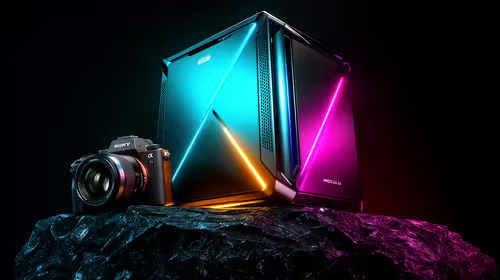
FPS drops on a Ryzen 9 9950X3D build often have a fixable cause. Check settings, drivers, thermals, background tasks, network conditions, and bottlenecks before assuming a part must be replaced.

The difference between PCIe 5.0 and PCIe 4.0 for SA gamers is mostly bandwidth headroom. Compare GPU slot needs, NVMe speed, motherboard support, and upgrade timing before paying extra for a newer platform.

Gaming PC stuck pixel checks in South Africa should confirm the monitor fault first. Use colour tests, screenshot comparison, cable swaps, display menu checks, and clear photos before deciding on support.

AMD's current driver now lists a Radeon RX 9050 4GB, while product coverage details a narrowed memory system. SA buyers should weigh the low VRAM ceiling against current local Radeon options.

Samsung Display has demonstrated a 16-inch 2.5K OLED laptop panel running at 300Hz. SA buyers should wait for a named notebook, full panel specifications and a local price before planning an upgrade.

Microsoft says some Windows 11 game crashes after recent updates are linked to RGB-related drivers. Affected SA gamers should confirm the update and driver before using the published registry workaround.
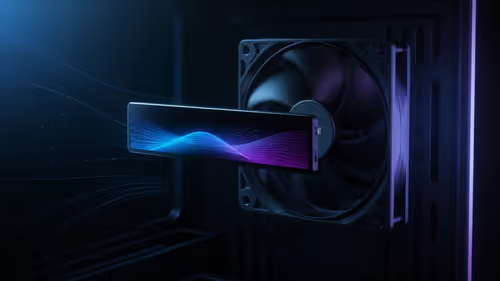
Thermalright's Fan Frame Vision-1 adds a 640x172 status screen to a standard 120mm fan. SA builders should check clearance, USB routing and local support before treating it as an easy upgrade.

Shokz OpenFit Air 2 earbuds weigh 7.2g each and use a redesigned dual-driver open-ear layout. SA buyers should choose them for comfort and awareness, not maximum isolation.

A fake 113GB GTA VI ISO reportedly used empty padding around a small malware payload. SA gamers should delete unofficial builds, keep Windows security active and wait for official channels.

The ROG Flux Charger Dock combines 260W total output, 140W laptop charging and HDMI 2.1. SA buyers should check laptop USB-C limits, display needs and local warranty first.

ASRock's Rock 360 Digital AIO adds a 1.05-inch CPU temperature display, 360mm radiator and simplified wiring. SA builders should check case fit, socket support and local warranty.