The ache that creeps into your neck by mid-afternoon usually traces back to a setup that quietly fights your body all day. Neutral posture is the fix, and it is less about sitting up straight on command and more about arranging your desk so your joints rest in their lowest-strain positions. Get the monitor, elbows, and wrists where they belong and the static muscle load that causes fatigue largely disappears.
Quick Answer
Neutral posture places the display's upper edge level with your eyes, your elbows bent at roughly 90 degrees, and your wrists held flat and level as you type. This alignment minimises the constant low-level muscle tension that drives neck, shoulder, and wrist fatigue during long desk sessions. It is the reference position every ergonomic guideline starts from.
The Three Anchors of Neutral Posture
Neutral posture comes down to three checkpoints, and each one removes a specific strain.
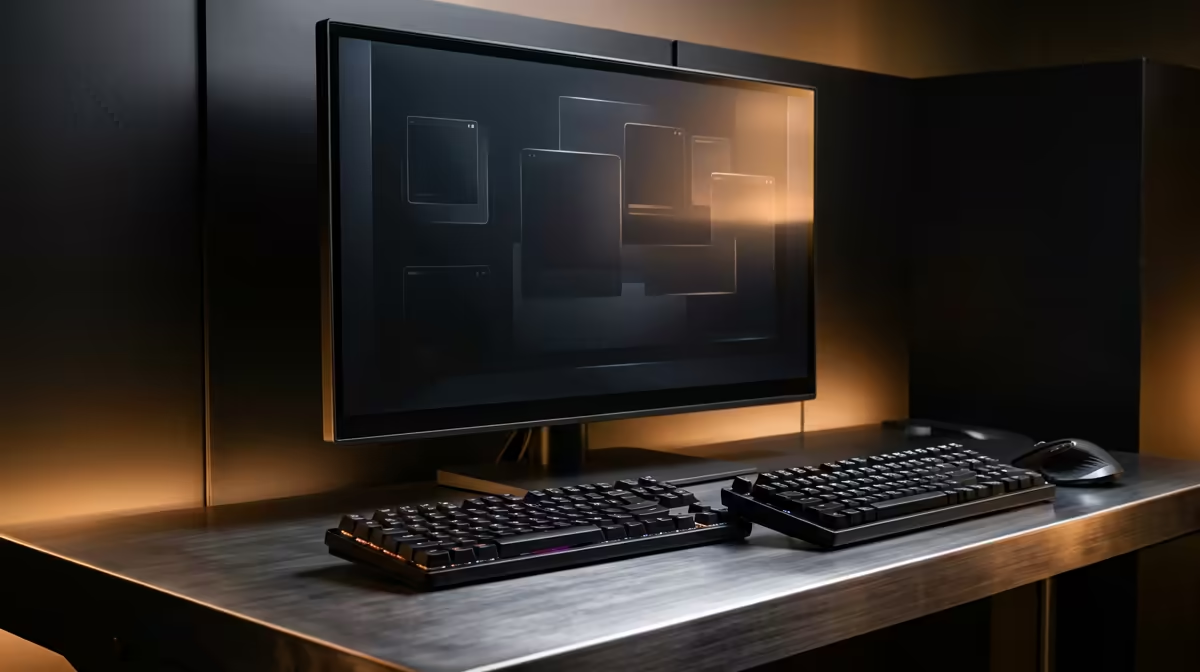
The monitor sits with its upper edge level with your eyes, so your gaze drops only slightly to the centre of the screen. Look up at a screen all day and your neck holds your head back against gravity; look down and it tips forward. Both fatigue the same muscles. Eye level keeps your head balanced over your spine.
Your elbows bend at roughly 90 degrees, with upper arms hanging relaxed at your sides. This keeps your shoulders down instead of hunched and your forearms supported rather than reaching. If your desk forces your arms up or out, the shoulders pay for it within an hour.
Your wrists stay flat as you type, held in a neutral line rather than angled up toward the screen or dropped below the keyboard. A bent wrist compresses the soft tissue running through it, which is where typing-related strain begins.
How to Reach Neutral Posture at Your Desk
Start with the chair, because everything else references it. Set the seat height so your feet rest flat on the floor and your thighs sit roughly parallel to it. From there, your elbows should naturally fall near desk height for that 90-degree bend.
Next, fix the monitor. If its upper edge falls below your eye line, raise it on a stand or a sturdy riser. Laptop users almost always need to lift the screen and add a separate keyboard, because a laptop forces a compromise: a screen low enough to type on is too low to look at. A supportive chair with proper height and back adjustment does most of the heavy lifting here, and the Arozzi gaming chair range at Evetech covers the kind of adjustability that makes neutral posture easy to hold.
Finally, pull your keyboard and mouse close enough that your elbows stay at your sides. Reaching forward for them drags your shoulders out of neutral no matter how well the rest is set. For a quick read on which chairs perform well for extended sessions, the chair best sellers at Evetech show consistently popular, well-reviewed options.
Why It Matters More Than Willpower
You cannot muscle your way to good posture by remembering to sit up. The moment you focus on something else, your body drifts back to whatever the furniture allows. Neutral posture works because it is built into the setup, so holding it costs no conscious effort. Arrange the desk correctly once and the comfortable position becomes the default one.
Frequently Asked Questions
Where should my monitor be for neutral posture?
Raise the display until its top edge aligns with your natural eye line, and keep it roughly an arm's length away. This lets your gaze fall slightly downward to the centre of the screen without tilting your head up or dropping your neck forward, which is what causes neck strain over a long day.
What angle should my elbows be at?
Roughly 90 degrees, with your upper arms relaxed at your sides rather than reaching forward. Set your chair and desk so your forearms rest near horizontal as you type, keeping your shoulders down instead of hunched.
Why do my wrists hurt when I type?
Usually because they bend up or down as you type instead of staying flat. A cocked wrist compresses the soft tissue passing through it. Keep the keyboard at a height that lets your wrists run straight, and consider a wrist rest to support them during pauses.
Do I need a special chair for neutral posture?
Not strictly, but an adjustable chair makes it far easier, because seat height sets the position of everything above it. A chair with adjustable height and back support lets you place your feet flat and your elbows at desk level, which are the foundations of the whole setup.
Is neutral posture the same as sitting perfectly upright?
No. Neutral posture is about your joints resting in low-strain positions, not rigid uprightness. A slight, supported recline is fine, as long as your monitor, elbows, and wrists stay in their neutral alignment. The goal is reduced muscle load, not military stiffness.
Build a setup that holds neutral posture for you. Explore the Arozzi gaming chair range at Evetech to find a seat with the height and back adjustment that keeps your elbows and spine where they should be all day.