The right ergonomic mesh office chair must fit the user, desk and daily tasks before its material becomes persuasive. Start with adjustable contact points, room around the workstation and clear answers about the exact seat construction.
Quick Answer
A useful mesh-chair checklist can be answered directly by the E3 Ultra: nylon-yarn mesh, 1.97-inch seat-depth travel, 8D lumbar, five-way arms, 4D headrest, gravity sensing and 140-degree recline.
Check seat fit, lumbar contact, arm positioning, head support, recline and the chair's rated capacity. The R9,599 E3 Ultra uses full nylon-and-yarn mesh with 16.5% breathable construction, 8D lumbar adjustment, omni armrests, a biaxial headrest and 140-degree recline.
📐 Begin with body-to-chair fit
The seat should support the thighs without pressing behind the knees, while the feet remain stable and the user can sit against the backrest. Those checks require actual dimensions and a trial; adjustment labels cannot settle them.
Seat composition matters for contact feel, airflow and care. The E3 Ultra is a mesh model, so choose cleaning methods for its nylon-and-yarn surface and surrounding frame.
🎚️ Map useful adjustment
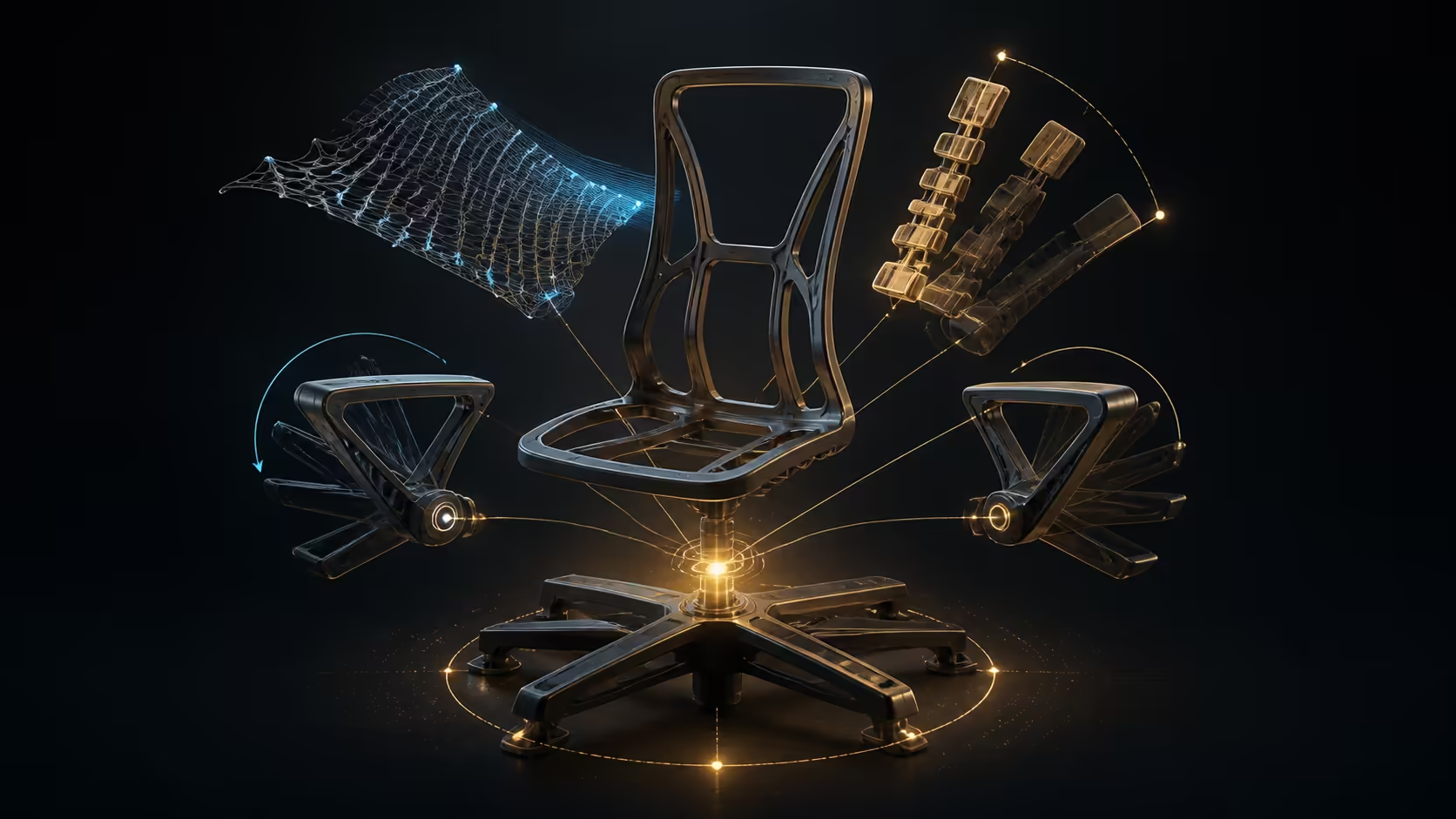
HBADA gives this chair an 8D adjustable lumbar system. Its arm supports use a 720-degree omni range. Rather than counting features, test whether these controls reach the lower back and forearm positions your desk requires.
Compare the range against Evetech's HBADA chair options, making notes for keyboard use, pointer work and relaxed reading. A control earns value when its preferred setting can be restored easily.
↔️ Include head and recline movement
The E3 Ultra uses a 4D biaxial headrest whose rotation-and-tilt travel covers 70 degrees. Set it only after screen height and seated position are aligned. Then retest as the backrest moves toward its 140-degree limit.
Do not assume extra headrest motions or recline locks. Learn each physical control and judge contact gently rather than forcing the body to remain against the support.
🧱 Verify structure and limits
Aluminium alloy is used for the five-star base and the supporting bar. Material is useful construction information, but it does not reveal the chair's load ceiling or dimensions. Obtain those separately for the intended user and space.
Evetech's general office seating selection is the place to compare capacity, fit and material across models. Keep a shortlist only when every essential constraint has a specific answer.
Include adjustment access in the fit test. A useful control must be reachable and understandable while the user remains safely positioned. Ask every regular user to restore a lumbar, arm and headrest reference; a range that only one person can operate may be poor for a shared space.
Score material information only when it belongs to the exact candidate. A chair can satisfy the adjustment checklist and still leave the buyer without enough evidence about upholstery care, contact surfaces or long-session airflow.
Then test ordinary transitions: approach the desk, work, recline modestly, return upright and stand. Collisions, lost settings or forced reaches often appear during movement rather than a static sit. These observations turn a broad ergonomic shortlist into evidence tied to the actual room.
Allow another regular user to repeat the sequence without copying the first setup. Their result can expose whether the chair's range genuinely accommodates the household or merely fits one person well.
The aluminium-alloy base and support bar add known construction. Check the user's fit across the six lumbar and upper-support ranges, then treat medical relief as outside the product promise. The complete adjustment map matters more than the mesh label alone.
Four recline levels and a sliding seat add useful fit checks beyond the mesh surface itself.
Frequently Asked Questions
What fit measurements belong at the top of the checklist?
Check seat depth and width, foot support, desk reach and where the backrest meets the torso. These relationships decide whether adjustments start from a workable position.
What lumbar capability is included?
The E3 Ultra has an adjustable lumbar system carrying an 8D description. Use it progressively and assess one changed control during ordinary work.
How do the headrest and armrests adjust?
Its head support is 4D and biaxial with 70-degree rotation and tilt, while the armrests offer a 720-degree omni-adjustment range.
What recline range does the chair offer?
The backrest reaches 140 degrees. Exact resistance, intermediate positions and locking behaviour should be checked on the individual chair.
Which material forms the base?
HBADA uses aluminium alloy in the five-star base and support bar. That material detail does not establish a weight capacity.
Can load capacity be estimated from these features?
No. Adjustability and base material cannot produce a safe weight rating; obtain a model-specific limit before completing the fit decision.
Ready to turn an ergonomic-chair checklist into a practical trial?
Explore Evetech office chairs with your fit dimensions, task positions and required capacity written down before comparing materials.