Quick Answer
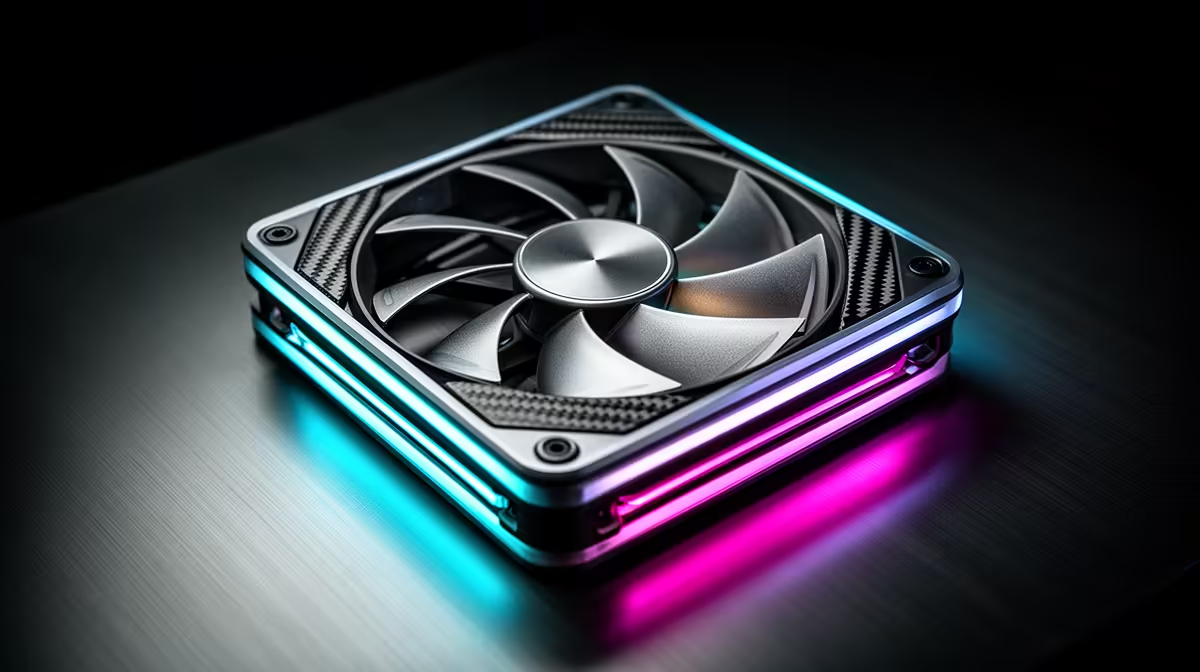
For racing wheel cockpits, premium case fans are worth it when sim racing titles run the CPU and GPU at sustained load through long stints, and you want quiet airflow that holds them below throttle. Premium fans cost about R350 to R550 each in SA versus R150 to R250 standard, moving 50 to 75 CFM at under 25dBA for long, focused races.
When Premium Fans Earn Their Price For Sim Racing
Sim racing titles like iRacing, Assetto Corsa, or Le Mans Ultimate keep the CPU and GPU near full load for the length of a stint, which can run 30 minutes to over an hour. Premium fans matter because they move enough air to hold both components below the 90 to 95C throttle point through a long race, preventing the frame-time hitches that throw off your braking points and force feedback feel.
Quiet matters in a cockpit too. With a wheel, pedals, and often a bass shaker, you want to hear the engine and tyre audio, not the PC, so fans under 25dBA keep the rig quiet during a focused race. A premium fan's smooth airflow suits the long, concentration-heavy sessions sim racing demands.
When Standard Fans Are Fine
If you run short races at modest settings, the load is lower and standard R150 to R250 fans cope; premium is overspend. Premium pays off for long stints at high settings where heat builds for an hour or more, and a full premium set runs around R2,000. For smoother sim racing overall, frame consistency comes from the GPU and CPU, so fix any throttling with airflow, then invest in those components for steadier frame times under braking.
FAQ
Why do sim racing titles need strong cooling?
They keep the CPU and GPU near full load for the length of a stint, often 30 minutes to over an hour, which builds sustained heat. Strong airflow holds them below throttle to keep frame times consistent.
Are premium fans quieter for cockpit racing?
Yes. Premium fans stay under 25dBA where cheap fans ramp loud under sustained load, so you hear the engine and tyre audio rather than the PC during a focused race.
Do better fans help my lap times?
Indirectly. By preventing thermal throttling on long stints, they keep frame times steady, which keeps braking points and force feedback consistent. The GPU and CPU set raw frame rate.
long race and watch CPU and GPU temperatures late in the stint. If either nears throttle, add quiet intake airflow so frame times and force feedback stay consistent through every lap.