Quick Answer
Cheap gaming desks become expensive for low-latency online gaming when a wobbly top transmits every keypress and mouse jolt, throwing off your aim in fast titles. A stable steel-framed desk (around R1,500-R2,500 at Evetech) removes that wobble; the R600 particleboard desks are the ones that cost you rounds.
Where the hidden cost shows up
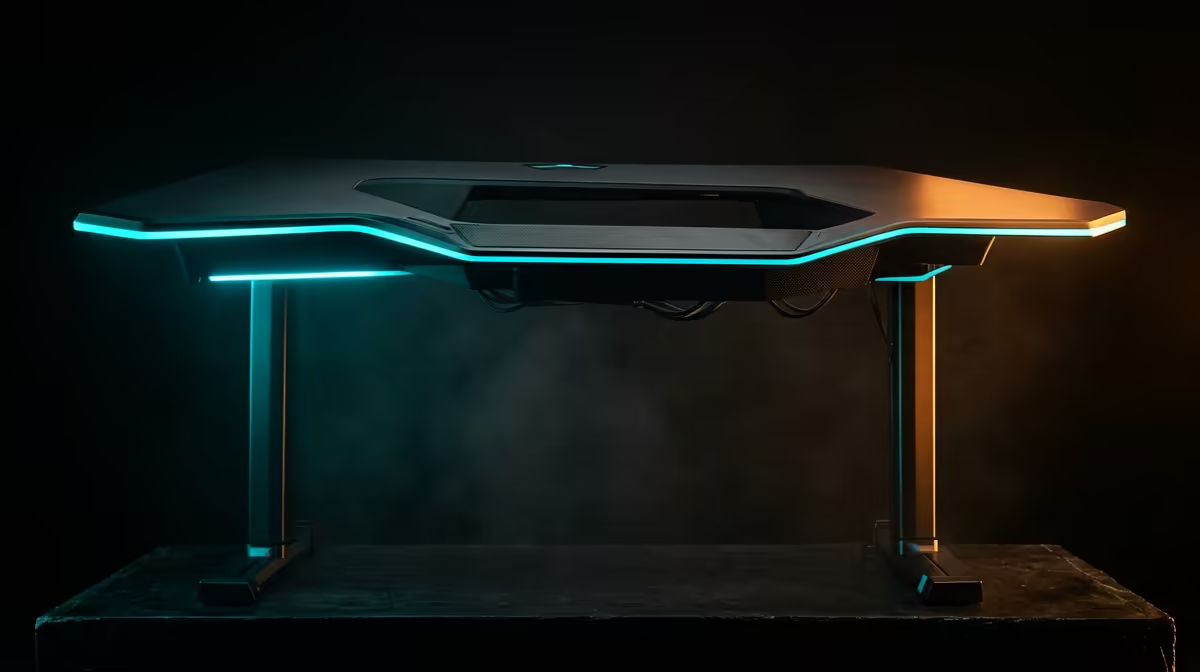
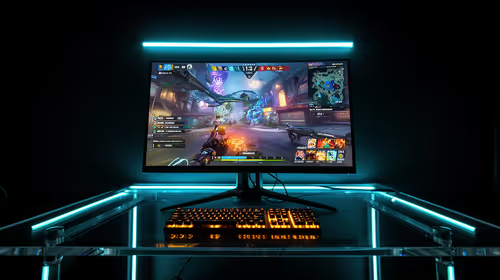
In a competitive shooter at 144fps, a desk that flexes when you flick the mouse adds micro-movements that wreck precision. A R600 flat-pack desk with thin legs wobbles under a keyboard and a monitor, and the shake worsens as the joints loosen over months. The expensive part is the lost games and the eventual replacement, not the first desk.
The spec floor for competitive play
Aim for a steel-framed desk with a thick, flat top and a weight rating that comfortably holds a monitor and peripherals, around R1,500-R2,500. A solid surface keeps your mouse pad stable so a 360 flick lands where you aim. Pair it with a 144Hz or 165Hz monitor and a wired or 8000Hz mouse, since the desk is only one link in the low-latency chain.
SA buyer notes
Buy locally for warranty and check the desk holds a monitor arm without flexing. A desk that disassembles cleanly survives moves between home and res.
FAQ
Does a wobbly desk affect aim in online games?
Yes. A desk that flexes when you move the mouse adds micro-shake that hurts precision in fast shooters, especially at high frame rates where small errors matter.
What desk is stable enough for competitive gaming?
A steel-framed desk with a thick top and a solid weight rating, around R1,500-R2,500. Stability matters more than size for precise aim.
Is the desk really part of low latency?
Indirectly. The desk keeps your input devices steady; combined with a 144Hz-plus monitor and a fast mouse, a stable surface lets your aim translate cleanly to the screen.
play, test a desk's stability by flicking your mouse hard across it; if the top shakes or the monitor wobbles, the desk is undermining your aim no matter how fast your mouse is.