Quick Answer
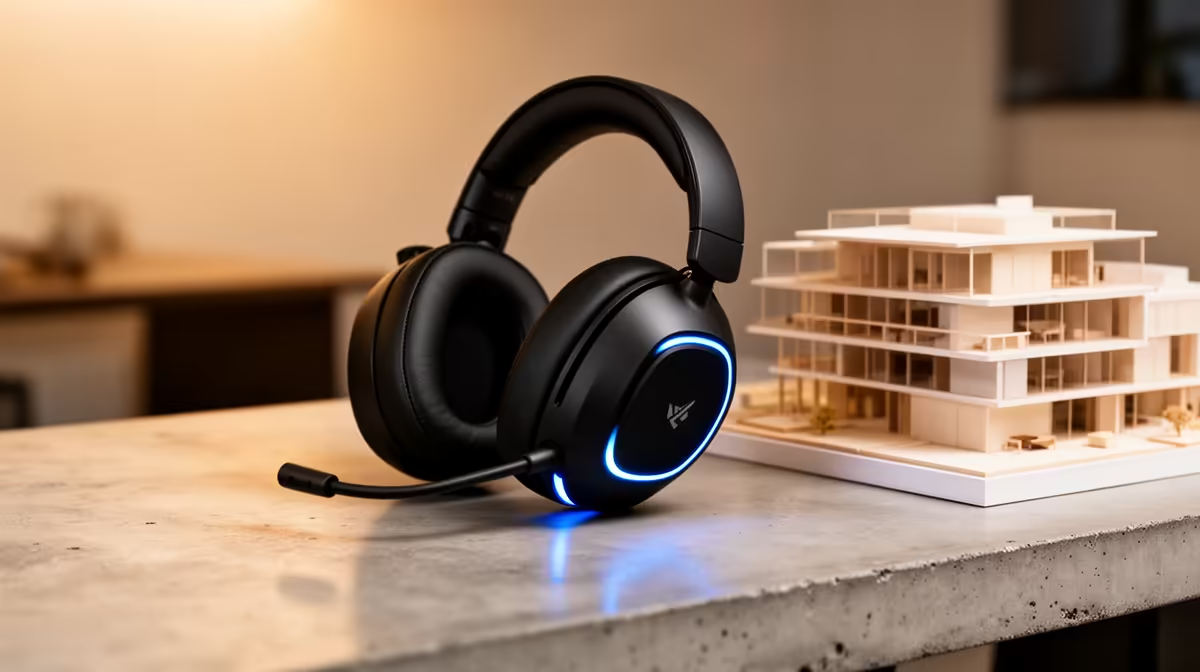
For AAA gaming at 1440p, a cheap gaming headset becomes expensive when its weak drivers and tinny mic cost you both immersion and clear team comms. A R400-R700 headset often has muddy positional audio and a mic teammates strain to hear, which matters in competitive 1440p titles. A R1,200-R2,500 headset at Evetech delivers crisp directional cues and a clear boom mic, turning sound into the advantage it should be.
Where the Cheap Headset Falls Short at 1440p
Modern AAA games at 1440p deliver detailed spatial audio, footsteps, reloads, and directional cues that a good headset turns into information. A cheap headset with small, poorly damped drivers smears that detail, so you hear that something is near but not where. Its electret mic also picks up room noise and sounds thin, so squad calls get missed. Both cost you in fast competitive play, where a missed footstep or unclear call loses the round.
The expense is the matches and immersion lost, not the small upfront saving.
What to Buy Instead
Choose a R1,200-R2,500 headset with 40-50mm drivers, a detachable or flip-up cardioid boom mic, and a comfortable clamp for long sessions. Wired or low-latency wireless both work for 1440p gaming.
FAQ
Does headset quality affect competitive 1440p gaming?
Yes. Clear, well-damped drivers turn detailed game audio into precise directional cues, so you locate footsteps and reloads accurately. A cheap headset smears that detail, costing you reaction time in fast AAA matches.
What headset specs matter for AAA gaming?
Look for 40-50mm drivers for full-range sound, a cardioid boom mic so teammates hear you clearly, and comfortable padding for long sessions. A R1,200-R2,500 model at Evetech covers all three well.
Is wireless worth it for 1440p gaming?
Low-latency 2.4GHz wireless is now good enough for competitive play, with sub-30 ms latency. Wired remains the most reliable and cheapest; choose wireless for freedom of movement, not a performance gain.
gaming at 1440p, enable your headset's stereo (not virtual surround) mode for the most accurate footstep direction, and position the boom mic two finger-widths from your mouth for clear, consistent team comms.