Quick Answer
The cheap option becomes expensive when it forces an early replacement. Watch for low endurance, weak controllers or poor stands, because saving R500 now can cost more than buying the solid mid-range part once.
Build The Shortlist Around The Real Job
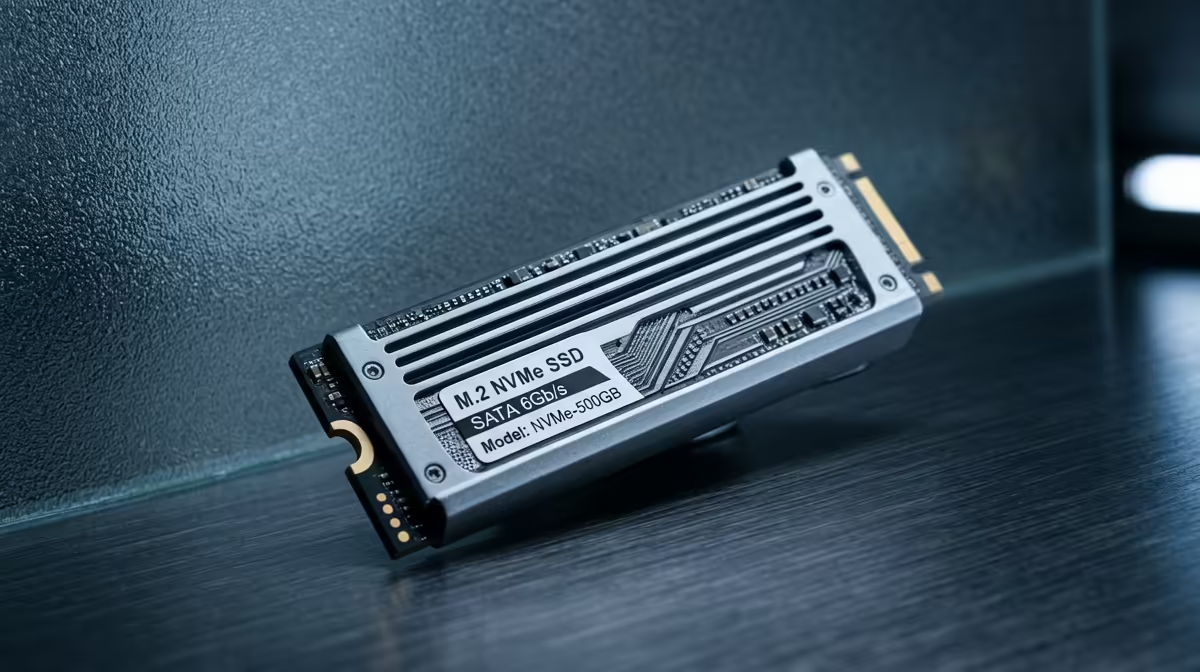
For content creation on a budget, capacity and sustained behaviour matter more than a screenshot-friendly peak number. Shop around R800-R3,500 and compare WD Blue SN580, Kingston NV2, Crucial T500 and WD Black SN850X by 1 TB capacity, PCIe Gen4 x4, 3,500-7,000 MB/s reads and sensible TBW endurance. A 1 TB Gen4 drive is the sensible floor for most students, creators and gaming PCs.
Where The Money Actually Changes Daily Use
Entry-level drives are fine for Windows, assignments and game libraries. Mid-range drives are better for Adobe Premiere caches, large datasets, Plex metadata or frequent file copies. High-end drives only earn their price when the workload writes large files often enough to expose heat and endurance limits.
Mistakes That Make The Cheap Option Costly
Ignore wireless language for NVMe: internal NVMe is M.2 PCIe, while portable drives are USB. Also avoid buying a heatsink model before checking the motherboard cover and laptop clearance, because some systems already include a thermal plate. Buy enough capacity for local project files before chasing peak benchmark numbers.
FAQ
What is the safest budget for NVMe SSD buyers in SA?
A realistic working band is R800-R3,500, with the lower end for basic builds and the upper end for quieter, faster or more expandable options. Use the price as a shortlist filter, then confirm the exact live cart before purchase because stock and promotions move.
Which spec should I check first for content creation on a budget?
Start with 1 TB capacity, PCIe Gen4 x4, 3,500-7,000 MB/s reads and sensible TBW endurance. That one check catches most bad fits before you worry about branding, RGB or small benchmark differences.
When should I spend more instead of taking the cheapest option?
Spend more when the cheaper option blocks the next upgrade, runs too loud, lacks capacity or cannot hit the target such as 60 fps, 144 Hz or a 1 TB project drive. Save money when the premium feature will sit unused in your room or workload.