Choosing a PC case comes down to a few decisions that actually move the needle, and ignoring the marketing noise around the rest.
Quick Answer
Spend roughly R900 to R1,800 on a mid-tower like the case tiers Evetech stocks for quiet, low-noise builds; the cheapest R450 chassis usually skips a proper dust filter and a tempered-glass panel cracks easily. A case rarely adds frames, but a 360 mm radiator clearance and 2-3 included 120 mm fans keep a hot GPU quiet.
What a PC case actually controls
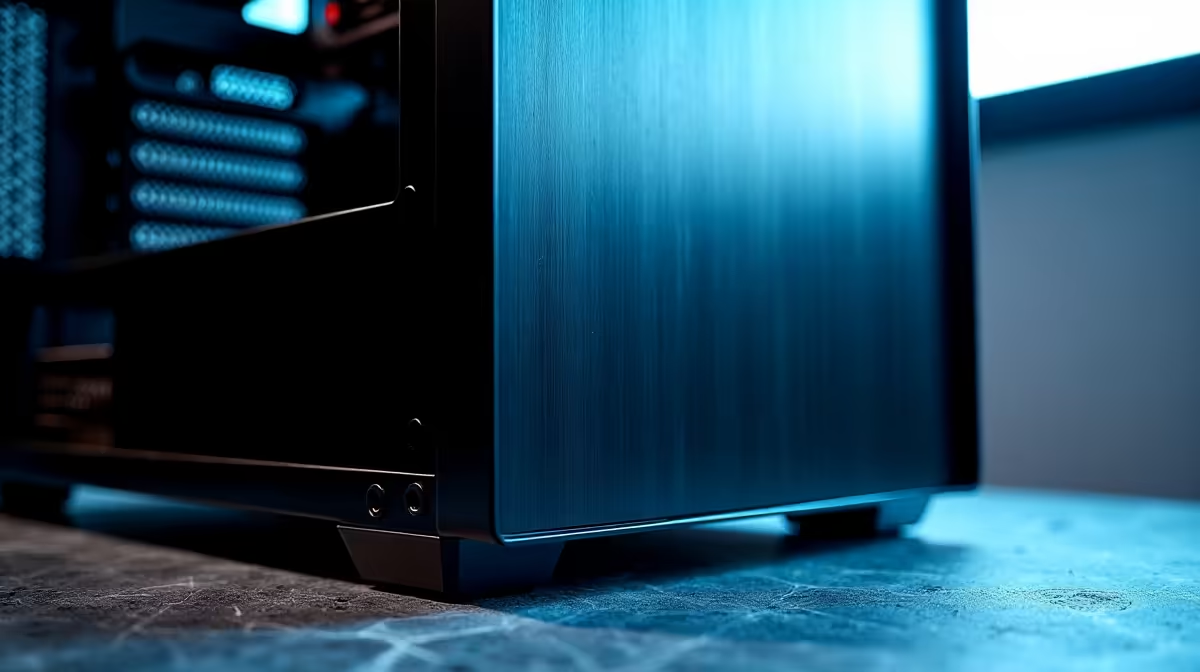
A case decides three things: airflow, the size of parts that fit, and noise. For quiet, low-noise builds, prioritise a mesh front panel and at least two 120 mm or 140 mm intake fans; a sealed glass-front case can run a GPU 8-12 degrees hotter and push fans to a louder 1,500+ RPM. Check GPU clearance (a long RTX-class card needs 330-360 mm), radiator support (240 mm or 360 mm AIO), and that the PSU shroud leaves room for cables.
Where the money goes
Below about R600 you typically lose dust filters, get thin 0.6 mm steel that flexes, and fan headers run straight off the PSU with no control. The R900 to R1,800 band buys 1.0 mm steel, removable magnetic dust filters, a tempered-glass side, front USB-C, and 3-4 pre-installed fans. Above R2,200 you mostly pay for aesthetics and a fan hub. Stock at Evetech moves fast on popular tiers, so check current availability before you commit.
Quick buyer's checklist
- GPU clearance exceeds your card length (many cards run 300-360 mm)
- Radiator support matches your AIO (240 mm or 360 mm)
- Mesh front panel plus at least two 120/140 mm intake fans
- Front USB-C and removable magnetic dust filters
- 1.0 mm steel and a tempered-glass panel, not thin 0.6 mm steel
FAQ
Does a more expensive PC case improve gaming performance?
Not directly. A case never raises fps on its own, but better airflow stops CPU and GPU thermal throttling, which protects sustained framerates during long sessions. Spend on airflow and clearance, not RGB.
What size case do I need for a modern graphics card?
Measure your GPU length first; many current cards run 300-360 mm. A standard ATX mid-tower handles most builds, but verify the case lists clearance above your card length and leaves room for front fans or a radiator.
How many fans should a case come with?
Aim for at least two intake and one exhaust to start. Two or three pre-installed 120 mm fans is common in the R900-R1,800 band; you can add a 140 mm intake later for a few hundred rand if temperatures climb.
write down your GPU length in mm and your AIO radiator size, then filter the case list to clearances that exceed both. That single check prevents the most common return.