Quick Answer
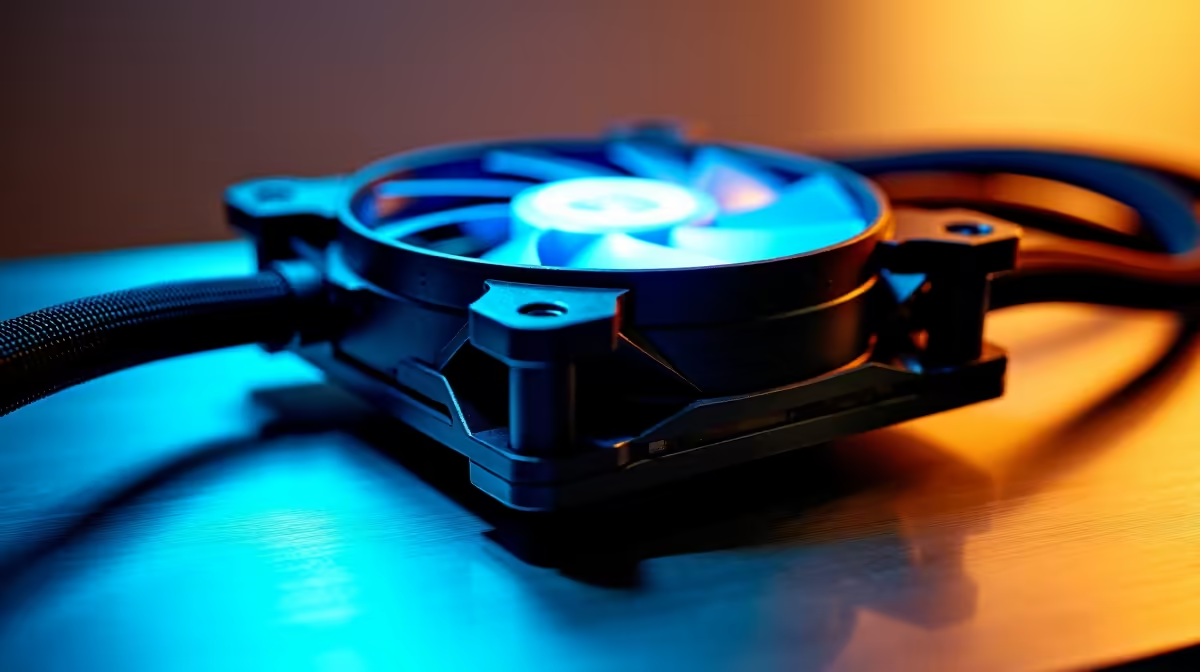
For protecting an expensive build, RGB, 360mm radiators and sky-high rated TDP numbers are the most overrated CPU-cooler specs. What actually matters is sustained noise-normalised performance and reliable mounting. A solid R700 to R1,200 air cooler beats a flashy bargain AIO for most builds.
Match Cooler To CPU, Not To Hype
Protecting an expensive build is about matching the part to the rig you already own rather than over-spending blindly. A 65W chip is happy on a R350 to R600 tower; a 105W chip wants a strong dual-tower or 240mm AIO around R900 to R1,500. Buying a 360mm AIO for a 65W CPU adds cost and pump noise without lowering temperatures meaningfully, so size to the silicon you actually own.
Clearance, Noise And Mounting
Check three numbers before checkout: cooler height versus case clearance (most mid-towers cap near 160mm to 170mm), RAM clearance for tall heatsinks, and fan noise at load. A cooler that throttles your CPU to fit is a false economy. For protecting an expensive build, fan curves tuned in BIOS often cut noise more than buying a pricier cooler.
Where The Money Is Worth It
Spend up for a proven mounting system, a fluid-dynamic-bearing fan, and good contact plate. Skip the premium for RGB unless your build calls for it. Re-pasting with a R150 tube of quality compound every two years often restores 5C to 8C of lost headroom, which is cheaper than a new cooler.
FAQ
Do I need an AIO for protecting an expensive build?
Usually not. For protecting an expensive build, a quality air cooler handles a mid-range CPU under 80C. Reserve a 240mm or larger AIO for hot, high-wattage chips or genuinely tight cases.
How long do CPU coolers last?
Air coolers last many years since only the fan can wear out, and fans are cheap to replace. AIOs typically last 4 to 6 years before pump wear shows, so factor that into a bargain unit.
Does thermal paste matter?
Yes. Quality paste applied correctly can drop temperatures several degrees, and re-pasting every couple of years restores headroom lost as the original compound dries out.
check the cooler's height against your case's clearance (often 160mm to 170mm) and confirm AM5 or LGA1700 mounting hardware is included, so it actually fits your build.