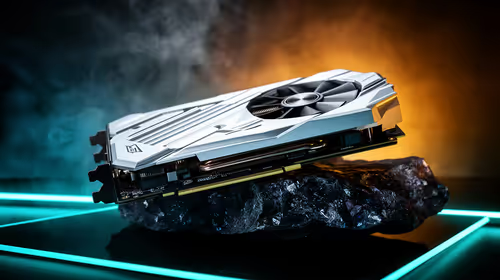
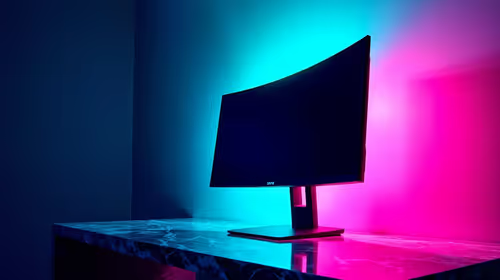
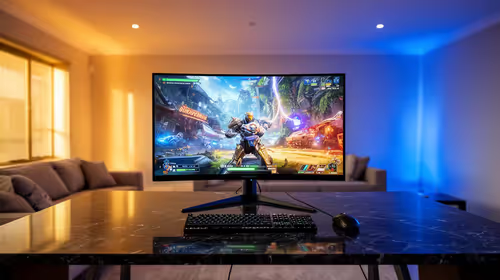
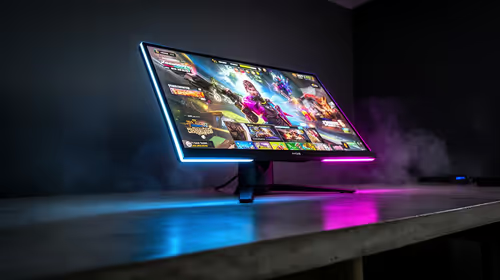
A graphics recommendation without a game list and frame target is just a guess. Choosing a graphics card for 1440p 280Hz gaming depends on quality settings, desired low points and whether 280 frames per second is a target or merely the display ceiling. The R4,499 Alienware AW2726DL supplies QHD 280Hz; your measurements define the GPU job.
Quick Answer
Choose the graphics card that holds your priority games near their chosen frame target at 2560x1440, with stable frame times and enough headroom for busy scenes. Lightweight esports titles need a different balance from demanding modern releases, so test or consult game-specific evidence. The R4,499 AW2726DL can use FreeSync Premium below 280Hz, meaning the GPU does not have to lock every game at the maximum.
🎯 Define the frame target per game
For a tactical shooter, high frame rate and low visual clutter may dominate. For a story game, richer effects at a lower stable cadence can be the better experience. Write a target for each instead of forcing both to 280.
Use a representative combat replay or busy route. Average FPS alone hides stalls, so record low points and frame times. The chosen graphics card should meet the demanding section of play, not only the built-in benchmark's easiest camera pass.
Compare QHD screens through the gaming monitor category, but keep the game list beside the display decision. The monitor ceiling and GPU requirement are related, not identical.
🧪 Identify the bottleneck before naming hardware
Lower shadows, reflections, ambient effects and other GPU-heavy settings. If performance rises strongly, graphics power is limiting the chosen setup. If results barely change, the processor, game engine or background activity may be responsible.
Monitor GPU use, memory pressure and frame time through normal tools, then repeat the same scene. A card upgrade aimed at a CPU-bound title can improve visual quality without raising the competitive rate you expected.
Resolution testing can confirm the diagnosis. If lowering internal rendering resolution produces a large frame-rate gain, the graphics workload is significant. If performance remains nearly fixed, pushing more GPU throughput at the same game logic may not solve the ceiling. Keep every other setting steady during this comparison.
The PC monitor deals collection provides display price context while the test protects the rest of the budget. Do not choose a graphics tier from the words 280Hz alone.
⚙️ Use scaling and settings deliberately
Keep QHD output for crisp UI and geometry, then reduce settings with the largest frame-time cost. Render scaling or upscaling can lower internal pixel work while the AW2726DL still receives 2560x1440. Compare fine foliage and moving edges to decide whether the trade is acceptable.
FreeSync Premium can present variable frame delivery more coherently beneath the 280Hz maximum. Choose a cap the system sustains through actual matches. A stable 220 can feel better than an average 260 interrupted by long spikes.
The AW2726DL's 1ms GTG specification addresses pixel transitions, not GPU render time. Likewise, HDR10 and 93% DCI-P3 expand picture options but may encourage heavier game settings. Maintain separate competitive and cinematic profiles.
Review the monitor best-sellers page after deciding whether QHD detail or maximum cadence receives priority. Then match the graphics purchase to that declared use.
Leave room for game patches and new titles by valuing consistent low points, not speculative future labels. A measured target, suitable settings and adaptive sync produce a more durable plan than chasing one peak counter.
Thermal behaviour deserves a longer run. A card that performs well for three minutes may settle at another clock or fan state after half an hour. Test the intended case, room and background workload, then decide from the stable period rather than the opening burst.
Power, case clearance and cooling are part of any graphics change, but they should be assessed for the exact chosen card. Do not let the monitor headline bypass those physical checks. A balanced upgrade must fit the machine as well as the frame target.
Frequently Asked Questions
Must the graphics card render 280 FPS for the AW2726DL?
No. The monitor can operate with lower and variable frame rates, while FreeSync Premium coordinates delivery beneath its ceiling.
Why does lowering graphics quality sometimes change nothing?
The game may be limited by the processor or engine rather than the GPU. Use frame-time and utilisation evidence to identify the constraint.
Can upscaling help at 1440p?
Yes. It reduces internal rendering work and scales the result to QHD output, though image quality should be compared in motion.
Should every game use the same frame cap?
No. Set caps according to each title's repeatable performance and visual priorities. Competitive and cinematic games rarely need identical targets.
Ready to give the graphics card a measured QHD workload instead of a vague 280Hz order?
Explore Evetech's display and graphics choices, test the games that matter, and spend against the bottleneck that actually appears.