Quick Answer
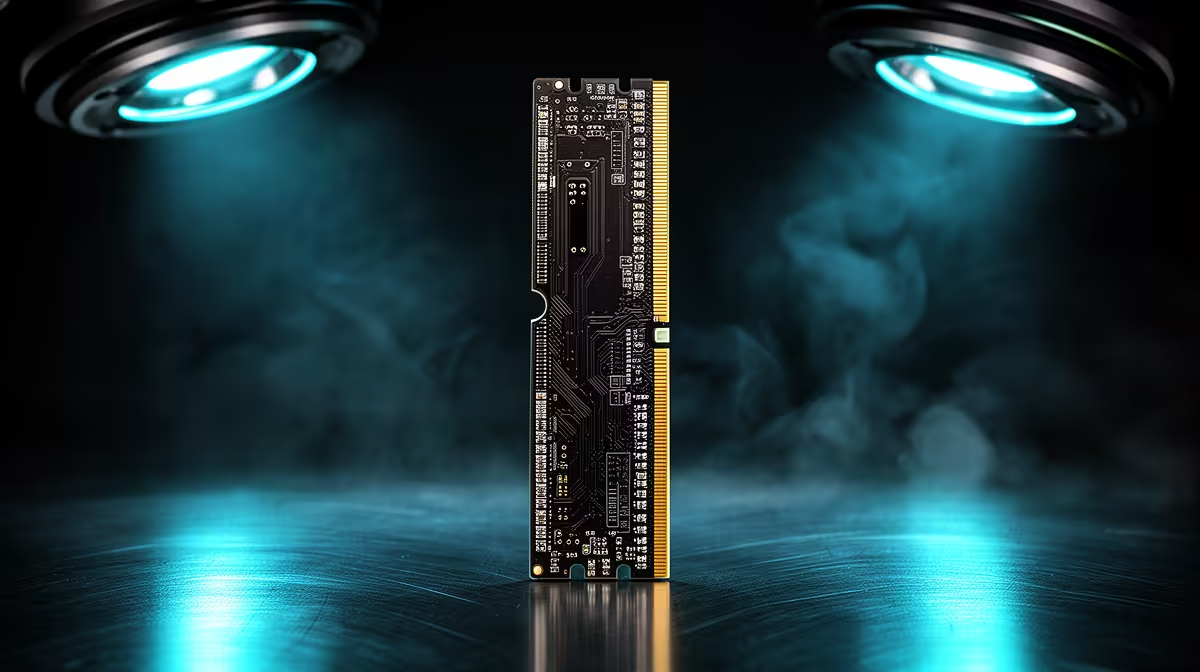
For SA PC builders, DDR5-8000 being stuck on Intel matters because it shapes your platform choice — only Intel's Core platform can run DDR5-8000 stably, while AMD's AM5 tops out around DDR5-6000 to 6400 for its 1:1 memory mode. If you want the highest RAM speeds you go Intel; if you want the best gaming value, AM5 at DDR5-6000 (around R1,800 for 32GB) is the smarter buy.
Why AM5 stops near 6000
AM5's memory controller and infinity fabric run best synchronised with the RAM at DDR5-6000. Pushing past that breaks the ideal 1:1 ratio, so very high speeds like 8000 gain little and often lose stability on AMD. Intel's Core CPUs use a more flexible memory controller that handles DDR5-8000 with a gear-mode divider, which is why those headline speeds appear on Intel boards, not AMD ones.
What this means for your build
For gaming, the practical takeaway is that DDR5-8000 on Intel does not translate into a big real-world lead — AM5 at well-tuned DDR5-6000 CL30 is right behind and usually cheaper. Choose Intel for memory-bound professional workloads that genuinely use extreme bandwidth, and AM5 for gaming value with a long upgrade path. Either way, enable XMP (Intel) or EXPO (AMD) so the kit runs at its rated speed. For most SA builders the GPU still moves frame rates far more than memory frequency, so once you have a 32GB DDR5-6000 kit, any extra budget belongs in a stronger graphics card rather than chasing headline RAM speeds.
FAQ
Can AMD AM5 run DDR5-8000?
Not stably in its ideal mode. AM5 tops out near DDR5-6000 to 6400 for its 1:1 ratio. DDR5-8000 is an Intel Core platform feature.
Does DDR5-8000 give a big gaming lead?
No. Even on Intel the real-world gaming gain over DDR5-6000 is small. AM5 at tuned DDR5-6000 CL30 stays close for less money.
Which platform should a SA gamer pick?
AM5 for gaming value and a long upgrade path; Intel for memory-bound professional work that genuinely uses extreme bandwidth.
Before you buy
For gaming value, AM5 at DDR5-6000 is the smart pick — DDR5-8000 on Intel adds little real-world frame rate for the extra cost.