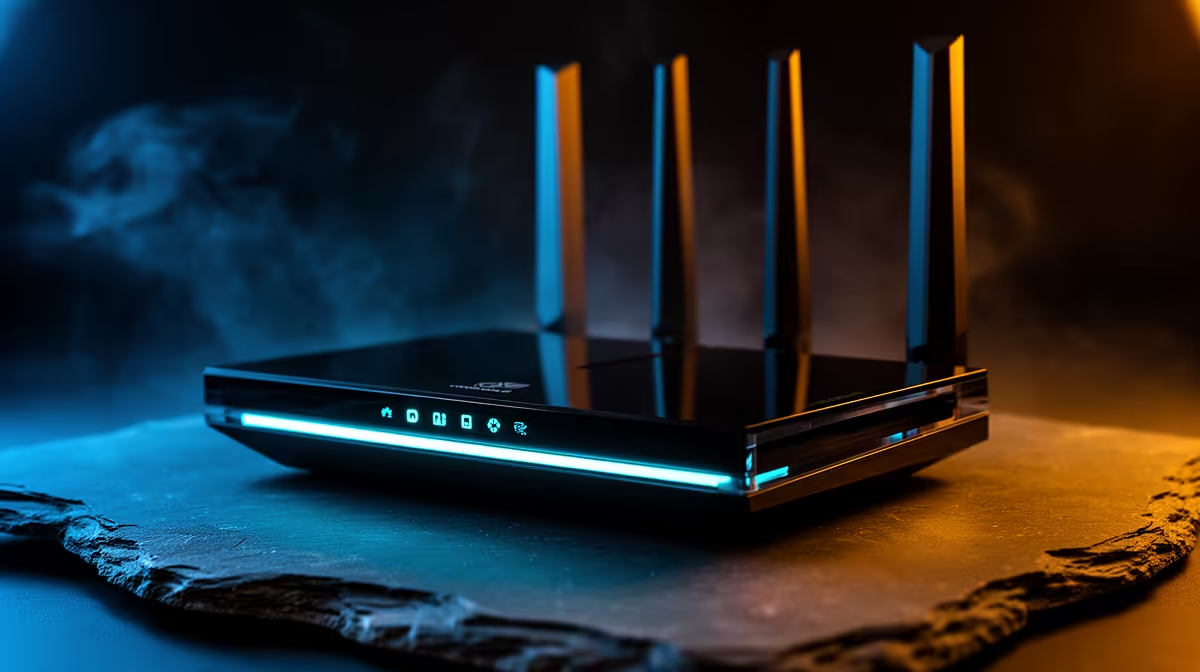
Wired LAN ports are quietly one of the best reasons to spend up on a router. For new PC builders, the right port count removes stutter that no Wi-Fi tweak fixes.
Quick Answer
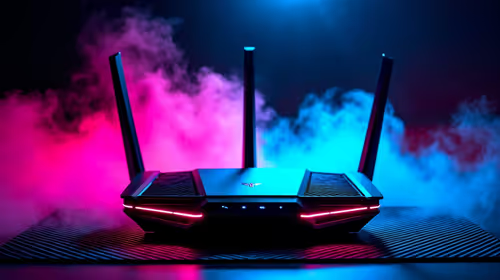
Pay for more LAN ports when you have a desktop, console, NAS or a second mesh node to wire; aim for at least four Gigabit ports, and a 2.5 GbE port if you run 500 Mbps-plus fibre. A solid Wi-Fi 6 router with four-plus Gigabit ports runs about R1,800 to R4,500 in SA.
When LAN ports are worth paying for
Every wired device frees the Wi-Fi for phones and tablets and gives you zero-jitter latency for gaming and streaming. A desktop, a console and a NAS already use three ports, so a four-port router fills fast. A 2.5 GbE WAN or LAN port future-proofs you for faster fibre and for fast local file transfers to a NAS.
Matching ports to new PC builders
For new PC builders, count your wired devices, add one for a future mesh backhaul, and buy a router with that many Gigabit ports plus headroom. If you only have a laptop and a phone, ports matter less than Wi-Fi 6 coverage, so do not overspend on a port-heavy model. Where your fibre line is 100 to 300 Mbps, Gigabit ports are plenty; reserve the 2.5 GbE premium for 500 Mbps-plus plans.
FAQ
How many LAN ports do I actually need?
Count your wired gear (desktop, console, NAS), add one for a future wired mesh node, and buy that many. Four Gigabit ports suit most homes; power users want more.
Is a 2.5 GbE port worth it?
Only if your fibre is 500 Mbps-plus or you move big files to a NAS locally. On a 100 to 300 Mbps line, Gigabit ports already exceed your internet speed.
Does wiring a device really lower latency?
Yes, an Ethernet link removes Wi-Fi jitter entirely, which steadies ping in online games. For a competitive setup, wiring the gaming PC is the single best free upgrade.
gaming PC or console to a Gigabit port before blaming Wi-Fi for lag. A R0 cable run usually steadies your ping more than a pricier router would.